Join us on a literary world trip!
Add this book to bookshelf
Grey
Write a new comment Default profile 50px
Grey
Subscribe to read the full book or read the first pages for free!
All characters reduced
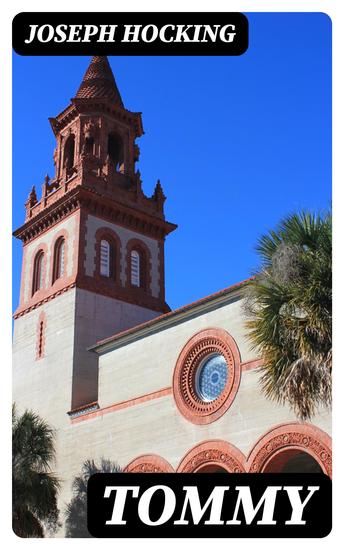
Tommy - cover

Tommy

Joseph Hocking

Publisher: DigiCat

  • 0
  • 0
  • 0

Summary

In "Tommy," Joseph Hocking crafts a poignant narrative that explores the intricate dynamics of social class and personal aspiration within the context of early 20th-century England. Through the lens of the titular character, Tommy, Hocking delves into themes of identity, ambition, and the often harsh realities of working-class life. The novel employs a realist literary style, characterized by its vivid depictions of character struggles and an unflinching gaze at societal expectations, mirroring the naturalistic trends that dominated the period alongside the burgeoning modernist movement. Hocking's rich prose enhances the emotional depth of the story, providing a powerful critique of the social constructs that shape individual destinies. Joseph Hocking, a British novelist born in a Methodist family, often drew inspiration from his experiences in a rapidly changing industrial society. His background as a preacher, coupled with his concerns about social justice, informed his literary works, allowing him to address complex societal issues with both empathy and insight. Hocking's personal journey and commitment to social reform are evident in the struggles and triumphs of his characters, lending authenticity to their experiences. "Tommy" is a must-read for fans of socially conscious literature and those who appreciate character-driven storytelling. Hocking's ability to weave together deep emotional currents and social commentary makes this novel not only a compelling read but also a profound examination of human resilience. Readers seeking an engaging narrative that reflects the challenges of its time will find themselves profoundly moved by Tommy's journey.
Available since: 08/01/2022.
Print length: 95 pages.

Other books that might interest you

  • The Fires of Hell - cover

    The Fires of Hell

    William W. Johnstone, J. A....

    • 0
    • 0
    • 0
    When a band of merciless, murdering thieves raise hell across the territory, three men committed to justice descend upon them like angels of death. And when the guns fall silent and the smoke clears, the Jackals are always the last men standing. 


    Comanchero Cullen Brice has escaped from a Huntsville, Alabama, prison, where he was sentenced to hang. And he has sworn revenge against the man who killed his brother and put him behind bars, Texas Ranger Matt McCulloch. Freed from the hangman by his gang, Brice has kidnapped the lawman's daughter Cynthia along with other women and make tracks to the Texas Panhandle. Holing up in The Canyon of Weeping Women, the outlaws plan to sell their captives to Comanche raiders. 


    Joined by bounty hunter Jed Breen and retired cavalry sergeant Sean Keegan, McCulloch rides hard for Texas, determined to save his daughter from Brice. But Cynthia isn't her father’s little girl anymore. And hell hath no fury like a woman raised by a Ranger who's just as deadly as the trio of Jackals gunning for Brice's comancheros . . .
    Show book
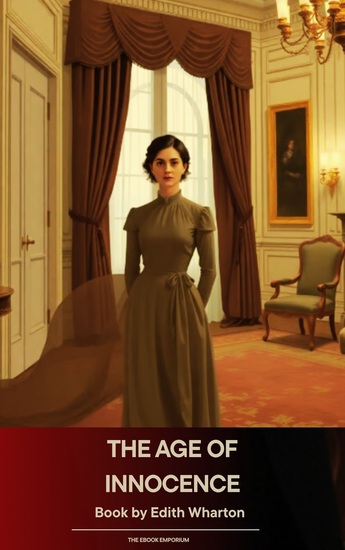
  • The Age of Innocence - cover

    The Age of Innocence

    Edith Wharton

    • 1
    • 0
    • 0
    "They lived in a kind of hieroglyphic world, where the real thing was never said or done or even thought, but only uttered by a set of arbitrary signs."
    
    Newland Archer is a man of the elite, a gentleman lawyer perfectly aligned with the rigid social codes of 1870s New York. His life is meticulously planned, beginning with his engagement to the beautiful, conventional May Welland. But when May's cousin, the scandalous Countess Ellen Olenska, returns from Europe seeking a divorce, Archer's world is upended. Drawn to Ellen's independence and intellectual fire, he begins to question the very foundations of the society that sustains him.
    
    The Invisible Chains of Convention: Wharton brilliantly portrays a world where "the tribal ritual" of social life is more powerful than any individual passion. As Archer and Ellen's forbidden attraction grows, the weight of family expectation and the subtle, unspoken threats of social exile begin to close in. It is a story where a dinner party can be as deadly as a duel, and a raised eyebrow can signal the end of a reputation.
    
    A Pulitzer Prize-Winning Masterpiece: The Age of Innocence is a lush, satirical, and ultimately heartbreaking exploration of the sacrifice required to belong. Wharton, an insider of the world she describes, uses her exquisite prose to dissect the hypocrisy and the hidden beauty of a vanished era. It remains the definitive novel of the American Gilded Age—a timeless study of the conflict between the heart's longing and the world's demands.
    
    Step behind the velvet curtain of Old New York. Purchase "The Age of Innocence" today and experience the elegance and the agony of a world bound by decorum.
    Show book
  • A Coffin for Tomahawk - cover

    A Coffin for Tomahawk

    William W. Johnstone, J. A....

    • 0
    • 0
    • 0
    Western legend Luke "Tomahawk" Callahan agrees to lead one last wagon train across the Mexican border—where revolution is brewing, bullets are flying, and all roads lead to death . . .  
     
    With just a single journey under his belt, first-time wagoneer Tomahawk Callahan became a national hero. It started as a challenge waged by a railroad mogul—a race between an old-time wagon train and a brand-new rail line—with the whole world watching. Against all odds, Tomahawk led his family business to victory. At the time, he thought it would be his first—and last—wagon train. But at his sister's urging, he's agreed to take on one final job, a never-before-attempted trip across the Mexican border . . . But Mexico is undergoing bloody changes. After a brutal coup, General Porfirio Diaz is determined to bring "order and progress" to the country—while revolutionaries plot against him. Tomahawk's wagon train could help modernize Mexico, bringing railroad workers, miners, and supplies—across a desert full of rattlesnakes, Apache, and other threats. The deadliest of all is a former priest known as Generalissimo “Padre” Rodriguez, who has his bloodthirsty sights set on the wagon train. Tomahawk's got to drive his wagons out of this frying pan and into the fire—or they'll all end up on a wagon trail to Hell . . .
    Show book
  • Neglected Authors The - North American Men - Celebrated in their time forgotten in ours - cover

    Neglected Authors The - North...

    Edward Page Mitchell, W C...

    • 0
    • 0
    • 0
    Throughout the long centuries of human history is the want, and the need, to share information, to exchange ideas and for that knowledge and experience, for curiosity and learning, to be the basis of a civil society. 
    In literature the ambition is much narrower.  In order to be known, to be popular, you had to be published.  And for that people had to know you existed and your ideas worth reading.  Obviously for most of humanity’s time people couldn’t read and texts couldn’t be published in any great number. 
    In the 15th Century Gutenberg’s printing press began the revolution to address the second and by the 19th century had gathered pace with startling speed and mass distribution.  Education for the many was brought in to help people understand more of their world and, with new skills, how to have a better place within it.  Now, if the powers that owned the presses and means of distribution agreed an audience would now be able to avail themselves of your ideas, your printed words.  
    In this volume we offer up a small selection of talents from the literary landscape of the North American male author whose time has now come again.
    Show book
  • 3 Stories - Set in Puritan New England - A trio of classic tales perfect for a commute walk or quiet night in - cover

    3 Stories - Set in Puritan New...

    Nathaniel Hawthorne, Washington...

    • 0
    • 0
    • 0
    There is something about the number 3.    
     
    The Ancient Greeks believed 3 was the perfect number, and in China 3 has always been a lucky number, and they know a thing or two.   
     
    Most religions also have 3 this and 3 that and, of course, in these more modern times, three’s a crowd may be too many, except when it’s a ménage à trois.  It seems good things usually come in threes. 
     
    Whatever history and culture says WE think 3, a hat-trick of stories, is a great number to explore themes and literary avenues that classic authors were so adept at creating. 
     
    From their pens to your your ears.
    Show book
  • Richard Bruce - Burglar - Former soldier and journalist that became a revered author and screenwriter - cover

    Richard Bruce - Burglar - Former...

    Edgar Wallace

    • 0
    • 0
    • 0
    Richard Horatio Edgar Wallace was born on the 1st April 1875 in Greenwich, London.  Leaving school at 12 because of truancy, by the age of fifteen he had experience; selling newspapers, as a worker in a rubber factory, as a shoe shop assistant, as a milk delivery boy and as a ship’s cook.  
     
    By 1894 he was engaged but broke it off to join the Infantry being posted to South Africa. He also changed his name to Edgar Wallace which he took from Lew Wallace, the author of Ben-Hur.  
     
    In Cape Town in 1898 he met Rudyard Kipling and was inspired to begin writing. His first collection of ballads, The Mission that Failed! was enough of a success that in 1899 he paid his way out of the armed forces in order to turn to writing full time.  
     
    By 1904 he had completed his first thriller, The Four Just Men. Since nobody would publish it he resorted to setting up his own publishing company which he called Tallis Press. 
      
    In 1911 his Congolese stories were published in a collection called Sanders of the River, which became a bestseller. He also started his own racing papers, Bibury’s and R. E. Walton’s Weekly, eventually buying his own racehorses and losing thousands gambling.  A life of exceptionally high income was also mirrored with exceptionally large spending and debts.  
     
    Wallace now began to take his career as a fiction writer more seriously, signing with Hodder and Stoughton in 1921. He was marketed as the ‘King of Thrillers’ and they gave him the trademark image of a trilby, a cigarette holder and a yellow Rolls Royce. He was truly prolific, capable not only of producing a 70,000 word novel in three days but of doing three novels in a row in such a manner. It was estimated that by 1928 one in four books being read was written by Wallace, for alongside his famous thrillers he wrote variously in other genres, including science fiction, non-fiction accounts of WWI which amounted to ten volumes and screen plays. Eventually he would reach the remarkable total of 170 novels, 18 stage plays and 957 short stories. 
     
    Wallace became chairman of the Press Club which to this day holds an annual Edgar Wallace Award, rewarding ‘excellence in writing’.  
     
    Diagnosed with diabetes his health deteriorated and he soon entered a coma and died of his condition and double pneumonia on the 7th of February 1932 in North Maple Drive, Beverly Hills. He was buried near his home in England at Chalklands, Bourne End, in Buckinghamshire.
    Show book