¡Acompáñanos a viajar por el mundo de los libros!
Añadir este libro a la estantería
Grey
Escribe un nuevo comentario Default profile 50px
Grey
Suscríbete para leer el libro completo o lee las primeras páginas gratis.
All characters reduced
Victory - cover

Victory

Joseph Conrad

Editorial: CLXBX

  • 0
  • 0
  • 0

Sinopsis

Victory is one of Joseph Conrad's most philosophically rich and emotionally intense novels, exploring isolation, idealism, and the perilous intersection between thought and action. Set largely on a remote tropical island, the novel examines the consequences of withdrawing from the world—and the inescapable pull of human connection.

The story centers on Axel Heyst, a wealthy, disillusioned intellectual who has retreated from society after a lifetime of moral skepticism. Seeking refuge from human conflict, Heyst lives in near solitude until he rescues Lena, a young woman trapped in exploitation and hardship. Their fragile bond draws Heyst back into the moral responsibilities he has long attempted to evade.

When a group of ruthless intruders arrives on the island, Heyst's passive philosophy is tested by violence and betrayal. Conrad transforms the isolated setting into a crucible of moral reckoning, where ideals prove powerless without decisive action. Lena's courage and sacrifice stand in stark contrast to Heyst's intellectual detachment.

Written in Conrad's evocative prose, Victory blends psychological drama with suspense, probing the limits of detachment and the cost of inaction. The novel confronts timeless questions about responsibility, love, and the dangers of standing apart from human struggle.

Dark, haunting, and deeply philosophical, Victory is a masterwork of modern literature—a gripping narrative that reveals how isolation can become its own form of defeat.
Disponible desde: 07/02/2026.
Longitud de impresión: 401 páginas.

Otros libros que te pueden interesar

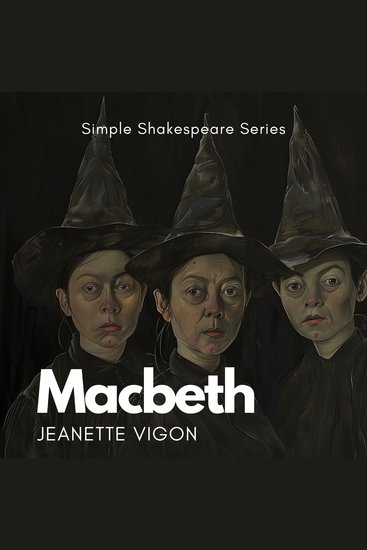
  • Macbeth | Simple Shakespeare Series - The classic play adapted to modern language - cover

    Macbeth | Simple Shakespeare...

    Jeanette Vigon

    • 0
    • 0
    • 0
    In an era where the timeless narratives of Shakespeare might seem daunting, Jeanette Vigon extends a welcoming hand through her adaptation of "Macbeth" in the Simple Shakespeare series. Her modern retelling breathes vitality into the dark and ambitious journey of Macbeth, making the complex story of power, guilt, and fate accessible and engaging for today's readers. Vigon captures the original play's intensity and moral conflicts, while translating it into a language that resonates with the contemporary audience. 
    Ideal for newcomers to Shakespeare as well as devoted fans seeking a fresh take, this rendition of "Macbeth" explores the intricate relationships and psychological depths of its characters against a backdrop that feels strikingly relevant. Vigon skillfully unravels the themes of ambition, moral corruption, and the psychological turmoil of its protagonist, ensuring the story's enduring themes reach a new generation with undiminished impact. 
    This adaptation is a must-have for anyone eager to explore the dramatic landscape of one of Shakespeare’s most famous tragedies, without the hurdle of early modern English. It serves as a perfect resource for students encountering Shakespeare for the first time and educators in search of engaging literature for their curriculum. Jeanette Vigon’s "Macbeth" offers a captivating and insightful read that successfully narrows the centuries-old gap between the audience and Shakespeare’s work. 
    Rediscover "Macbeth" in this engaging retelling, where medieval Scotland's fog-laden highlands are painted with dialogues that speak to our current era. Delve into the storied tale of Macbeth, Lady Macbeth, and the witches, reimagined through Vigon’s adept storytelling. Dive into a narrative where each line draws you closer to the unraveling destiny of characters who have never seemed more alive or relatable.
    Ver libro
  • Germinal - cover

    Germinal

    Émile Zola

    • 0
    • 0
    • 0
    'There is a germ of revolt in every injustice.'
    
    Part of Zola's ambitious twenty-volume series Les Rougon-Macquart, Germinal is one of the most notable novels written in the French tradition and is often considered Zola's masterpiece.
    
    First serialised in the periodical Gil Blas in 1884, Germinal is a profoundly gripping novel that explores the harsh realities of industrial life in nineteenth century France. When Étienne Lantier arrives in the town of Montsou in search for work, he is confronted by the brutal conditions endured by the coal miners: gruelling shifts, meagre wages and backbreaking labour. As Étienne immerses himself in the community, he takes it upon himself to become a voice for the labourers and a leader in their fight for justice. As tensions rise and a minor's strike begins to brew, Zola candidly depicts a devastating spiral into violence and despair. Through vivid characters and uncompromising realism, Zola movingly captures the human cost of capitalism with a blossoming hope for revolution. This audiobook edition is beautifully narrated by David Rintoul.
    Émile Zola (1840 – 1902) was a French novelist, playwright and journalist. He was also a keen adopter of naturalism, famed for his realistic depictions of characters and their environments. Nominated for the first and second Nobel Prizes in Literature in 1901 and 1902, Zola's work is still widely read and respected today.
    Ver libro
  • The Beautiful and Damned - cover

    The Beautiful and Damned

    F. Scott Fitzgerald

    • 0
    • 0
    • 0
    First published in 1922, The Beautiful and the Damned followed Fitzgerald's impeccable debut, This Side of Paradise, thus securing his place in the tradition of great American novelists. Embellished with the author's lyrical prose, here is the story of Harvard-educated, aspiring aesthete Anthony Patch and his beautiful wife, Gloria. As they await the inheritance of his grandfather's fortune, their reckless marriage sways under the influence of alcohol and avarice. A devastating look at the nouveau riche, and the New York nightlife, as well as the ruinous effects of wild ambition, The Beautiful and the Damned achieved stature as one of Fitzgerald's most accomplished novels.
    Ver libro
  • The Dream Woman - cover

    The Dream Woman

    Wilkie Collins

    • 0
    • 0
    • 0
    “Wake up! Wake up, there! Murder!” A hostler spits out these vehement words while he turbulently sleeps. He is haunted by a phantasm. It is a phantasm with a droop in the left eye, long flaxen hair, and a long buckhorn clasp knife.
    Ver libro
  • Moby Dick - "Or The Whale" - cover

    Moby Dick - "Or The Whale"

    Herman Melville

    • 0
    • 0
    • 0
    Moby-Dick; or, The Whale is an 1851 epic novel by American writer Herman Melville. The book is centered on the sailor Ishmael's narrative of the maniacal quest of Ahab, captain of the whaling ship Pequod, for vengeance against Moby Dick, the giant white sperm whale that bit off his leg on the ship's previous voyage. A contribution to the literature of the American Renaissance, Moby-Dick was published to mixed reviews, was a commercial failure, and was out of print at the time of the author's death in 1891. Its reputation as a Great American Novel was established only in the 20th century, after the 1919 centennial of its author's birth. William Faulkner said he wished he had written the book himself, and D. H. Lawrence called it "one of the strangest and most wonderful books in the world" and "the greatest book of the sea ever written". Its opening sentence, "Call me Ishmael", is among world literature's most famous.
    Ver libro
  • The Idiot - cover

    The Idiot

    Fyodor Dostoyevsky

    • 0
    • 0
    • 0
    First published in 1869, "The Idiot" is a novel by the renowned Russian author Fyodor Dostoyevsky. It tells the story of Prince Lev Nikolayevich Myshkin, who returns to Russia after spending years in a Swiss sanatorium. Despite being genuinely kind, compassionate, and possessing an almost Christ-like innocence, Myshkin is perceived by the society around him as an "idiot." The novel delves into the complexities of the human soul, exploring themes of goodness, love, society's moral degradation, and the repercussions of unbridled ambition. As the narrative unfolds, Prince Myshkin gets entangled in a love triangle and a series of tragic events that underscore Dostoyevsky's critiques of Russian society and his exploration of the nature of good and evil.
    Ver libro