Begleiten Sie uns auf eine literarische Weltreise!
Buch zum Bücherregal hinzufügen
Grey
Einen neuen Kommentar schreiben Default profile 50px
Grey
Jetzt das ganze Buch im Abo oder die ersten Seiten gratis lesen!
All characters reduced
Moby Dick - "Or The Whale" - cover

Moby Dick - "Or The Whale"

Herman Melville

Verlag: Seven Books

  • 0
  • 0
  • 0

Beschreibung

Moby-Dick; or, The Whale is an 1851 epic novel by American writer Herman Melville. The book is centered on the sailor Ishmael's narrative of the maniacal quest of Ahab, captain of the whaling ship Pequod, for vengeance against Moby Dick, the giant white sperm whale that bit off his leg on the ship's previous voyage. A contribution to the literature of the American Renaissance, Moby-Dick was published to mixed reviews, was a commercial failure, and was out of print at the time of the author's death in 1891. Its reputation as a Great American Novel was established only in the 20th century, after the 1919 centennial of its author's birth. William Faulkner said he wished he had written the book himself, and D. H. Lawrence called it "one of the strangest and most wonderful books in the world" and "the greatest book of the sea ever written". Its opening sentence, "Call me Ishmael", is among world literature's most famous.
Verfügbar seit: 11.12.2024.
Drucklänge: 750 Seiten.

Weitere Bücher, die Sie mögen werden

  • Boy - A Sketch - cover

    Boy - A Sketch

    Marie Corelli

    • 0
    • 0
    • 0
    "Boy: A Sketch" unfolds as a poignant narrative, portraying the neglectful upbringing of 'Boy' by his careless parents. Despite the Muirs' indifference, the kindness of Miss Leslie and The Major shapes Boy's path. From Brittany to an English Military School, he grows indifferent and blase. Expelled from Sandhurst due to drunkenness, he spirals into debt and fraud. Remorseful, Boy enlists, redeems himself in the Boer War, sacrificing his life to save a childhood friend. Marie Corelli's novel is a powerful exploration of redemption, friendship, and the impact of upbringing on one's destiny.
    Zum Buch
  • The Woman in White - cover

    The Woman in White

    Wilkie Collins

    • 0
    • 0
    • 0
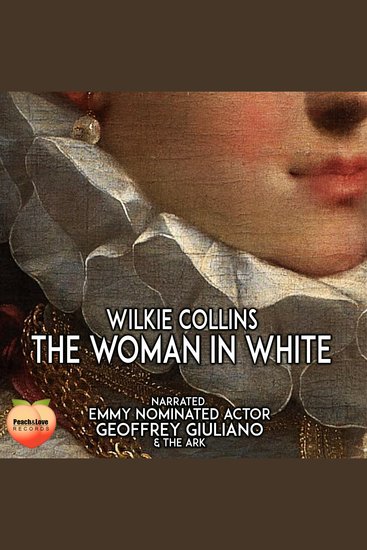
    A trailblazing work in the mystery and sensation fiction genres, "The Woman in White" enthralls readers with its complex plot, intriguing characters, and spine-tingling atmosphere. The story begins with Walter Hartright's chance encounter with a mysterious woman in white, setting off a chain of events that unravels dark secrets, mistaken identities, and psychological suspense. As the narrative unfolds through multiple narrators, including the unforgettable character of the cunning Count Fosco, the novel keeps readers guessing until its thrilling conclusion. 
     
    Wilkie Collins, an English novelist, and playwright, is renowned as a pioneer of the detective fiction genre. His most famous work, "The Woman in White," published in 1859, captivated readers with its intricate plot, suspenseful narrative, and innovative use of multiple narrators. Collins' contributions to mystery and sensation fiction significantly influenced the development of crime literature.
    Zum Buch
  • The Tragedy of a Comic Song - Hilarious story written in the early 20th century - cover

    The Tragedy of a Comic Song -...

    Leonard Merrick

    • 0
    • 0
    • 0
    The bookshelves of British literature are incredible collections that have gathered together centuries of very talented authors.  From these Isles their fame spread and whilst among their number many are now forgotten or neglected their talents endure.  Among them is Walter Besant.
    Zum Buch
  • The Great Gatsby - cover

    The Great Gatsby

    F. Scott Fitzgerald

    • 0
    • 0
    • 0
    The Great Gatsby is a 1925 novel by American writer F. Scott Fitzgerald. Set in the Jazz Age on Long Island, the novel depicts narrator Nick Carraway's interactions with mysterious millionaire Jay Gatsby and Gatsby's obsession to reunite with his former lover, Daisy Buchanan. A youthful romance Fitzgerald had with socialite Ginevra King, and the riotous parties he attended on Long Island's North Shore in 1922 inspired the novel. Following a move to the French Riviera, he completed a rough draft in 1924. He submitted the draft to editor Maxwell Perkins, who persuaded Fitzgerald to revise the work over the following winter. After his revisions, Fitzgerald was satisfied with the text, but remained ambivalent about the book's title and considered several alternatives. After its publication by Scribner's in April 1925, The Great Gatsby received generally favorable reviews, although some literary critics believed it did not hold up to Fitzgerald's previous efforts and signaled the end of the author's literary achievements. Despite the warm critical reception, Gatsby was a commercial failure. The book sold fewer than 20,000 copies by October, and Fitzgerald's hopes of a monetary windfall from the novel were unrealized. When the author died in 1940, he believed himself to be a failure and his work forgotten. After his death, the novel faced a critical and scholarly re-examination amid World War II, and it soon became a core part of most American high school curricula and a focus of American popular culture. Numerous stage and film adaptations followed in the subsequent decades. Gatsby continues to attract popular and scholarly attention. The novel was most recently adapted to film in 2013 by director Baz Luhrmann, while contemporary scholars emphasize the novel's treatment of social class, inherited wealth compared to those who are self-made, race, environmentalism, and its cynical attitude towards the American dream.
    Zum Buch
  • Dracula – Chapter 9: Mina Murray’s Journal - A Chapter-by-Chapter Reading of Bram Stoker’s Classic - cover

    Dracula – Chapter 9: Mina...

    Bram Stoker

    • 0
    • 0
    • 0
    In this chapter, the narrative continues through Mina Murray’s journal as she grows increasingly concerned for her friend Lucy Westenra. Lucy has begun sleepwalking again, slipping out into the night toward the old churchyard overlooking the sea. Mina does her best to watch over her, but a strange presence seems to follow them — a dark figure glimpsed in the moonlight, watching from the shadows. 
    The peaceful seaside atmosphere of Whitby begins to feel unsettling and dangerous. Strange reports circulate in the town following the wreck of the Demeter, and Mina senses that something sinister has arrived on the coast. Lucy’s mysterious exhaustion and pallor only deepen the worry, hinting at a threat neither woman yet understands. 
    This is Chapter 9 of Bram Stoker’s Dracula, narrated by Amazon bestselling horror author Jonathan Dunne — part of a complete chapter-by-chapter audiobook series that brings the Gothic classic to life with haunting atmosphere, rich characterization, and cinematic storytelling. 
    Experience the eerie tension of Lucy’s midnight wanderings, the chilling presence lurking nearby, and the rising dread that Whitby is no longer safe. 
    📖 Public domain text. Original publication: 1897.
    Zum Buch
  • A Middle-Sized Artist - From their pens to your ears genius in every story - cover

    A Middle-Sized Artist - From...

    Charlotte Perkins Gilman

    • 0
    • 0
    • 0
    Charlotte Perkins Gilman was born on 3rd July 1860 in Hartford, Connecticut, to an unaffectionate mother and a father who abandoned her and her older brother to a life of poverty. 
    Inevitably her schooling was limited and by 15 she had attended seven different schools but received only four years education.  However Charlotte was resourceful and did spend time with her father’s aunts – the suffragist Isabella Beecher Hooker and the ‘Uncle Tom Cabin’s’ author, Harriet Beecher Stowe as well as many hours at the public library studying ancient civilisations. 
    In 1878, she enrolled in classes at the Rhode Island School of Design where she met Martha Luther and they developed a close relationship until Luther married in 1881. Charlotte was devastated and detested romance and love until she met and married the artist Charles Walter Stetson.  
    Their only child, Katharine Beecher Stetson, was born in 1885 but left Charlotte with post-natal depression, then often dismissed as a case of hysteria or nerves.  Unsuited to domestic life she ruptured her life and moved to California with Katherine.  She divorced in 1894 and then sent Katharine east to live with her father and his second wife confirming that his paternal rights be acknowledged and that Katherine establish a relationship with her father. 
    After her mother died in 1893, Charlotte moved back east and became involved with her first cousin, Wall Street attorney, Houghton Gilman who she married in 1900. After his death she moved back to California, where Katherine now lived.   
    Her most popular story is ‘The Yellow Wallpaper’ which touched on her own post-partum depression and underlined the need for women to be responsible for their mental and physical well-being, as the narrator is ordered by her husband/doctor to take compete rest in her room where she is isolated and becomes obsessed with the revolting yellow wallpaper.   
    She wrote other notable short stories the best of which we also include.   
    Charlotte lectured widely for social reform, wrote important non-fiction works that questioned our patriarchal system and left a legacy as a leading and positive spokesperson for feminism.  
    She was diagnosed with incurable breast cancer in 1932 and, as she wrote in her suicide note and autobiography, she ‘chose chloroform over cancer’    
    Charlotte Perkins Gilman took her own life on 17th August 1935, aged 75, in Pasadena, California.
    Zum Buch