Join us on a literary world trip!
Add this book to bookshelf
Grey
Write a new comment Default profile 50px
Grey
Subscribe to read the full book or read the first pages for free!
All characters reduced
Under Western Eyes - cover

Under Western Eyes

Joseph Conrad

Publisher: Aeneas Press

  • 0
  • 0
  • 0

Summary

A Petersburg student betrays a revolutionary to the police, is sent by them to Geneva to spy on the exiles, and finds the dead man's sister waiting there. Conrad's father died in Russian exile and he loathed the whole subject; he had a breakdown finishing this book, and it is the most controlled thing he wrote — a study of the informer as the century's representative man.
Available since: 08/19/2026.
Print length: 347 pages.
Other books that might interest you

  • The Phantom Rickshaw and Other Ghost Stories - cover

    The Phantom Rickshaw and Other...

    Rudyard Kipling

    • 0
    • 0
    • 0
    "Not every ghost haunts a castle; some haunt the open road in the midday sun."
    
    In this chilling collection, Rudyard Kipling proves that the bright sun of the Indian subcontinent can be just as terrifying as a dark English manor. The title story, The Phantom Rickshaw, follows Jack Pansay, a man haunted by the literal apparition of the woman he spurned—a ghost that only he can see, appearing in a yellow-paneled rickshaw amidst the fashionable crowds of Simla. From the claustrophobic nightmare of a "living graveyard" in The Strange Ride of Morrowbie Jukes to the eerie whispers of the supernatural in the barracks, Kipling explores the thin veil between reality and madness. These are not just ghost stories; they are psychological thrillers that examine guilt, isolation, and the uncanny friction between East and West.
    
    The Horror of the Mind: What makes Kipling's ghosts so effective is their ambiguity. Is Jack Pansay truly seeing a specter, or is he crumbling under the weight of his own moral failures? Kipling was a pioneer of the "psychological ghost," where the supernatural serves as a manifestation of a character's internal decay.
    
    The Strange Ride of Morrowbie Jukes: Often considered a precursor to modern "weird fiction," this standout story features a man trapped in a literal pit of the "living dead." It is a visceral, terrifying exploration of social collapse and the loss of reason that remains one of Kipling's most disturbing achievements.
    
    Why It Is a Must-Read: The Phantom Rickshaw offers a unique perspective on the Victorian ghost story. By transplanting gothic tropes into the vivid, dusty, and complex landscape of India, Kipling created a brand of horror that feels both exotic and intimately human. It is essential reading for fans of classic suspense and anyone interested in the darker side of the colonial imagination.
    
    Experience the ghosts of the Himalayas. Purchase "The Phantom Rickshaw and Other Ghost Stories" today.
    Show book
  • When I Was a Witch - From their pens to your ears genius in every story - cover

    When I Was a Witch - From their...

    Charlotte Perkins Gilman

    • 0
    • 0
    • 0
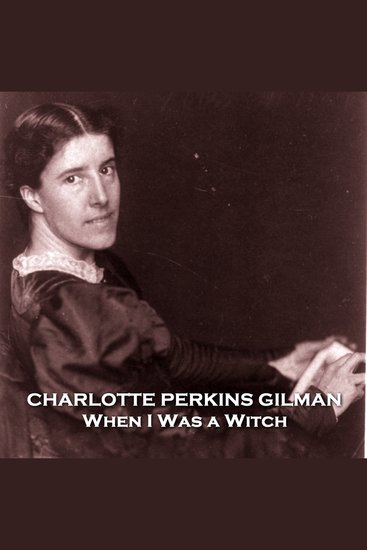
    Charlotte Perkins Gilman was born on 3rd July 1860 in Hartford, Connecticut, to an unaffectionate mother and a father who abandoned her and her older brother to a life of poverty. 
    Inevitably her schooling was limited and by 15 she had attended seven different schools but received only four years education.  However Charlotte was resourceful and did spend time with her father’s aunts – the suffragist Isabella Beecher Hooker and the ‘Uncle Tom Cabin’s’ author, Harriet Beecher Stowe as well as many hours at the public library studying ancient civilisations. 
    In 1878, she enrolled in classes at the Rhode Island School of Design where she met Martha Luther and they developed a close relationship until Luther married in 1881. Charlotte was devastated and detested romance and love until she met and married the artist Charles Walter Stetson.  
    Their only child, Katharine Beecher Stetson, was born in 1885 but left Charlotte with post-natal depression, then often dismissed as a case of hysteria or nerves.  Unsuited to domestic life she ruptured her life and moved to California with Katherine.  She divorced in 1894 and then sent Katharine east to live with her father and his second wife confirming that his paternal rights be acknowledged and that Katherine establish a relationship with her father. 
    After her mother died in 1893, Charlotte moved back east and became involved with her first cousin, Wall Street attorney, Houghton Gilman who she married in 1900. After his death she moved back to California, where Katherine now lived.   
    Her most popular story is ‘The Yellow Wallpaper’ which touched on her own post-partum depression and underlined the need for women to be responsible for their mental and physical well-being, as the narrator is ordered by her husband/doctor to take compete rest in her room where she is isolated and becomes obsessed with the revolting yellow wallpaper.   
    She wrote other notable short stories the best of which we also include.   
    Charlotte lectured widely for social reform, wrote important non-fiction works that questioned our patriarchal system and left a legacy as a leading and positive spokesperson for feminism.  
    She was diagnosed with incurable breast cancer in 1932 and, as she wrote in her suicide note and autobiography, she ‘chose chloroform over cancer’    
    Charlotte Perkins Gilman took her own life on 17th August 1935, aged 75, in Pasadena, California.
    Show book
  • War and Peace (Book Eleven: 1812) - cover

    War and Peace (Book Eleven: 1812)

    Leo Tolstoy

    • 0
    • 0
    • 0
    War and Peace is a literary work mixed with chapters on history and philosophy by the Russian author Leo Tolstoy. It was first published serially, then published in its entirety in 1869. It is regarded as one of Tolstoy's finest literary achievements and remains an internationally praised classic of world literature.
    Book 11: 1812: Absolute continuity of motion is not comprehensible to the human mind. Laws of motion of any kind become comprehensible to man only when he examines arbitrarily selected elements of that motion; but at the same time, a large proportion of human error comes from the arbitrary division of continuous motion into discontinuous elements.
    Show book
  • Jacob's Room - cover

    Jacob's Room

    Virginia Woolf

    • 0
    • 0
    • 0
    Jacob Flanders is never described. He is assembled instead out of what other people notice — his mother's letters, a room in Cambridge, a woman on a bus, sheep's jaws on the beach, an empty pair of shoes. Woolf set the Hogarth Press up in her own dining room and hand-printed the early books; this was her third novel, the one where she abandoned the old machinery for good, and the war does not need to be described either.
    Show book
  • The Prince - Second Edition - cover

    The Prince - Second Edition

    Nicolo Machiavelli

    • 0
    • 0
    • 0
    The most famous and important book on politics ever written 
     
    The Prince remains as lively and shocking today as when it was written almost five hundred years ago. Initially denounced as a collection of sinister maxims and a recommendation of tyranny, it has more recently been defended as the first scientific treatment of politics as it is practiced rather than as it ought to be practiced. Harvey C. Mansfield's brilliant translation of this classic work, along with the new materials added for this edition, make it the definitive version of The Prince, indispensable to scholars, students, and those interested in the dark art of politics. 
     
    This revised edition of Mansfield's acclaimed translation features an updated introduction, a chronology of Machiavelli's life, and notes. 
     
    "Of the other available [translations], that of Harvey C. Mansfield makes the necessary compromises between exactness and readability, as well as providing an excellent introduction and notes."—Clifford Orwin, The Wall Street Journal 
     
    "Mansfield's work . . . is worth acquiring as the best combination of accuracy and readability."—Choice 
     
    "There is good reason to assert that Machiavelli has met his match in Mansfield. . . . [He] is ready to read Machiavelli as he demands to be read—plainly and boldly, but also cautiously."—John Gueguen, The Sixteenth Century Journal 
     
    This audiobook is expertly read and engineered by Peter Coates. It was produced and published by Echo Point Books & Media, an independent bookseller in Brattleboro, Vermont.
    Show book
  • The Beauties - cover

    The Beauties

    Anton Chekhov

    • 0
    • 0
    • 0
    One great example of Chekhov's minimalism is found in The Beauties, a very short "story" - I use the term loosely, because it is really just two snapshots, two unrelated anecdotes in which a man describes seeing true beauty in two different women. These women are imperfect, yet enigmatically alluring.
    Chekhov's genius lies in the way he manages to convey with such apparent effortlessness a profound sense of the mystery of beauty, and of the sadness of those who observe and think. The narrator of this apparently inconsequential tale fixes on exactly the right details, from a myriad of possible ones, to strike at the heart. It's a masterpiece of minimalism.
    Show book