Join us on a literary world trip!
Add this book to bookshelf
Grey
Write a new comment Default profile 50px
Grey
Subscribe to read the full book or read the first pages for free!
All characters reduced
Some Reminiscences - cover

Some Reminiscences

Joseph Conrad

Publisher: DigiCat

  • 0
  • 0
  • 0

Summary

In "Some Reminiscences," Joseph Conrad offers a reflective journey into his life and experiences, primarily focusing on his maritime adventures and artistic development. Written in a rich and evocative literary style, the work intertwines personal anecdotes with broader themes of identity, self-discovery, and the complexity of human experience. Conrad's narrative is characterized by its introspective depth and contemplative tone, providing insights into the formative experiences that shaped his celebrated literary career. The book serves as both memoir and critique, revealing the intricate relationship between life at sea and the craft of fiction, set against the backdrop of the late 19th and early 20th centuries, a period marked by exploration and cultural upheaval. Joseph Conrad, a Polish-born author who spent significant time at sea, drew from his diverse experiences as a sailor and observer of various cultures. These elements deeply influenced his writing, infusing his narratives with a sense of existential inquiry and moral ambiguity. Having navigated the complexities of imperialism and the human psyche, Conrad's insights emerge from a profound understanding of the human condition, shaped by his historical context and personal odyssey. Conrad's "Some Reminiscences" is a compelling read for those interested in literary history, maritime literature, or autobiographical narratives, as it not only sheds light on the author's life but also on the broader currents of his time. Readers will find in this work not only a glimpse into Conrad's mind but also an invitation to reflect on their own experiences, making it an essential addition to any literary collection.
Available since: 09/15/2022.
Print length: 111 pages.
Other books that might interest you

  • Thriving Beyond Glamour: My Journey to Self-Discovery - Unlock self-discovery journeys! Immerse in captivating audio lessons crafted for personal transformation and enlightenment - cover

    Thriving Beyond Glamour: My...

    Archer Ellwood

    • 0
    • 0
    • 0
    Thriving Beyond Glamour: My Journey to Self-Discovery 
    Are you eager to advance your personal journey and deepen your understanding of life's challenges?   
    Looking for a detailed guide that offers all the essentials to discover strength and purpose in the midst of challenges? 
    Look no further! 
    This audiobook is your ultimate companion for enhancing your self-awareness, applying your insights, and engaging in transformative exercises. With this, you're set to thrive. 
    Updated to include fresh perspectives for embracing life's challenges. 
    Key features of this enriching audiobook: 
    - Profound insights about finding strength and purpose in life's challenges 
    - Detailed explanations about the journey to self-discovery 
    - Effective strategies for personal growth and resilience 
    Our audiobook stands out with its in-depth coverage, crucial for triumph in personal transformation. It doesn't just skim the surface but dives deep with accuracy and clarity. 
    Please note that this audiobook is an independent resource aimed solely at benefitting your personal journey. 
    Crafted with a clear structure and accessible language, our guide ensures smooth transitions between topics. Say goodbye to complex jargon and embrace clear, precise, and inspiring content. 
    So, why wait? Click the BUY NOW button, secure your guide, and embark on your journey to self-discovery and personal growth!
    Show book
  • The Turpentine Tree - cover

    The Turpentine Tree

    Lynne Hjelmgaard

    • 0
    • 0
    • 0
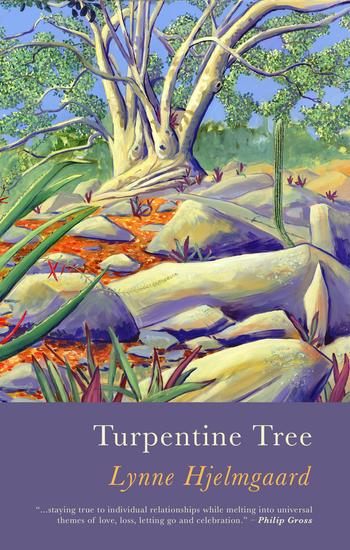
    The Turpentine Tree is an enduring symbol of memory, fragile but enduring the passage of time and still persisting: in the title poem, Lynne Hjelmgaard describes it 'a coppery faux god / with wildly twisted branches'. It might slip into the void, but here it is for now 'flying into the eye of the storm.' Hjelmgaard employs strong, sensuous imagery to capture moments from across her remarkable life.
    These are portraits of family, friends and relationships – of Hjelmgaard's uprooted life, including a life at sea, the subsequent displacement, widowhood and search for connections. Often the remembrances in poems are sweet-bitter, recalling friends and lovers lost, including the writer's late partner Dannie Abse. These explorations of loss are extremely moving, but the poems also communicate the value of a rich bank of memories which range around from spectating on a girl being punished at camp ('Summer Camp'), a Florida roadtrip with friends ('1969'), or an 'Evening Flight from Copenhagen.' Very often the speakers are in transit, travelling through, and so the poems hold onto intense, lucid or epiphanic moments.
    There's an honesty, easiness and at times humour about the language. Vulnerability and strength walk side by side to give an extraordinary depth of experience for the reader. There's a visitation from her dead lover; her husband's spirit is safe in her wardrobe in a plastic bag; her father's ghost is on a WWII battleship in Norfolk Harbour and later waits for her in a crowd of strangers at Miami airport.
    These snapshots are sometimes based on real photographs, or at other times are imaginary photographs; Hjelmgaard questions 'Did we really exist? Yes – / the photograph answers' ('The Photograph Answers'). Threaded throughout all these memories is the gorgeous vividness of nature – the sea, animals, and creatures – which take speakers out of human concerns to a more connected relation with the world. The Turpentine Tree is about intangible presences which open up memory and move beyond it, towards a universal interconnectedness.
    How far back does grief go? What is lost, what can be found? Is memory transferred between us without words, years later, is the unsayable felt? 
    (from 'On the Atlantic Coast of Spain')
    'Lynne Hjelmgaard is truthful yet unrepentant. An American poet, determined to be alive.' - Robert Minhinnick, author of Diary of the Last Man
    'These poems keep a distinctive balance between distance and closeness – a  wide span across decades, between continents, hand in hand with crisp small moments that encapsulate a life. Closeness, too, in the intimacies at the heart of this collection, held with a lucid sensitivity that's never sentimental, staying true to individual relationships while melting into universal themes of love, loss, letting go and celebration.' -   Philip Gross, author of The Thirteenth Angel
    'Who is this person from so many places? Lynne Hjelmgaard grew up in Stuyvesant Town NYC, lived in Denmark, in Paris, in England, in the Caribbean -- did she really sail on a boat? What is she telling us? Everything she carries within, at any time. A unique, unusual life reflected on in poems of intimate address to the reader/companion. Delicate, beautiful, detailed from an amazing memory. Childhood, womanhood, children, aging, loves, mixed as everything is in the one body/mind. Tender and magical.' - Alice Notley, author of For the Ride
    Show book
  • Gentle Breathing - From their pens to your ears genius in every story - cover

    Gentle Breathing - From their...

    Ivan Bunin

    • 0
    • 0
    • 0
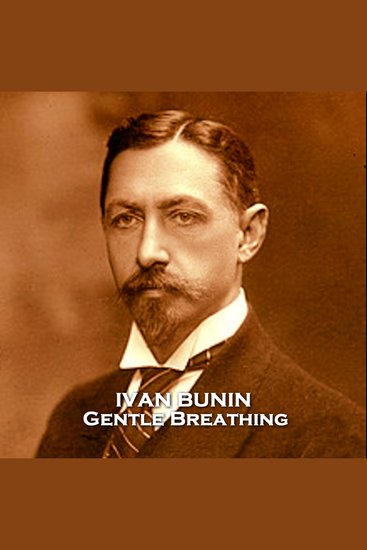
    Ivan Alekseyevich Bunin was born on 22nd October 1870 in Voronezh province, in the South-West of the Russian Empire. 
    His early life was plagued by his Father’s gambling habits which caused his education to be erratic and the family to lose most of their wealth. 
    Bunin published his first poem in 1887 in St Petersburg and later in Oryol he worked for the local paper and became its editor, handily allowing him to publish his own poems and short stories.  There he met and married Varvara Pashchenko.  Ivan Bunin's debut book of poetry ‘Poems (1887–1891)’ was published in 1891. 
    This poetry and his translation of Longfellow garnered him his first Pushkin Prize.  Now he switched to writing prose and his novella ‘Antonov Apples’ is regarded as his first masterpiece.  Many more would follow. 
    The October Revolution of 1905 found Bunin in the Crimea.  Scenes of ‘class struggle’ he saw more as the oppressed people's craving for anarchy and destruction. 
    In November 1906 he began a passionate affair with Vera Muromtseva, within a few months they were touring through Egypt and Palestine.  ‘The Bird's Shadow’ collection was the result.   
    His second Pushkin Prize came in 1909 for Poems (1903–1906) and further translations.  He was now elected to the prestigious Russian Academy. 
    More widespread fame came in 1910 with ‘The Village’, a controversial and bleak portrayal of Russian country life.  Travel too beckoned them back to the Middle East, Ceylon (now Sri Lanka) and for winters in Capri with their friend Maxim Gorky.  
    That friendship suddenly ended in April 1917 as the revolution began to ferment in war-ravaged Russia.  After the Bolsheviks took power and the upheavals continued, he decided to leave Russia, finally achieving that in early 1920.  
    It would take some time to heal the wounds and stress he had been under and for his writing to begin again.  Settled in France, Bunin published many of his previous works and collections of novellas.  He also made regular contributions to the Russian emigre press.  
    Although reluctant to become involved in politics, Bunin was now feted as both a writer and the figurehead of non-Bolshevik Russian values and traditions.  In 1933 he became the first Russian to be awarded the Nobel Prize for Literature ‘for following through and developing with chastity and artfulness the traditions of Russian classic prose.’  
    In 1938 Bunin began working on the celebrated cycle of nostalgic, and erotically themed stories known Dark Avenues (or Dark Alleys).  
    As World War II broke out he chose to remain in Grasse spending the war at his remote Villa Jeanette, high in the mountains.  
    Ivan Bunin was a staunch anti-Nazi, and often, under difficult conditions, sheltered fugitives after Vichy was occupied by the Germans.  He wrote but did not publish during these years until on August 23rd the Nazi’s fled Grasse without a fight.  The next day the Americans came.  
    In May 1945 he returned to Paris and, apart from convalescing at times in Juan-les-Pins, he stayed for the rest of his life. 
    After 1948, with his health deteriorating, Bunin concentrated upon writing his memoirs and a book on Chekhov.  His last years were overshadowed by bitterness and despair at the situation in Russia and the treatment of its peoples.  He was suffering now from asthma, bronchitis and chronic pneumonia. 
    Ivan Alekseyevich Bunin died in a Paris attic flat on 8th November 1953.  Heart failure, cardiac asthma and pulmonary sclerosis were given as the causes of death.  He was 83.
    Show book
  • Amy Carmichael - Rescuer of Precious Gems - cover

    Amy Carmichael - Rescuer of...

    Janet Benge, Geoff Benge

    • 0
    • 0
    • 0
    Amy Carmichael stood on the deck of the steamer, waving good-bye once again to her old friend Robert Wilson. How could she have known she would never see him or the British Isles again? Amy was certain God had called her to India. Indeed! India would be home for the rest of her life.Amy's life was marked by a simple, determined obedience to God, regardless of circumstances. Her story and legacy are stunning reminders of the impact of one person who will fear God and nothing else.Driven by love and compassion, and sustained by faith and determination, Amy Carmichael defied the cruel barriers of India's caste system. The story of this young woman from Northern Ireland is a brilliant, sparkling example of God's love generously poured out to "the least of these among us."
    Show book
  • Road Song - A Memoir - cover

    Road Song - A Memoir

    Natalie Kusz

    • 0
    • 0
    • 0
    In 1969, Natalie Kusz and her family abandoned the city, packed up the car, and headed to Alaska. They ended up a hundred miles from Fairbanks in a dilapidated house surrounded by 258 acres of spruce, birch and willow-and no road. When the first winter came-with Mr. Kusz working in Prudhoe Bay, money running out, and temperatures 60 below-the Kusz family was living so close to disaster that the question was not when it would strike but whom.
    Show book
  • Epaminondas: The Life and Legacy of Ancient Greece’s Greatest General - cover

    Epaminondas: The Life and Legacy...

    Charles River Editors

    • 0
    • 0
    • 0
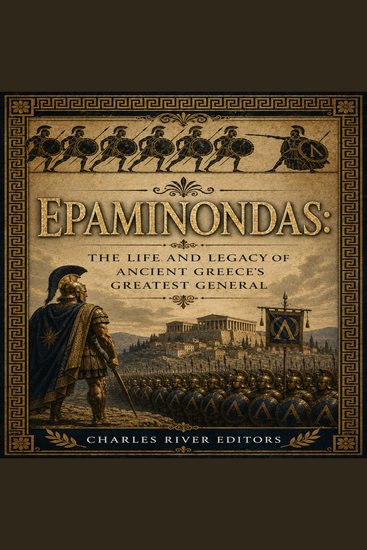
    Modern perceptions of Classical Greece are almost invariably based on Athens and Sparta, but the city-state of Thebes was also a key player in the history of the region during that period, and by the 4th century B.C., Thebes was the major power in Greece for many of the years preceding the emergence of Macedon. The reasons for so little being known about Thebes and its contributions to ancient Greek civilization are complex, but the fact that it was totally destroyed by Alexander the Great is certainly one. 	Those points notwithstanding, Thebes was an important city-state, served as the scene of many of the great myths of Greece, and developed a reputation for military might and tactical genius that was well-deserved. Thebes’ rise and fall are subjects well worthy of study, and ones that provide invaluable insights into how ancient Greek politics worked, especially in relation to the constantly changing pattern of alliances. Thebes also provided inspirational stories of individual and group heroism in the face of huge odds.  
    	At the center of it all was a general and statesman who changed the face of Greece on the battlefield and off of it, revolutionizing ancient warfare in the process. Over the course of a little more than a decade, Epaminondas shattered Spartan military dominance, liberated entire populations from centuries of slavery, and transformed his homeland from a regional power to a powerhouse at the center of Greek affairs. His victories ushered in a new era that altered the balance of power that had long defined Greece, and he established a new political order that, while short-lived, drastically reshaped the region. In fact, Epaminondas’ military lessons were passed down to a Macedonian noble who was held as a hostage in Thebes through his childhood: Philip II of Macedon, who initiated the rise of the Macedonian kingdom that his son Alexander would turn into the largest empire the world had ever seen. 
    Show book