Join us on a literary world trip!
Add this book to bookshelf
Grey
Write a new comment Default profile 50px
Grey
Subscribe to read the full book or read the first pages for free!
All characters reduced
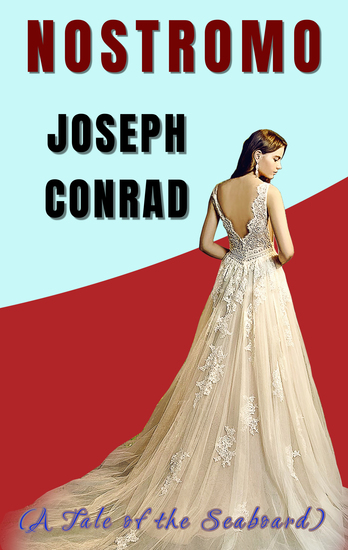
Nostromo - (A Tale of the Seaboard) - cover

Nostromo - (A Tale of the Seaboard)

Joseph Conrad

Publisher: E-Kitap Projesi & Cheapest Books

  • 0
  • 0
  • 0

Summary

So foul a sky clears not without a storm."
—SHAKESPEARE

"Nostromo" is the most anxiously meditated of the longer novels which belong to the period following upon the publication of the "Typhoon" volume of short stories.

I don't mean to say that I became then conscious of any im-pending change in my mentality and in my attitude towards the tasks of my writing life. And perhaps there was never any change, except in that mysterious, extraneous thing which has nothing to do with the theories of art; a subtle change in the nature of the inspiration; a phenomenon for which I can not in any way be held responsible. What, however, did cause me some concern was that after finishing the last story of the "Typhoon" volume it seemed somehow that there was nothing more in the world to write about.

This so strangely negative but disturbing mood lasted some lit-tle time; and then, as with many of my longer stories, the first hint for "Nostromo" came to me in the shape of a vagrant anecdote completely destitute of valuable details.

As a matter of fact in 1875 or '6, when very young, in the West Indies or rather in the Gulf of Mexico, for my contacts with land were short, few, and fleeting, I heard the story of some man who was supposed to have stolen single-handed a whole lighter-full of silver, somewhere on the Tierra Firme seaboard during the trou-bles of a revolution.
Available since: 01/05/2025.
Print length: 600 pages.

Other books that might interest you

  • Places Like These - cover

    Places Like These

    Lauren Carter

    • 0
    • 0
    • 0
    Finalist for the 2023 Foreword INDIES Book of the Year Awards
    A widow visits a spiritualist community to attempt to contact her late husband. A grieving teenager confronts the unfairness of his small-town world and the oncoming ecological disaster. A sexual assault survivor navigates her boyfriend's tricky family and her own confusing desires. A mother examines unresolved guilt while seeking her missing daughter in a city slum. A lover exploits his girlfriend's secrets for his own purposes. Whether in Ecuador or San Francisco, rural Ontario or northern Manitoba, the landscape in each of Carter's poignant short stories reflects each character's journey.
    Psychologically complex and astute, Places Like These plumbs the vast range of human reactions to those things which make us human—love, grief, friendship, betrayal, and the intertwined yet contrasting longing for connection and independence.
    Show book
  • Gentle Breathing - From their pens to your ears genius in every story - cover

    Gentle Breathing - From their...

    Ivan Bunin

    • 0
    • 0
    • 0
    Ivan Alekseyevich Bunin was born on 22nd October 1870 in Voronezh province, in the South-West of the Russian Empire. 
    His early life was plagued by his Father’s gambling habits which caused his education to be erratic and the family to lose most of their wealth. 
    Bunin published his first poem in 1887 in St Petersburg and later in Oryol he worked for the local paper and became its editor, handily allowing him to publish his own poems and short stories.  There he met and married Varvara Pashchenko.  Ivan Bunin's debut book of poetry ‘Poems (1887–1891)’ was published in 1891. 
    This poetry and his translation of Longfellow garnered him his first Pushkin Prize.  Now he switched to writing prose and his novella ‘Antonov Apples’ is regarded as his first masterpiece.  Many more would follow. 
    The October Revolution of 1905 found Bunin in the Crimea.  Scenes of ‘class struggle’ he saw more as the oppressed people's craving for anarchy and destruction. 
    In November 1906 he began a passionate affair with Vera Muromtseva, within a few months they were touring through Egypt and Palestine.  ‘The Bird's Shadow’ collection was the result.   
    His second Pushkin Prize came in 1909 for Poems (1903–1906) and further translations.  He was now elected to the prestigious Russian Academy. 
    More widespread fame came in 1910 with ‘The Village’, a controversial and bleak portrayal of Russian country life.  Travel too beckoned them back to the Middle East, Ceylon (now Sri Lanka) and for winters in Capri with their friend Maxim Gorky.  
    That friendship suddenly ended in April 1917 as the revolution began to ferment in war-ravaged Russia.  After the Bolsheviks took power and the upheavals continued, he decided to leave Russia, finally achieving that in early 1920.  
    It would take some time to heal the wounds and stress he had been under and for his writing to begin again.  Settled in France, Bunin published many of his previous works and collections of novellas.  He also made regular contributions to the Russian emigre press.  
    Although reluctant to become involved in politics, Bunin was now feted as both a writer and the figurehead of non-Bolshevik Russian values and traditions.  In 1933 he became the first Russian to be awarded the Nobel Prize for Literature ‘for following through and developing with chastity and artfulness the traditions of Russian classic prose.’  
    In 1938 Bunin began working on the celebrated cycle of nostalgic, and erotically themed stories known Dark Avenues (or Dark Alleys).  
    As World War II broke out he chose to remain in Grasse spending the war at his remote Villa Jeanette, high in the mountains.  
    Ivan Bunin was a staunch anti-Nazi, and often, under difficult conditions, sheltered fugitives after Vichy was occupied by the Germans.  He wrote but did not publish during these years until on August 23rd the Nazi’s fled Grasse without a fight.  The next day the Americans came.  
    In May 1945 he returned to Paris and, apart from convalescing at times in Juan-les-Pins, he stayed for the rest of his life. 
    After 1948, with his health deteriorating, Bunin concentrated upon writing his memoirs and a book on Chekhov.  His last years were overshadowed by bitterness and despair at the situation in Russia and the treatment of its peoples.  He was suffering now from asthma, bronchitis and chronic pneumonia. 
    Ivan Alekseyevich Bunin died in a Paris attic flat on 8th November 1953.  Heart failure, cardiac asthma and pulmonary sclerosis were given as the causes of death.  He was 83.
    Show book
  • Fear - From their pens to your ears genius in every story - cover

    Fear - From their pens to your...

    Catherine Wells

    • 0
    • 0
    • 0
    Little information survives on Catherine’s life. 
    She was born Amy Catherine Robbins in 1872. 
    In about 1892 she was a student in a biology cramming class where the teacher was H G Wells.  Though married he was quickly attracted to his student and within a short time they were living together in Woking, Surrey.  He then divorced his first wife and married Catherine in October 1895 at St Pancras register office. 
    In the early years they were poor to the point that they could not afford to start a family.  When they did they had two children; Philip in 1901 and Frank two years later. 
    For much of her life she seemed to pursue other interests, being a mother, a gardener, running much of her husband’s business affairs and this seemed to leave little time for her own literary pursuits.  She published little during her lifetime apart from a few poems and some short stories.  Indeed her prodigiously talented husband even referred to her as ‘Jane’ and soon all around her did too, her writing life seemingly in another personality far, far away.   
    By the mid 20’s she was ill with cancer and succumbed to its advance in 1927. 
    Wells, although wayward and promiscuous during much of the marriage, now attempted to put his wife’s literary merits into book form and published ‘The Book of Catherine Wells’, a collection of short stories and poems.
    Show book
  • Browdean Farm - From their pens to your ears genius in every story - cover

    Browdean Farm - From their pens...

    A M Burrage

    • 0
    • 0
    • 0
    Alfred McLelland Burrage was born in Hillingdon, Middlesex on 1st July, 1889. His father and uncle were both writers, primarily of boy’s fiction, and by age 16 AM Burrage had joined them.  The young man had ambitions to write for the adult market too.  The money was better and so was his writing. 
    From 1890 to 1914, prior to the mainstream appeal of cinema and radio the printed word, mainly in magazines, was the foremost mass entertainment.  AM Burrage quickly became a master of the market publishing his stories regularly across a number of publications. 
    By the start of the Great War Burrage was well established but in 1916 he was conscripted to fight on the Western Front. He continued to write during these years documenting his experiences in the classic book War is War by Ex-Private X. 
    For the remainder of his life Burrage was rarely printed in book form but continued to write and be published on a prodigious scale in magazines and newspapers.  In this volume we concentrate on his supernatural stories which are, by common consent, some of the best ever written.  Succinct yet full of character each reveals a twist and a flavour that is unsettling…..sometimes menacing….always disturbing.
    Show book
  • Valentines in an Apocalypse - A System Apocalypse short story - cover

    Valentines in an Apocalypse - A...

    Tao Wong

    • 0
    • 0
    • 0
    What happens when the apocalypse is over; to love, strained and torn?  
       
    How do you pick up the pieces, when life stabilises?  
       
    It's a question our heroes must ask themselves, when they're no longer fighting off swarms of monsters, no longer struggling for Credits and Levels.  
       
    Valentines in the Apocalypse is set four years after the System Apocalypse has arrived, between books 5 and 6 of the System Apocalypse and features new characters. The story is set in Vancouver, BC.
    Show book
  • Rheinbach’s Remedies - A Short Story - cover

    Rheinbach’s Remedies - A Short...

    Robert Brighton

    • 0
    • 0
    • 0
    In Rheinbach's Remedies, we travel back in time to the high-water mark of the patent medicine era, when millions could be made from a good cure-all. Envious of the success of a local patent medicine kingpin, Dr. Franklin Rheinbach decides to concoct his own line of elixirs. All goes well--very well--for Dr. Rheinbach . . . until he finds that success and fame have their price.
    Show book