Join us on a literary world trip!
Add this book to bookshelf
Grey
Write a new comment Default profile 50px
Grey
Subscribe to read the full book or read the first pages for free!
All characters reduced
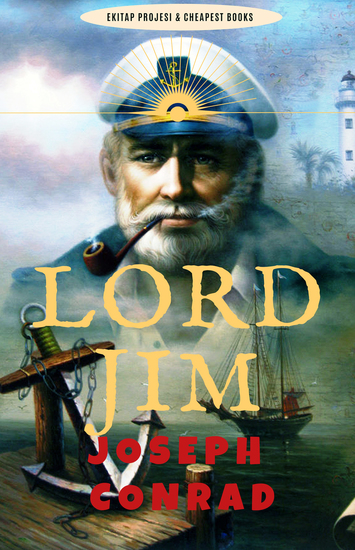
Lord Jim - cover

Lord Jim

Joseph Conrad

Publisher: E-Kitap Projesi & Cheapest Books

  • 0
  • 0
  • 0

Summary

Lord Jim is a novel by Joseph Conrad originally published as a serial in Blackwood's Magazine from October 1899 to November 1900. An early and primary event is the abandonment of a ship in distress by its crew including the young British seaman Jim. He is publicly censured for this action and the novel follows his later attempts at coming to terms with his past. In 1998, the Modern Library ranked Lord Jim #85 on its list of the 100 best English language novels of the 20th century.

Jim (his surname is never told), a young British seaman, becomes first mate on the Patna, a ship full of pilgrims traveling to Mecca for the hajj. When the ship starts rapidly taking on water and disaster seems imminent, Jim joins his captain and other crew members in abandoning the ship and its passengers. A few days later, they are picked up by a British ship.

However, the Patna and its passengers are later also saved, and the reprehensible actions of the crew are exposed. The other participants evade the judicial court of inquiry, leaving Jim to the court alone. The court strips him of his navigation command certificate for his dereliction of duty. Jim is angry with himself, both for his moment of weakness, and for missing an opportunity to be a 'hero'.
Available since: 11/30/2023.
Print length: 400 pages.
Other books that might interest you

  • 100 Legendary Fairy Tales of All Time - cover

    100 Legendary Fairy Tales of All...

    Hans Christian Andersen, Andrew...

    • 0
    • 0
    • 0
    Included 1. The Princess and the Pea by Hans Christian Andersen2. Little Ida's Flowers by Hans Christian Andersen3. Little Tiny or Thumbelina by Hans Christian Andersen4. The Saucy Boy by Hans Christian Andersen5. The Travelling Companion by Hans Christian Andersen6. This Fable is Intended for You by Hans Christian Andersen7. The Talisman by Hans Christian Andersen8. God Can Never Die by Hans Christian Andersen9. The Little Mermaid by Hans Christian Andersen10. The Emperor's New Suit by Hans Christian Andersen11. The Frog-King, or Iron Henry by The Brothers Grimm12. Cat and Mouse in Partnership by The Brothers Grimm13. Our Lady's Child by The Brothers Grimm14. The Story of the Youth Who Went Forth to Learn What Fear Was by The Brothers Grimm15. The Wolf and the Seven Little Kids by The Brothers Grimm16. Faithful John by The Brothers Grimm17. The Good Bargain by The Brothers Grimm18. The Strange Musician by The Brothers Grimm »19. The Twelve Brothers by The Brothers Grimm20. The Pack of Ragamuffins by The Brothers Grimm21. The Bronze Ring by Andrew Lang22. Prince Hyacinth and the Dear Little Princess by Andrew Lang23. Little Red Riding Hood by Andrew Lang24. The Sleeping Beauty in the Wood by Andrew Lang25. Beauty and the Beast by Andrew Lang26. The Water-Lily. The Gold-Spinners by Andrew Lang      27. The Terrible Head by Andrew Lang28. The History of Whittington by Andrew Lang29. Prince Darling by Andrew Lang30. The Brave Little Tailor by Andrew Lang31. The History of Jack the Giant-Killer by Andrew Lang32. The Black Bull of Norroway by Andrew Lang33. The Sleeping Beauty in the Wood by Charles Perrault34. Blue Beard by Charles Perrault35. Master Cat by Charles Perrault36. The Fairies by Charles Perrault37. Riquet with the Tuft by Charles Perrault38. Beauty and the Beast by Charles Perrault39. Princess Minute and King Floridor by Charles Perrault  by Charles Perrault40. Prince Chéri BY CHARLES PERRAULT41. Young and Handsome by Charles Perrault42. The Palace of Revenge by Charles Perrault43. East of the Sun and West of the Moon by Peter Christen Asbjørnsen, & Jørgen Moe44. The Blue Belt  by Peter Christen Asbjørnsen, & Jørgen Moe45. Prince Lindworm by Peter Christen Asbjørnsen, & Jørgen Moe46. The Lassie and Her Godmother by Peter Christen Asbjørnsen, & Jørgen Moe47. The Husband Who Was to Mind the House by Peter Christen Asbjørnsen, & Jørgen Moe48. The Lad Who Went to the North Wind by Peter Christen Asbjørnsen, & Jørgen Moe49. The Three Princesses of Whiteland by Peter Christen Asbjørnsen, & Jørgen Moe50. Soria Moria Castle by Peter Christen Asbjørnsen, & Jørgen Moe51. The Giant Who Had No Heart in His Body by Peter Christen Asbjørnsen, & Jørgen Moe 52. The Princess on the Glass Hill by Peter Christen Asbjørnsen, & Jørgen Moe53. Connla and the Fairy Maiden by Joseph Jacob54. Guleesh  by Joseph Jacob55. The Field of Boliauns  by Joseph Jacob56. The Horned Women  by Joseph Jacob57. Conall Yellowclaw  by Joseph Jacob58. Hudden and Dudden and Donald O'Neary  by Joseph Jacob59. The Shepherd of Myddvai  by Joseph Jacob60. The Sprightly Tailor  by Joseph Jacob61. The Story of Deirdre  by Joseph Jacob62. Munachar and Manachar by Joseph Jacob63. Green Willow by Grace James64. The Flute  by Grace James65. The Tea-Kettle  by Grace James66. The Peony Lantern  by Grace James67. The Sea King and the Magic Jewels  by Grace James68. The Good Thunder  by Grace James69. The Black Bowl  by Grace James70. The Star Lovers  by Grace James71. Horaizan  by Grace James72. Reflections  by Grace James73. The Young King  by Oscar Wilde74. The Birthday of the Infanta  by Oscar Wilde75. The Star-Child  by Oscar Wilde76. The Happy Prince by Oscar Wilde77. The Nightingale78. The Selfish Giant by Oscar Wilde and more...
    Show book
  • The Bride comes to Yellow Sky - cover

    The Bride comes to Yellow Sky

    Stephen Crane

    • 0
    • 0
    • 0
    An 1898 western short story by American author Stephen Crane. The story's protagonist is a Texas marshal named Jack Potter, who is returning to the town of Yellow Sky with his eastern bride. Potter's nemesis, the gunslinger Scratchy Wilson, drunkenly plans to accost the sheriff after he disembarks the train, but he changes his mind upon seeing the unarmed man with his bride.
    Show book
  • White Magic - From their pens to your ears genius in every story - cover

    White Magic - From their pens to...

    Ella D'Arcy

    • 0
    • 0
    • 0
    Ella D'Arcy was born on 23rd August 1857 in London, one of nine children.  
    Her education spanned London, Germany, France and the Channel Islands. A student of fine art, her poor eyesight meant a switch to literature was needed and with this she had hopes to be an author. 
    She worked as a contributor and unofficial editor, alongside Henry Harland, to The Yellow Book, Aubrey Beardsley’s sensational quarterly magazine that combined art, stories, poetry, essays and much else besides.  D'Arcy wrote several stories for the magazine and her stories have an undeniable psychological and realist style through her engagement with various themes from marriage, the family, imitation through to deception.  
    Recognition of her talents grew after the publication of ‘Irremediable’, in the Yellow Book, where it received much praise from critics.   
    She also wrote and published in the Argosy, Blackwood's Magazine, and Temple Bar.  
    However, D’Arcy’s canon was small and, apart from her magazine stories, her book publishing was limited to ‘Monochromes’ (1895), ‘Modern Instances’ and ‘The Bishop’s Dilemma’ (1898). She also translated André Maurois's biography of Percy Bysshe Shelley entitled ‘Ariel’ (1924). 
    Her diligence with work aside she was notorious for her inability to maintain relationships with friends.  When she did appear to them it was often unannounced.  This earned her the sobriquet 'Goblin Ella.' 
    D'Arcy spent much of her life living alone, though she had a constant urge to travel, but usually she resided on the edge of poverty. Her writing was often motivated by this need. 
    Much of her later life was spent in Paris before returning to London in 1937, where she died, in hospital, on 5th September 1937.
    Show book
  • The Machine Stops - Classic Tales Edition - cover

    The Machine Stops - Classic...

    E. M. Forster

    • 0
    • 0
    • 0
    The earth's surface is no longer habitable. All humanity is sequestered beneath the ground, couched in isolation and contentment. The Machine provides the needs of humanity. Mankind becomes subservient drones to the life-supporting Machine. But what happens when the Machine stops?
    Show book
  • The Masque of the Red Death - cover

    The Masque of the Red Death

    Edgar Allan Poe

    • 0
    • 0
    • 0
    "The Masque of the Red Death" (originally published as "The Mask of the Red Death: A Fantasy") is a short story by American writer Edgar Allan Poe, first published in 1842. The story follows Prince Prospero's attempts to avoid a dangerous plague, known as the Red Death, by hiding in his abbey. He, along with many other wealthy nobles, hosts a masquerade ball in seven rooms of the abbey, each decorated with a different color. In the midst of their revelry, a mysterious figure disguised as a Red Death victim enters and makes his way through each of the rooms. Prospero dies after confronting this stranger, whose "costume" proves to contain nothing tangible inside it; the guests also die in turn.
    
    Poe's story follows many traditions of Gothic fiction and is often analyzed as an allegory about the inevitability of death, though some critics advise against an allegorical reading. Many different interpretations have been presented, as well as attempts to identify the true nature of the eponymous disease. The story was first published in May 1842 in Graham's Magazine and has since been adapted in many different forms, including a 1964 film starring Vincent Price. Poe's short story has also been alluded to by other works in many types of media.
    Show book
  • Moby Dick: Glimpses into the narrative's key themes - A Group Discussion - cover

    Moby Dick: Glimpses into the...

    Vines Graener

    • 0
    • 0
    • 0
    Welcome to Moby Dick: Glimpses into the Narrative’s Key Themes. In this audiobook, we delve into the complex layers of Herman Melville’s monumental work, Moby Dick. More than just a tale of obsession and revenge, Melville’s masterpiece explores themes of fate, free will, the power of nature, and the limits of human knowledge. Through a close examination of key moments in the narrative, we will explore how Captain Ahab’s relentless pursuit of the great white whale symbolizes humanity’s struggle against forces beyond its control. Join us on this journey across the high seas to discover the deep philosophical questions and moral dilemmas that make Moby Dick one of the greatest literary works in the Western canon.
    Show book