Join us on a literary world trip!
Add this book to bookshelf
Grey
Write a new comment Default profile 50px
Grey
Subscribe to read the full book or read the first pages for free!
All characters reduced
Days with Sir Roger De Coverley - cover

Days with Sir Roger De Coverley

Joseph Addison, Richard Steele

Publisher: DigiCat

  • 0
  • 0
  • 0

Summary

Days with Sir Roger De Coverley offers a vivid exploration of 18th-century life, encapsulating a rich tapestry of literary styles and themes woven together by the masterful prose of Joseph Addison and Richard Sir Steele. The collection, while rooted in the periodical tradition of the time, transcends mere commentary to present a lively and nuanced portrayal of English country life, social customs, and intellectual discourse. Through diverse narratives and vivid depictions, the anthology invites readers into the whimsical yet profound world of Sir Roger De Coverley, rendering an insightful glimpse into the complexities of society and human nature. The anthology is a testament to the collaborative genius of Addison and Steele, both pivotal figures in the early 18th-century literary scene and key architects of The Spectator. Their works within this collection illustrate an intimate understanding of human follies and virtues, capturing the essence of the social and political landscape of their era. The combined narratives reflect the Enlightenment's philosophical undercurrents, with their emphasis on reason, introspection, and societal critique, offering a dynamic interplay of wit and moral exploration that still resonates with contemporary readers. This volume is indispensable for those seeking to immerse themselves in the stylistic and thematic richness of Addison and Steele's works. It presents an opportunity to engage with the multiplicity of perspectives, balancing satire with earnest social commentary. Readers are encouraged to savor the anthology for its ability to not only entertain but also to educate, acting as both a portal to understand historical contexts and a conversation starter for ongoing dialogue about the interaction between society and literature.
Available since: 09/15/2022.
Print length: 27 pages.
Other books that might interest you

  • Noachic & Flood Traditions: Enoch Giants and the Great Deluge Across Apocrypha - Ancient Jewish & Christian Retellings That Expand Genesis’ Flood and the Watcher Myth - A Modern Translation - Adapted for the Contemporary Reader - cover

    Noachic & Flood Traditions:...

    Various Ancient Writers

    • 0
    • 0
    • 0
    What if the Genesis flood saga was only a fragment of a grander cosmic battle—where rebellious angels, giant offspring, and divine wrath shaped human destiny? 
    In this modern presentation, probe the expanded flood narratives found in 1 Enoch’s Book of the Watchers, Jubilees, 2 Enoch, and the Book of Giants. See how Qumran’s Genesis Apocryphon adds depth, painting a world under siege by heavenly watchers whose fateful sin triggers global cataclysm. 
    Included Texts:1 Enoch & Book of Giants – Angelic descent, forbidden knowledge, and giant hybrid beings.2 Enoch & 3 Enoch – Enoch’s further visions of heavenly realms and cosmic order.Jubilees & Genesis Apocryphon – Detailed genealogies, moral codes, and retold flood accounts.Testament of Amram – Glimpses of watchers and their realm. 
    What You’ll Discover Inside:A Deeper Flood Narrative – Spiritual forces, advanced learning, and the moral impetus behind the deluge.Giant Offspring & Cosmic Judgment – Explore the link between angelic rebellion and global catastrophe.Revered & Controversial – Why these stories fascinated early Jews and Christians but remained outside mainstream canon.Foundations for Later Myth & Doctrine – Trace how watchers influenced demonology, eschatology, and even modern “ancient aliens” debates. 
    Dive into the cosmic drama behind Noah’s ark. Witness the watchers’ downfall, the giants’ demise, and a flood that cleanses creation’s corruption.
    Show book
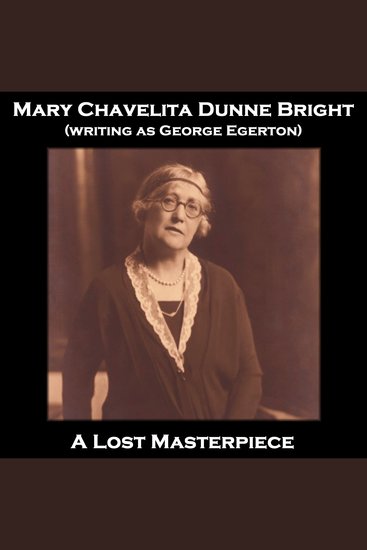
  • A Lost Masterpiece - From their pens to your ears genius in every story - cover

    A Lost Masterpiece - From their...

    Mary Chavelita Dunne Bright...

    • 0
    • 0
    • 0
    The bookshelves of British literature are incredible collections that have gathered together centuries of very talented authors.  From these Isles their fame spread and whilst among their number many are now forgotten or neglected their talents endure.  Among them is Mary Chavelita Dunne Bright.
    Show book
  • Walking on Thin Air - A Life's Journey in 99 Steps - cover

    Walking on Thin Air - A Life's...

    Geoff Nicholson

    • 0
    • 0
    • 0
    Geoff Nicholson has been walking his whole life. Wherever he is and wherever he goes in the world, he walks and writes about what he sees and feels. Here he reflects on the nature of walking, why we do it, how it benefits us and, in some cases, how it can damage and even destroy us. Geoff's recent diagnosis with a rare, incurable form of cancer has made him all too aware of his own mortality. Sooner or later there will be a last step, a last excursion, a final drift, for him just as there will be for all of us. Geoff vows to continue to walk for as long as he can.
    This moving, vital book describes his own walks and relates them to the walks of street photographers, artists and writers, such as Garry Winogrand, Diane Arbus, Sophie Calle, Jorge Luis Borges and Virginia Woolf, among many others. Walking on Thin Air is a book about mortality and, above all, a celebration of being alive.
    Show book
  • Reader I Married Him - Stories Inspired by Jane Eyre - cover

    Reader I Married Him - Stories...

    Anonymous

    • 0
    • 0
    • 0
    This collection of original stories by today’s finest women writers—including Tracy Chevalier, Francine Prose, Elizabeth McCracken, Tessa Hadley, Audrey Niffenegger, and more—takes inspiration from the famous line in Charlotte Brontë’s most beloved novel, Jane Eyre. 
    A fixture in the literary canon, Charlotte Brontë is revered by readers all over the world. Her novels featuring unforgettable, strong heroines still resonate with millions today. And who could forget one of literature’s best-known lines: “Reader, I married him” from her classic novel Jane Eyre? 
    Part of a remarkable family that produced three acclaimed female writers at a time in 19th-century Britain when few women wrote, and fewer were published, Brontë has become a great source of inspiration to writers, especially women, ever since. Now in Reader, I Married Him, twenty of today’s most celebrated women authors have spun original stories, using the famous line from Jane Eyre as a springboard for their own flights of imagination. 
    Unique, inventive, and poignant, the stories in Reader, I Married Him pay homage to the literary genius of Charlotte Brontë, and demonstrate once again that her extraordinary vision continues to inspire readers and writers.
    Show book
  • Tremors in the Blood - Murder Obsession and the Birth of the Lie Detector - cover

    Tremors in the Blood - Murder...

    Amit Katwala

    • 0
    • 0
    • 0
    Late one evening in the summer of 1922, Henry Wilkens burst through the doors of the emergency room covered in his wife’s blood. But was he a grieving husband or a ruthless killer who conspired with bandits to have her murdered? To find out, the San Francisco police turned to technology and a new machine that had just been invented in Berkeley by a rookie detective, a visionary police chief, and a teenage magician with a showman’s touch. John Larson, Gus Vollmer, and Leonarde Keeler hoped the lie detector would make the justice system fairer, but the flawed device soon grew too powerful for them to control. It poisoned their lives, turned fast friends into bitter enemies, and, as it conquered America and the world, transformed our relationship with the truth in ways that are still being felt. As new forms of lie detection gain momentum in the present day, Tremors in the Blood reveals the incredible truth behind the creation of the polygraph, through gripping true-crime cases featuring explosive gunfights, shocking twists, and high-stakes courtroom drama. Touching on psychology, technology, and the science of the truth, Tremors in the Blood is a vibrant, atmospheric thriller and a warning from history: beware what you believe.
    Show book
  • A Wireless Message - From their pens to your ears genius in every story - cover

    A Wireless Message - From their...

    Ambrose Bierce

    • 0
    • 0
    • 0
    Ambrose Gwinnett Bierce was born on 24th June 1842 at Horse Cave Creek in Meigs County, Ohio. His parents were poor but they introduced him to literature at an early age, instilling in him a deep appreciation of books, the written word and the elegance of language.  
    Growing up in Koscuisko County, Indiana poverty and religion were defining features of his childhood, and he would later describe his parents as “unwashed savages” and fanatically religious, showing him little affection but always quick to punish. He came to resent religion, and his introduction to literature appears to be their only positive effect. 
    At age 15 Bierce left home to become a printer’s devil, mixing ink and fetching type at The Northern Indian, a small Ohio paper. Falsely accused of theft he returned to his farm and spent time sending out work in the hopes of being published. 
    His Uncle Lucius advised he be sent to the Kentucky Military Institute. A year later he was commissioned as an Officer.  As the Civil War started Bierce enlisted in the 9th Indiana Infantry Regiment.  
    In April 1862 Bierce fought at the Battle of Shiloh, an experience which, though terrifying, became the source of several short stories. Two years later he sustained a serious head wound and was off duty for several months. He was discharged in early 1865.  
    A later expedition to inspect military outposts across the Great Plains took him all the way to San Francisco. He remained there to become involved with publishing and editing and to marry, Mary Ellen on Christmas Day 1871.  They had a child, Day, the following year.  
    In 1872 the family moved to England for 3 years where he wrote for Fun magazine. His son, Leigh, was born, and first book, ‘The Fiend’s Delight’, was published.  
    They returned to San Francisco and to work for a number of papers where he gained admiration for his crime reporting. In 1887 he began a column at the William Randolph Hearst’s San Francisco Examiner.  
    Bierce’s marriage fell apart when he discovered compromising letters to his wife from a secret admirer. The following year, 1889 his son Day committed suicide, depressed by romantic rejection. 
    In 1891 Bierce wrote and published the collection of 26 short stories which included ‘An Occurrence at Owl Creek Bridge’.  Success and further works including poetry followed.  
    Bierce with Hearst’s resources helped uncover a financial plot by a railroad to turn 130 million dollars of loans into a handout. Confronted by the railroad and asked to name his price Bierce answered “my price is $130 million dollars. If, when you are ready to pay, I happen to be out of town, you may hand it over to my friend, the Treasurer of the United States”.  
    He now began his first foray as a fabulist, publishing ‘Fantastic Fables’ in 1899.  But tragedy again struck two years later when his second son Leigh died of pneumonia relating to his alcoholism.  
    He continued to write short stories and poetry and also published ‘The Devil’s Dictionary’.  
    At the age of 71, in 1913 Bierce departed from Washington, D.C., for a tour of the battlefields where he had fought during the civil war. At the city of Chihuahua he wrote his last known communication, a letter to a friend. It’s closing words were “as to me, I leave here tomorrow for an unknown destination,” Ambrose Bierce then vanished without trace.
    Show book