Join us on a literary world trip!
Add this book to bookshelf
Grey
Write a new comment Default profile 50px
Grey
Subscribe to read the full book or read the first pages for free!
All characters reduced
Love Unplugged: A 14-Day Reset to Break Dating App Burnout and Reignite Real Attraction - Step Away from Endless Swipes Rebuild Confidence and Create Space for Genuine Connection - cover

Love Unplugged: A 14-Day Reset to Break Dating App Burnout and Reignite Real Attraction - Step Away from Endless Swipes Rebuild Confidence and Create Space for Genuine Connection

Jordan Warner

Publisher: BookRix

  • 0
  • 0
  • 0

Summary

Endless swipes. Dry chats. Matches that lead nowhere. If modern dating apps have left you exhausted, frustrated, and questioning your love life, it’s time for a reset. Burnout doesn’t mean you’re broken—it means you need a smarter approach.Love Unplugged is your 14-day guide to reclaiming your energy, clarity, and hope for love. In just two weeks, you’ll follow a simple, structured detox that helps you step away from the noise of dating apps, rebuild your confidence, and reset your mindset. You’ll learn how to cut through the overwhelm, set healthier boundaries with technology, and reconnect with yourself so you can attract matches that actually align with what you want.Packed with practical exercises, daily prompts, and motivational strategies, this book empowers you to detox from app fatigue and step back into dating with renewed energy. The break you need could be the breakthrough you’ve been waiting for.
Available since: 09/16/2025.
Other books that might interest you

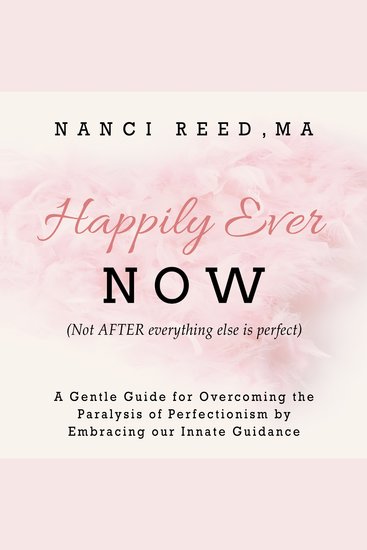
  • Happily Ever Now - (Not AFTER Everything Is Perfect) A Gentle Guide for Overcoming the Paralysis of Perfectionism by Embracing our Innate Guidence - cover

    Happily Ever Now - (Not AFTER...

    Nanci Reed

    • 0
    • 0
    • 0
    Happily Ever NOW recounts the strange and seemingly impossible journey that inspired Nanci's unique methods for personal transformation and self-healing. It’s not just another self-help book, it's also a memoir that recounts Nanci's unique journey and methods for personal transformation and self-healing. Using her vast personal and professional experiences, as well as her graduate degree in Psychology, Nanci shares a 12-week course of illuminating self-guided explorations to help you transform your life. And all that's needed to join is a journal, a kind and curious heart, and an open mind. 
    Happily Ever NOW is a guidebook for heart-centered, card-carrying perfectionists who are ready to overcome the endless paralysis of their perfectionism and find true happiness. Empower your Self-Healing by overcoming the paralyzing Inner Perfectionist that has run the show for too long. It's an invitation to gently reconnect with your Inner Voice, and to see life through an unexpectedly powerful lens of kindness and curiosity. Experience lasting change and transform your life from never being enough, to being perfectly imperfect always and in ALL ways.
    Show book
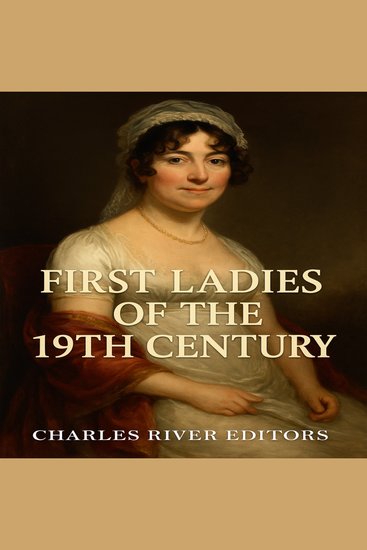
  • First Ladies of the 19th Century - cover

    First Ladies of the 19th Century

    Charles River Editors

    • 0
    • 0
    • 0
    American presidents have shaped the course of global affairs for generations, but as the saying goes, behind every great man there’s a great woman. While the First Ladies often remain overshadowed by their husbands, some have carved unique niches in their time and left their own lasting legacy. Dolley Madison helped establish the role of the First Lady in the early 19th century, Eleanor Roosevelt gave voice to policy issues in a way that made her a forerunner of First Ladies like Hillary Clinton, and Jackie Kennedy created glamorous trends that made her more popular than her husband.  
    Eleanor Roosevelt and Hillary Clinton may have been the most politically active First Ladies in American history, but Abigail Adams was the first to act as political advisor for her husband and the first to be dubbed Mrs. President. Indeed, Abigail was politically inclined to degree highly unusual among women of the 18th and 19th century, and she had originally impressed her future husband John because she was so well versed in poetry, philosophy and politics. Abigail was also very progressive, championing women’s rights and abolition long before they became widely held views even in traditionally liberal Massachusetts. While her time as First Lady was important, Abigail Adams remains one of the most recognized and respected First Ladies in American history due to her voluminous correspondence with John when they were separated throughout the American Revolution, as she remained in Massachusetts while John found himself in the thick of politics during his time in the Continental Congress and over in France.
    Show book
  • Betrayed By Hope - cover

    Betrayed By Hope

    Malashri Lal, Namita Gokhale

    • 0
    • 0
    • 0
    Michael Madhusudan Dutt (1824--1872), a maverick who changed the scope of Bengali poetry in the nineteenth century, especially with his free-verse epic, 'Meghnadhbadh Kabya', was a genius who never got his due. Throughout his life, Madhusudan was caught in an identity crisis: he wrote in the English language, changed his religion and was a restless traveler, yearning to belong somewhere. After an extended sojourn in London and Paris, with misery and poverty as his constant companions, the poet finally found his metier in his mother tongue. Betrayed By Hope, a play-script based on the letters Michael Madhusudan Dutt wrote to friends, well-wishers and patrons, paints the portrait of an artist as he plunges headlong into crisis after crisis, even as his imagination and creativity soar. Namita Gokhale and Malashri Lal pay tribute to his extraordinary life in a story that will lay bare our deep-set contradictions about art and life.
    The audio version is directed by Giriraj Kiradoo and Priyanka Sharma.
    Show book
  • One Step in a Poppy Field - The Inspirational Story of Lance Corporal Cayle Royce MBE - cover

    One Step in a Poppy Field - The...

    Bronwyn Royce

    • 0
    • 0
    • 0
    Thousands of miles away from where her son was deployed, a powerful premonition is devastatingly confirmed by a knock on the door from two faceless strangers bearing the news that her son had stepped on an improvised explosive device in the poppy fields of Afghanistan. He had lost both of his legs and suffered multiple other injuries, including partial amputation of all the fingers of his left hand. For forty-eight days she stood at his bedside. 


    Not only did he survive against all odds, but in time he began to test the limits of his new capabilities and undertook the first of, what would prove to be, many physical challenges. Just eighteen months after injury, and as part of a team of four servicemen, he rowed across the Atlantic Ocean for the first time. 


    Told mostly from a mother's perspective with contributions from Cayle, the genesis of the book was in the diary she kept while he was in a medically induced coma. It is the story of an extraordinarily brave man who has been through the agonies of rebuilding his life, with the encouragement of family and friends. 


    This was never meant to be another book about war or Afghanistan; it is a message of how love and hope can overcome adversity.
    Show book
  • Totem and Taboo - cover

    Totem and Taboo

    Sigmund Freud

    • 0
    • 0
    • 0
    Introducing "Totem and Taboo: A Psychoanalytic Exploration of Human Culture" Audiobook!Step into the intriguing world of Sigmund Freud's groundbreaking work as you embark on a captivating journey through "Totem and Taboo." Delve deep into the psychoanalytic origins of religion, society, and human behavior with this thought-provoking and insightful audiobook.Narrated with clarity and expertise, this meticulously crafted audiobook brings Freud's seminal work to life, allowing you to absorb his revolutionary ideas with ease and enjoyment. Immerse yourself in Freud's rich analysis as he explores the complex interplay between the primitive and the civilized, unraveling the mysteries of the human psyche.Unveiling the concept of the totem, the sacred symbol that represents clans and groups, Freud unveils its profound connection to our primal instincts and the origins of human civilization. Discover the fascinating primal horde and the intricate dynamics between dominant and subordinate figures, as Freud uncovers the primal crime of parricide that establishes moral order within society.As you listen, you'll encounter Freud's revolutionary concept of the Oedipus complex, an innate psychological phenomenon that shapes our development. Explore the depths of unconscious desires, repressed emotions, and the formation of the superego, gaining valuable insights into the intricate web of human relationships and cultural norms.This audiobook not only illuminates Freud's remarkable theories but also provides a thought-provoking perspective on the formation of religion, societal structures, and the moral fabric of civilization. It offers a rare opportunity to engage with one of the most influential thinkers of the modern era and understand the profound impact of psychoanalysis on our understanding of human nature.Whether you're a student of psychology, a history enthusiast, or simply curious about the origins of our cultural and social constructs, "Totem and Taboo" audiobo
    Show book
  • Crime and Punishment in Ancient Egypt: The History and Legacy of the Egyptians’ Concepts of Justice - cover

    Crime and Punishment in Ancient...

    Editors Charles River

    • 0
    • 0
    • 0
    In ancient Egypt, the underpinning concept in law, in theory, was that rich and poor citizens should be treated equally, but this was an aspiration that was rarely fulfilled in practice. At the same time, the types of treatment delivered to those deemed guilty could also be harsh - common punishments included confiscation of property, slavery, beatings, and mutilation. During both the Old Kingdom (c. 2700 BCE – 2200 BCE) and Middle Kingdom (c. 2030 BCE – 1650 BCE), crime was dealt with by local officials using their own private police forces. However, during the New Kingdom (c. 1539 BCE – 1075 BCE) a centralized police force emerged, consisting of Nubian tribesmen under an Egyptian supervisor, who were armed with staffs and used specially trained dogs. 
    	In extreme cases, the death penalty was invoked, sometimes with the additional punishment of ensuring that the convicted were refused a burial or were buried but without full rituals. Based on the Egyptians’ religious beliefs, both situations resulted in the guilty being denied entry to the afterlife. 
    	Perhaps not surprisingly, not all laws related directly to criminal activity. Civil disputes were common, and suits by a plaintiff against a defendant provide another major source about the Egyptian legal system, as do the copies of the many legal transactions and contracts that date from the 7th century BCE onwards when the popular form of the written language (Demotic) started to become more widely used. Indeed, it is often difficult to distinguish between civil and criminal cases in the available records. Following the introduction of writing, however, written deeds or contracts quickly replaced traditional oral agreements, and many of these extant documents reveal considerable detail about the laws of ancient Egypt.
    Show book