Join us on a literary world trip!
Add this book to bookshelf
Grey
Write a new comment Default profile 50px
Grey
Subscribe to read the full book or read the first pages for free!
All characters reduced
A Short History of Ulster - cover

A Short History of Ulster

Jonathan Bardon

Publisher: Gill Books

  • 0
  • 0
  • 0

Summary

Jonathan Bardon's A History of Ulster is widely regarded as the definitive text on the region. Updated with a more recent preface from the author, this illustrated, abridged version offers a comprehensive but accessible overview of life in the province for anyone seeking to understand the roots of its troubled history.
The Vikings, the Norman invasions, the plantations, the Penal Laws, the rise of the United Irishmen and Orangeism, the Act of Union, the linen and shipbuilding industries, the Home Rule Crisis and partition, the civil rights movement, the Troubles and the peace process – it's all here in this essential companion to Jonathan Bardon's bestselling A History of Ireland in 100 Episodes.
Available since: 08/28/2025.
Print length: 408 pages.

Other books that might interest you

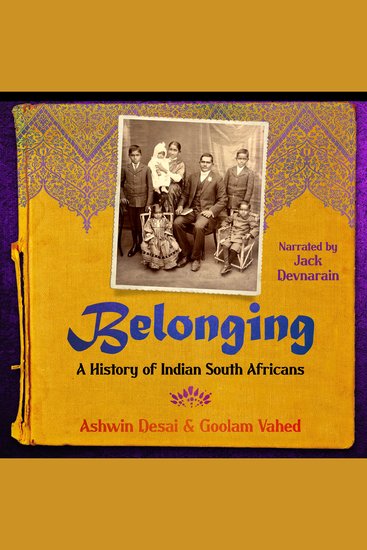
  • Belonging - A History of Indian South Africans - cover

    Belonging - A History of Indian...

    Ashwin Desai, Goolam Vahed

    • 0
    • 0
    • 0
    What does it mean to belong? 
    Across oceans and centuries, this sweeping narrative shuttles between the corridors of the Colonial Office in London, the contested streets of Durban, and the changing power dynamics within the British Raj.  
    The first boatload of indentured Indians arrived in Natal in 1860. Thousands were to follow. In haunting detail, the book captures the plight of these labourers as well as the vicious onslaught faced by the merchant class for daring to outpace their colonial rivals. At its core are the untold struggles of Indian South Africans as they confront the ever-present threat of repatriation.  
    Sensitive to shifting political terrains, the book weaves together seismic events – the independence of India, the coming of apartheid and the threat once more of mass expulsions – with the texture of everyday life. The granting of citizenship in 1961 is accompanied by mass relocations as the Group Areas Act rips communities from their roots. Yet, out of this despair, barren townships on the edges of cities are turned into places of hope.  
    In the final chapters, the fall of apartheid offers a moment of transcendence. Yet it also asks: what does it mean, at last, to belong? It is a fascinating story of the global and the local, of resistance and collaboration, and undefeated optimism. This is a book for anyone who has ever sought a place to call home.
    Show book
  • Sensation Me Crazy - A Guide Tools and Fun Games to Assist and Help Develop Your Child With Sensory Processing Disorder (SPD) - cover

    Sensation Me Crazy - A Guide...

    Jane Elizabeth

    • 0
    • 0
    • 0
    SPD, also known as Sensory Processing Disorder, tends to show itself within children at an early age, however it is not always easy to understand what is wrong with the child without the proper tools, techniques, or methods. Within this book, SPD will be looked at, explained and the right activities will be given in order for parents to gain the proper understanding needed to help their child move effortlessly through childhood and into adulthood. 
      
    Being a child with SPD or any kind of disorder is not easy, but with the proper help guidance and love, the child can function just like anyone else. Do not give up on the child and do not make them feel like a burden, that will only worsen the disorder and create a far more difficult situation to fix later down the line. 
    Show book
  • Going Back - cover

    Going Back

    Eugene O'Brien

    • 0
    • 0
    • 0
    Scobie Donoghue was once the king of the weekend. His twenties were spent working hard and playing harder. A lovable rogue, the lads wanted to be him and the girls wanted to be with him.
    But now, about to turn forty and returning to his small midlands hometown, Scobie is back in his childhood bed, single, burnt out and depressed. The life he thought he had left behind has moved on – but has he?
    Going Back, Eugene O'Brien's heartwarming debut novel, continues the story of hit TV series Pure Mule, capturing the whole world in one Irish town: the highs and the lows, from addiction and mental-health issues to love and redemption.
    It will take some time and a lot of soul-searching, but maybe Scobie Donoghue is finally ready to grow up.
    'I was delighted to get reacquainted with Scobie Donoghue. This is a timely book, engaging and entertaining. It lifts the lid on and exposes the underbelly of the disenfranchised in a community that has been pulled apart since the heady days of the Celtic Tiger.' Liz Nugent
    Show book
  • Shame and Attachment Loss - The Practical Work of Reparative Therapy - cover

    Shame and Attachment Loss - The...

    Joseph Nicolosi

    • 0
    • 0
    • 0
    Bringing together a Judeo-Christian anthropology with biological and psychodynamic theories of human development and sexuality, psychologist Joseph Nicolosi details the therapeutic techniques of reparative therapy he has developed over the past decades. 
    Written in three parts, the book first describes the nature of the psychodynamics of same-sex attraction as understood in the reparative therapy approach. The second part describes the various phases of treatment. The final part deals with walking clients through the process of grieving and the healing of their wounding. 
    Endorsed by numerous notable leaders in psychotherapy, Nicolosi offers practical guidance for counselors and therapists who want to offer reparative therapy to those seeking change. 
    Revised edition with new chapter on EMDR.
    Show book
  • Nerva-Antonine Dynasty The: The History and Legacy of the Emperors Who Ruled the Roman Empire at Its Peak - cover

    Nerva-Antonine Dynasty The: The...

    Editors Charles River

    • 0
    • 0
    • 0
    “The Five Good Emperors,” a reference to the five emperors who ruled the Roman Empire between 96 and 180 CE (Nerva, Trajan, Hadrian, Antoninus Pius, and Marcus Aurelius), was a term first coined by Machiavelli and later adopted and popularized by historian Edward Gibbon, who said that under these men, the Roman Empire “was governed by absolute power under the guidance of wisdom and virtue.”  
    	This period of 84 years is generally regarded as the high point of the Roman Empire, at least after Augustus, but what is uncertain and a matter of ongoing debate is whether the five emperors were personally responsible for the situation and the accompanying prosperity enjoyed throughout the empire at the time or if they were simply the beneficiaries of the Pax Romana, inaugurated by Augustus in the early part of the 1st century CE. In other words, historians have wondered whether anyone in power during those years would have enjoyed the same rewards.  
    	The description of these rulers as “good” is also a matter of interpretation, with some scholars suggesting they were only “good” in comparison to the preceding emperor (Domitian) and the emperor who followed Marcus Aurelius (Commodus). Both of them were horrible rulers in every aspect, making their near contemporaries look all the better.  
    	Regardless, it is clear that the era of the Five Good Emperors was one of unparalleled success and wealth, and the reasons Rome reached its zenith at this time are worthy of scrutiny. Perhaps most noteworthy is that none of these five emperors were blood relatives - while the final two are often referred to as the Antonines, they were not, in fact, related except by adoption, a practice that may in itself provide at least part of the answer to the question as to why this particular period was so magnificent.
    Show book
  • Cities that Shaped the Ancient World - cover

    Cities that Shaped the Ancient...

    John Julius Norwich

    • 0
    • 0
    • 0
    Today we take living in cities for granted. But when did humans first come together to live in large groups, creating an urban landscape? More than simply a history of ancient cities, this volume also reveals the art and architecture created by our ancestors, and provides a fascinating exploration of the origins of urbanism, politics, culture, and human interaction. 


    Arranged geographically into five sections, Cities That Shaped the Ancient World takes a global view, beginning in the Near East with the earliest cities such as Ur and Babylon, Troy and Jerusalem. In Africa, the great cities of Ancient Egypt arose, such as Thebes and Amarna. Glorious European metropolises, including Athens and Rome, ringed the Mediterranean, but also stretched to Trier on the turbulent frontier of the Roman Empire. Asia had bustling commercial centers such as Mohenjodaro and Xianyang, while in the Americas the Mesoamerican and Peruvian cultures stamped their presence on the landscape, creating massive structures and extensive urban settlements in the deep jungles and high mountain ranges, including Caral and Teotihuacan. 


    A team of expert historians and archaeologists with firsthand knowledge and deep appreciation of each site gives voices to these silent ruins, bringing them to life as the bustling state-of-the-art metropolises they once were.
    Show book