Join us on a literary world trip!
Add this book to bookshelf
Grey
Write a new comment Default profile 50px
Grey
Subscribe to read the full book or read the first pages for free!
All characters reduced
Summers at the Lake - Upper Michigan Moments and Memories - cover

Summers at the Lake - Upper Michigan Moments and Memories

Jon C. Stott

Publisher: Modern History Press

  • 0
  • 0
  • 0

Summary

Paddling a canoe into sunrise on the longest day of the year... watching a child take her first kayak ride with her father... gazing at a bald eagle, riding air currents high above the lake... chuckling as a hummingbird defends his feeder against intruders... dodging campfire smoke while burning marshmallows and telling scary stories to wide-eyed kids. These are some of the moments and memories depicted in Summers at the Lake. The essays-often humorous; sometimes tinged with a sweet melancholy--celebrate the people and events marking the progress of the seasons--from the budding of the first green leaves of May to their falling, gold and scarlet, in September. These prose poems capture the joy of simple, lake-side living and quiet reflection.     "Jon Stott is a masterful storyteller. In Summers at the Lake, he shares memories that read like prose poetry. Each story takes us to a place of solitude and beauty and will stir pleasant memories of our own." --Sharon Kennedy, author of The Sideroad Kids: Tales from Chippewa County    "This gentle book by a gentle man is the kind that grows on you. Reading it will give you the same benefits as meditating in lovely surroundings in peace and calmness." --Bob Rich, author of From Depression to Contentment      "In Summers at the Lake, much can be learned about life in the U.P. and its enjoyable places. You can explore the wonders of the U.P. while dipping your toes into the everyday experiences of life near Crooked Lake." --Sharon Brunner, U.P. Book Review    "Jon C. Stott delightfully describes the many joys of lakeside living with the unchanging activities of summer. Deb Le Blanc's photos will make readers feel as if they are right there at the cabin, next to the author."  --Carolyn Wilhelm, MA, Midwest Book Review
Available since: 05/01/2022.
Print length: 142 pages.

Other books that might interest you

  • Local Haunts - cover

    Local Haunts

    Adam Scovell

    • 0
    • 0
    • 0
    'In this wonderfully eclectic collection of essays Adam Scovell makes a beguiling guide, leading us along numerous haunted byways of British and European literature, television and cinema.'
    – Edward Parnell, author of Ghostland
    'Scovell's incisive essays, distributed across space-time, come together in this volume to form a cohesive travelogue through the hinterlands of our cultural landscape and the imaginal topographies of great artists, writers and filmmakers. It's an enriching journey that takes regular pitstops in those enchanted zones where a place and its stories are one and the same.'
    – Gareth E. Rees, author of Sunken Lands
    For more than a decade, writer and filmmaker Adam Scovell has been preoccupied by the strange connections between place and culture: curious about the graves of writers, determined to find the locations of iconic films, intrigued by the landscapes that inspired novels.
    From obscure British television to European cinema, the poems of playwrights to the psychogeography of Weird Fiction, Local Haunts brings together a collection of essays, photographs, travelogues, and journalism that explores the connections between art and the landscapes that inspire it. With particular focus on several key figures that emphasised place in their work – including W.G. Sebald, Alan Garner, Agnès Varda, M.R. James, and Marguerite Duras – Scovell examines culture that is haunted by locales, rural and urban.
    Taken from a range of print and digital publications, including work published by Sight & Sound, Literary Hub, Caught By The River, and Little White Lies, as well as Scovell's Celluloid Wicker Man site that brought many ideas surrounding Folk Horror and the Urban Wyrd to prominence in the early 2010s, Local Haunts brings together a decade of work treading the ghostways and the corpse roads of film, literature, and art.
    Show book
  • Ten Camels for My Wife - cover

    Ten Camels for My Wife

    John Meadows

    • 0
    • 0
    • 0
    A highly entertaining anecdotal collection of humorous life observations during a trip around the world. Travelling by bus to Kathmandu, the author experiences hair-raising misadventures: a chase through Jerusalem, a gun battle in Jordan, a pummelling by a gargantuan masseur in Istanbul, a python in India, and the terrifying James Bond encounter in Australia. His portrait of an Afghani shopkeeper has a bizarre twist. Time-travelling detours punctuate interesting stories about the Taj Mahal, Sydney Opera House, Tahiti, Easter Island statues and Christ in Rio. More than a travelogue, personal insights and character portrayals are underscored by whimsical humour.
    Show book
  • Mali Empire The: A Captivating Guide to One of the Largest Empires in West African History and the Legendary Mansa Musa - cover

    Mali Empire The: A Captivating...

    Captivating History

    • 0
    • 0
    • 0
    Have you ever wondered why the Mali Empire was so wealthy and well-known? Find your answer in our guide about the Mali Empire and learn about its foundation and rise to fame under Mansa Musa. 
    Within this audiobook, you’ll listen to the humble beginnings and hardships that befell Sundiata Keita as he founded the Mali Empire. His thrilling story leads into how the empire was structured and its early laws and customs. 
    Eventually, though, the empire would descend into internal strife between the heirs of the first emperor. Then, just as it seemed as if the Mali Empire would crumble, a great ruler emerged, leading it to new heights. 
    Learn about the reign of the famous Mansa Musa, who brought riches and international respect to his kingdom. The golden age of the Mali Empire brought territorial expansion as well as cultural growth. 
    However, its glory was short-lived. Follow the tragic tale of Musa’s heirs, and discover how the empire slowly crumbled, descending from an empire into a mere memory. This decay caused the empire to gradually lose its lands and wealth, making its splendor of the golden age a distant dream. Yet, as its final days came, the last ruler of the Keita dynasty led a valiant effort to restore its former glory, which ends this story with a bang rather than a whimper. 
    Here are some of the captivating facts you’ll learn about in this audiobook:What trials did Sundiata Keita have to overcome to unite an empire?Where did all that Malian gold and wealth come from?Why is Mansa Musa so well-remembered today? Did any of the other Malian rulers even come close?How did Islamic influences mix with local African traditions?What caused the Mali Empire to fall, and could it have been avoided? 
    Scroll up and click the “add to cart” button to learn more about the Mali Empire and why it matters!
    Show book
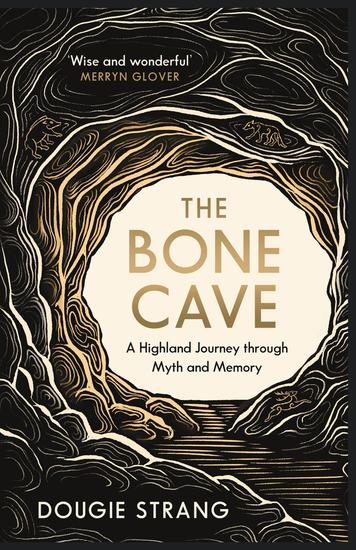
  • The Bone Cave - A Highland Journey through Myth and Memory - cover

    The Bone Cave - A Highland...

    Dougie Strang

    • 0
    • 0
    • 0
    This is a book about stories – old stories of people and place, and of the more-than-human world.
    A vivid account of a journey through the Scottish Highlands, The Bone Cave follows a series of folktales and myths to the places in which they're set. Travelling mostly on foot, and camping along the way amid some of Scotland's most beautiful and rugged landscapes, Dougie Strang encounters a depth of meaning to the tales he tracks – one that offers a unique perspective on place, culture, land ownership and ecological stewardship, as well as insights into his own entanglement with place.
    Dougie sets out on his walk at the beginning of October, which also marks the start of the red deer rut. The bellowing of stags forms the soundtrack to his journey and is a reminder that, as well as mapping invisible landscapes of story, he is also exploring the tangible, living landscape of the present.
    Longlisted for the Highland Book Prize
    Show book
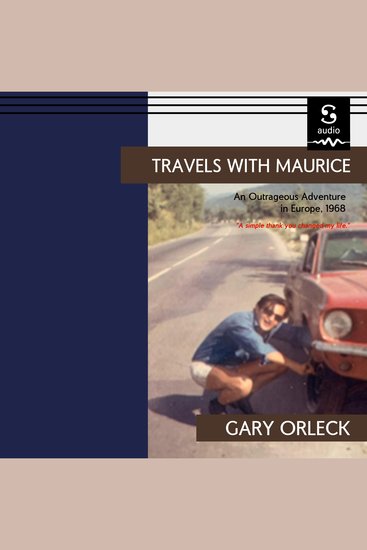
  • Travels With Maurice - An Outrageous Adventure In Europe 1968 - cover

    Travels With Maurice - An...

    Gary Orleck

    • 0
    • 0
    • 0
    A simple “thank you” led to the trip of a lifetime, along with an unbreakable friendship of two opposites. See them come of age while rubbing elbows with the rich and famous like the Shah and Queen of Iran, The Who, Paul McCartney, Brigitte Bardot, and even Shirley Temple Black. An unbelievable story, yet it’s true because nobody could make this story up. Find out things the rich and famous do not want you to know.
    Show book
  • History of Argentina - From the Arrival of the Spanish to the 20th Century - cover

    History of Argentina - From the...

    Kelly Mass

    • 0
    • 0
    • 0
    Argentina's history is a rich tapestry that can be divided into four distinct periods: the pre-Columbian or early history (up to the sixteenth century), the colonial period (1530–1810), the nation-building period (1810–1880), and contemporary history (from approximately 1880 to the present). Each phase shaped the region, transforming it from sparsely inhabited land into the modern Argentine Republic. 
    Human presence in what is now Argentina dates back approximately 13,000 years, with evidence of early settlements in Patagonia. Archaeological findings suggest human activity through the Paleolithic, Mesolithic, and Neolithic periods. However, a significant depopulation of large interior areas occurred between 4000 and 2000 B.C., likely due to a prolonged period of drought. Over time, indigenous peoples in the region evolved into diverse cultural groups with varying levels of complexity. 
    Uruguayan archaeologist Raúl Campá Soler categorized Argentina’s indigenous peoples into three groups: basic hunters and food gatherers without pottery; advanced gatherers and hunters; and basic farmers who developed pottery. The Pampas and Patagonia were dominated by the first group, while the second included tribes like the Charrúa, Minuane, and Guaraní. The third group, inhabiting regions such as the Quebrada de Humahuaca, adopted farming practices and pottery.
    Show book