Join us on a literary world trip!
Add this book to bookshelf
Grey
Write a new comment Default profile 50px
Grey
Subscribe to read the full book or read the first pages for free!
All characters reduced
Representative Government - cover

Representative Government

John Stuart Mill

Publisher: John Stuart Mill

  • 0
  • 1
  • 0

Summary

Philosopher, son of James Mill, born in London, was educated by his father with the view of making him the successor of Bentham and himself, as the exponent of the Utilitarian philosophy. In all respects he proved an apt pupil, and by his 15th year had studied classical literature, logic, political economy, and mathematics. In that year he went to France, where he was under the charge of Sir S. Bentham, a brother of Jeremy. His studies had led him to the adoption of the utilitarian philosophy, and after his return he became acquainted with Grote, the Austins, and other Benthamites.
In 1823 he entered the India House as a clerk, and, like his father, rose to be examiner of Indian correspondence; and, on the dissolution of the Company, retired on a liberal pension. In 1825 he edited Bentham’s Rationale of Judicial Evidence. During the following years he was a frequent contributor to Radical journals, and edited the London Review. His Logic appeared in 1843, and produced a profound impression; and in 1848 he published Principles of Political Economy. The years between 1858 and 1865 were very productive, his treatises on Liberty, Utilitarianism, Representative Government, and his Examination of Sir W. Hamilton’s Philosophy being published during this period. In 1865 he entered the House of Commons as one of the members for Westminster, where, though highly respected, he made no great mark. After this political parenthesis he returned to his literary pursuits, and wrote The Subjection of Women [1869], The Irish Land Question [1870], and an Autobiography. Mill had married in 1851 Mrs. Taylor, for whom he showed an extraordinary devotion, and whom he survived for 15 years. He died at Avignon.
His Autobiography gives a singular, and in some respects painful account of the methods and views of his father in his education. Though remaining all his life an adherent of the utilitarian philosophy, Mill did not transmit it to his disciples altogether unmodified, but, finding it too narrow and rigid for his own intellectual and moral requirements, devoted himself to widening it, and infusing into it a certain element of idealism.
Available since: 10/07/2015.

Other books that might interest you

  • DC Go-Go - Ten Years Backstage - cover

    DC Go-Go - Ten Years Backstage

    Chip Py

    • 0
    • 0
    • 0
    DC Represent!There's a party over here, there's a party over there! In go-go the party never stops, and neither does the beat. The bands, the stars, the clubs, the spots, the sweat, the late nights and the passion are the sound of the city--all photographically captured and preserved right here. For those who know go-go this book is a documentary celebration. Shout yourself out with a special photographic section dedicated to the fans. For those who don't know, this book is a peek into that world through the lens of photographer Chip Py. Once Chuck Brown's official photographer, his go-go collection is now part of the People's Archive at the DC Public Library. Discover the district's distinctive music, its artists, its culture, and why it has become The Official Music of Washington, D.C.
    Show book
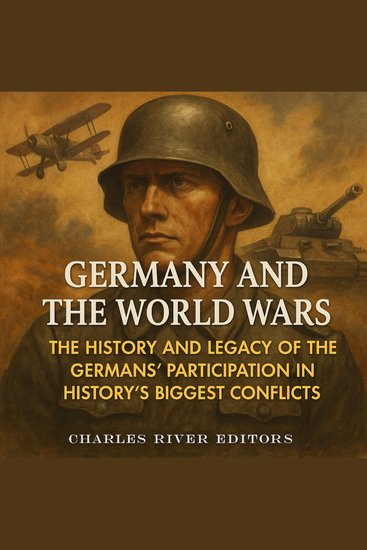
  • Germany and the World Wars: The History and Legacy of the Germans’ Participation in History’s Biggest Conflicts - cover

    Germany and the World Wars: The...

    Charles River Editors

    • 0
    • 0
    • 0
    Not surprisingly, German unity in 1871 caused geopolitical ripples that reverberated for decades. Other larger European powers, such as Britain, France, and Russia, came to feel threatened by the rise of Germany. These tensions were still prevalent at the outbreak of World War I in 1914, and it became even more important in World War II. In part this was because Germany also became an economic powerhouse, fundamentally altering the global economy. Alongside the rapid expansion of the United States, trade went through a transformation that still has ramifications today. 
    Germany's defeat in World War I brought about the Weimar Republic, but Weimar has since become a byword for a failed, tragic, political experiment. The official period of its existence, 1919-1933, marked the interwar years in Germany and their related uncertainty, chaos, and the state’s ultimate collapse. Historians have found the roots of Nazism embedded in the Weimar years and that in the final analysis, Weimar politicians voluntarily handed over power to the man who wrought destruction on an epic scale, Adolf Hitler. This set the German nation irrevocably on the path towards World War II. That war would plunge much of the planet into an existential battle that ultimately cost an estimated 60 million lives.
    Show book
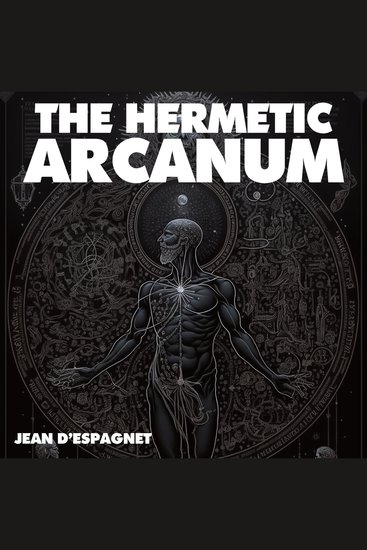
  • The Hermetic Arcanum - cover

    The Hermetic Arcanum

    Jean d'Espagnet

    • 0
    • 0
    • 0
    The secret work of the hermetic philosophy.Wherein the secrets of nature and art concerning the matter of the philosophers' stone and the manner of working are explained in an authentic and orderly manner. 
    This was a key work of 17th-century alchemy. It was written in Latin by Jean d'Espagnet as Enchiridion Physicae Restitutae, and the first edition was issued at Paris in 1623.  
    A number of editions were issued over the next decades, and it was included in a number of alchemical compendia. An English translation, translated by Elias Ashmole, was printed in 1650 in Arthur Dee's Fasciculus Chemicus: Or Chymical Collections.  
    The audiobook version features calming ambient music at a low volume that is fit for a relaxing listening experience.
    Show book
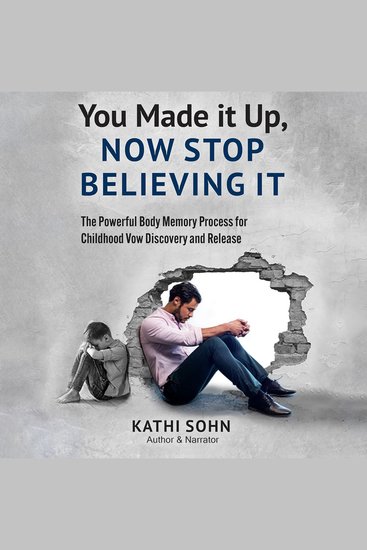
  • You Made it Up Now Stop Believing It: The Powerful Body Memory Process for Childhood Vow Discovery and Release - cover

    You Made it Up Now Stop...

    Kathi Sohn

    • 0
    • 0
    • 0
    Unlock Your Authentic Potential with "You Made it Up, Now Stop Believing It: The Powerful Body Memory Process for Childhood Vow Discovery and Release" by Kathi Sohn. 
    Discover the life-changing process to reclaim your power and reshape your reality. In this groundbreaking audiobook, Kathi Sohn, renowned author and narrator, unveils the transformative journey to break free from the limiting beliefs forged in childhood. 
    Unveil the secrets of your subconscious and liberate yourself from the shackles of childhood vows. Explore real-life narratives of individuals who have shattered these self-imposed barriers, witnessing remarkable transformations in health, relationships, finances, and self-expression. 
    Inside, you'll learn:How childhood vows continue to influence your adult lifeThe underlying origins of these deeply ingrained beliefsProven techniques to identify and release these vows, paving the way for profound positive change 
    Don't let outdated beliefs hold you back any longer. It's time to rewrite your story and embrace the limitless possibilities that await. Experience the freedom to live authentically, as you embark on a journey of self-discovery and empowerment. 
    Elevate your life today with "You Made it Up, Now Stop Believing It" – your guide to unlocking the extraordinary within. 
    #BreakFreeFromVows 
    #ChildhoodBeliefs 
    #EmpowerYourself 
    #LifeTransformation 
    #SelfDiscoveryJourney 
    #LimitlessPotential 
    #MindsetShift 
    #PersonalGrowth 
    #EmbraceAuthenticity 
    #PositiveChange 
    #UnlockYourPower 
    #InnerFreedom 
    #LiveYourTruth 
    #ReleaseThePast 
    #Mindfulness 
    #SelfEmpowerment 
    #NewBeginnings 
    #SelfAwareness 
    #HealingJourney 
    #OwnYourStory
    Show book
  • Nothing Ruins Youth Sports Like Adults - An Unfortunately True Story - cover

    Nothing Ruins Youth Sports Like...

    John Anthony

    • 0
    • 0
    • 0
    "When people get used to preferential treatment, equal treatment seems like discrimination." - Thomas Sowell. This is a must-read, cautionary tale for any parents with kids in youth sports or any adult considering coaching children. We have a coaching crisis in this country. Because of the parents with unrealistic assessments of how much more important their kids are to their teams or just how good (or not) their children are, coaches are putting their personal and professional reputations on the line when they coach a team for these parents: And the risks are starting to outweigh the rewards. Nothing ruins youth sports like adults is the unfortunately very true and accurate story of Coach Carlos, a once-in-a-lifetime, well-loved, and wildly successful high school girl's basketball coach in the Pacific Northwest who's reputation was unfairly destroyed by an obsessed parent who couldn't stand the rules being applied to his daughter and an inept school district who didn't have the backbone to make him stop. Written by a parent who documented everything over the three years Carlos coached the high school team, this book captures every available detail of all the lies and misinformation used by one parent as he ensnared another parent and used six sophomore girls to ultimately achieve his goal of getting rid of the coach who cut his daughter.
    Show book
  • The Temples of Egypt - Sacred Spaces and Religious Practices - cover

    The Temples of Egypt - Sacred...

    Omar Khalil

    • 0
    • 0
    • 0
    Temples in ancient Egypt were far more than mere places of worship. They stood at the very heart of Egyptian civilization, functioning as both spiritual centers and instruments of political and social order. Each temple was seen as a dwelling place for a god or goddess, and the rituals performed within their walls were believed to maintain the cosmic balance known as ma’at. The presence of a temple in a city or region signaled divine favor and legitimacy, reinforcing the bond between the gods and the ruling pharaoh. 
    Pharaohs were considered divine intermediaries between the gods and the people, and their authority was deeply rooted in religious belief. Temples were a direct reflection of this divine connection. Often constructed by pharaohs to honor specific deities, temples helped assert royal power and ensure harmony across the land. Through grand architecture and lavish offerings, rulers demonstrated their piety and reaffirmed their right to govern. This link between kingship and temple worship made temples central to the ideological framework of the state. 
    Beyond their religious significance, temples also played a pivotal role in the social life of ancient Egyptians. They were the sites of numerous festivals and ceremonial events that brought entire communities together. These occasions were marked by processions, music, dancing, and the display of sacred statues, all of which reinforced communal identity and devotion. The most prominent of these was the Opet Festival in Thebes, during which statues of Amun, Mut, and Khonsu were transported from Karnak to Luxor Temple in a public procession along the Nile. Such festivals reminded people of the gods’ presence and the pharaoh’s divine role in upholding order.
    Show book