Join us on a literary world trip!
Add this book to bookshelf
Grey
Write a new comment Default profile 50px
Grey
Subscribe to read the full book or read the first pages for free!
All characters reduced
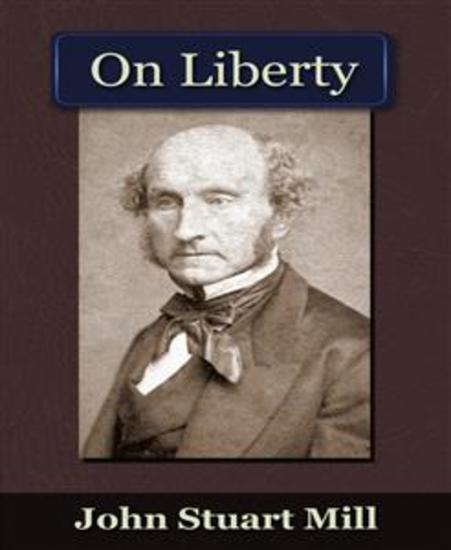
On Liberty - cover

On Liberty

John Stuart Mill

Publisher: BookRix

  • 0
  • 0
  • 0

Summary

On Liberty is a philosophical work by English philosopher John Stuart Mill, originally intended as a short essay. The work applies Mill's ethical system of utilitarianism to society and the state. Mill attempts to establish standards for the relationship between authority and liberty. He emphasizes the importance of individuality which he conceived as a prerequisite to the higher pleasures—the summum bonum of Utilitarianism. Furthermore, Mill criticised the errors of past attempts to defend individuality where, for example, democratic ideals resulted in the "tyranny of the majority". Among the standards established in this work are Mill's three basic liberties of individuals, his three legitimate objections to government intervention, and his two maxims regarding the relationship of the individual to society "which together form the entire doctrine of [Mill's] Essay."

On Liberty was a greatly influential and well received work though it did not go without criticism. Some attacked it for its apparent discontinuity with Utilitarianism, while others criticised its vagueness. The ideas presented in On Liberty have remained the basis of much liberal political thought. It has remained in print continuously since its initial publication. To this day, a copy of On Liberty is passed to the president of the British Liberal Democrats as a symbol of office. A copy of the same book is also presented to and then held by the resident of the Liberal Party as a symbol of office.
Available since: 12/19/2023.
Print length: 193 pages.

Other books that might interest you

  • Sex Stories Bundle - 36h of Forbidden Erotica Stories with Anal Teen Threesome and Lesbian Stories to Fulfill your Deepest Desires - cover

    Sex Stories Bundle - 36h of...

    James Smith

    • 0
    • 0
    • 0
    If you like your romance steamy, sticky, and full of forbidden fruit, this is the collection for you!  
    From anal, lesbians and threesomes to forbidden lusts, this collection of erotic romance short stories has a little something for everyone. 
    This collection has lesbian erotic romance stories that will appeal to fans of Meghan O'Brien and Sarah Waters as beautiful women explore the possibilities of sex and romance without a single man in sight. 
    Fans of the Fifty Shades series will find many things to love in the stories featuring BDSM romance as our characters learn and explore the erotic potentials of bondage, sadism, masochism, and other dominance role play situations. Get out your fuzzy handcuffs and let our dom lead you to the climax with all the sexy skill anyone could ask for! 
    Every naughty little detail is waiting in this collection, but they're far too naughty to list here! Trust us when we say our narrator is waiting to sweep you off to a land of sin and pleasure with relatable characters, daring adventures, and bodice ripping excitement that's sure to satisfy. 
    Get comfortable, grab your favorite drink, and settle in to find out what sort of lustful sins have slipped in between the sheets. 
    Buy this audibook now! 
    ​​​​​​​Warning: This book contains explicit sex scenes that are absolutely not for kids!
    Show book
  • Wyndham Lewis and British Art Rock - A Practicological Modernism - cover

    Wyndham Lewis and British Art...

    Thomas Keller

    • 0
    • 0
    • 0
    This study connects the idiosyncratic modernism of Wyndham Lewis, co-founder of the Vorticist art movement, with works of several artists from the British art rock tradition, among them Bryan Ferry, David Bowie, art-punk pioneers Wire and electronic pop musician John Foxx. By taking a transdisciplinary and intermedial approach to texts from two fields normally studied in isolation and staking out the elements of a shared modernist ethos, the book presents a new perspective on both fields relevant to scholars of literature, popular culture, and the visual arts alike. While the book rests on sound research from the fields of literary criticism, art history, and pop theory, the structure and writing of the book is fundamentally designed to be accessible and comprehensible to non-scholarly readers.
    Show book
  • The Pharaohs of Ancient Egypt - Rulers of the Nile - cover

    The Pharaohs of Ancient Egypt -...

    Omar Khalil

    • 0
    • 0
    • 0
    The emergence of the pharaohs marked the beginning of one of history’s most iconic civilizations. In the early dynastic period around 3100 BCE, Egypt underwent a dramatic transformation as Upper and Lower Egypt were unified under a single ruler, traditionally identified as King Narmer or Menes. This unification not only established centralized rule but also laid the foundations for a dynastic tradition that would endure for millennia. The pharaoh, whose name means “great house,” came to be seen as both a political leader and a divine figure, embodying the will of the gods on earth. 
    As Egypt’s first kings consolidated power, they created administrative systems to manage resources, command armies, and oversee large-scale construction projects. Hierarchical governance emerged, with officials and scribes acting under the pharaoh’s authority to maintain order throughout the land. This new system allowed the pharaohs to centralize authority, control the fertile Nile Valley, and ensure the production and redistribution of grain and other goods, which became critical for sustaining a growing population and for asserting royal dominance. 
    Religious ideology played a key role in solidifying the power of the pharaohs. They were often depicted as the sons of deities, particularly associated with the sun god Ra and the sky god Horus. Temples were erected not just as places of worship, but as instruments of royal propaganda, showcasing the divine legitimacy of the ruler. Rituals, festivals, and monumental inscriptions reinforced the pharaoh’s sacred status and his role in maintaining ma’at, the cosmic order of balance and harmony.
    Show book
  • Nature Fix The: Book Summary & Analysis - cover

    Nature Fix The: Book Summary &...

    Briefly Summaries

    • 0
    • 0
    • 0
    This is a concise summary and analysis of The Nature Fix, by Florence Williams.
     
    It is not the original book and is not affiliated with or endorsed by Florence Williams.
     
    Ideal those seeking a quick and insightful overview.
    
     
    The Nature Fix explores the science behind the restorative powers of nature, highlighting how spending time outdoors can improve mental health, boost creativity, and enhance well-being. Through engaging storytelling and research, the book examines the physical and psychological benefits of connecting with nature, offering insights into how nature's influence can combat stress, anxiety, and the challenges of modern life.
    Show book
  • Silent Valor - One Man's Vietnam War - cover

    Silent Valor - One Man's Vietnam...

    Rick Greenberg

    • 0
    • 0
    • 0
    A young Marine deployed to Vietnam finds terror, danger, and death, but also courage, loyalty, and brotherhood. This intense, gritty tale of the Vietnam War, in a setting depicted so vividly you can almost feel the jungle heat, it will draw you in and won't let go. 


    Silent Valor recreates what happened to Lance Corporal Don Talbot and the squad members of Echo Two in their attempt to save fellow Marines surrounded by the North Vietnamese Army. 


    This touching true story will please listeners interested in the Vietnam War and all those who find inspiration in examples of courage under fire.
    Show book
  • Mechanized Death: The History and Legacy of the First Machine Guns Used in War - cover

    Mechanized Death: The History...

    Editors Charles River

    • 0
    • 0
    • 0
    Soon after dawn on July 1, 1916, British and Commonwealth troops climbed out of damp, muddy trenches in the Somme valley and began to advance across no-man’s land towards German positions. This was the biggest Anglo-French attack of the First World War to date, and British commanders were confident that their troops would quickly push the Germans back out of France and perhaps even begin a drive into Germany itself. The tactics they used in planning this battle had changed little since the Napoleonic Wars. After an artillery bombardment, a mass of infantry would move forward to overwhelm the defenses and then three cavalry divisions would exploit the breakthrough and drive deep into German-held territory. 
    	The British commander, Field Marshal Douglas Haig, was certain that this battle would lead to a decisive victory. The Germans had been worn down by fighting on other parts of the Western Front in 1915 and the British attacking force was one of the largest bodies of men at arms ever sent on the attack. However, by the time that night fell on that day, 57,000 British troops had become casualties, including more than 19,000 killed, the highest number of British casualties in a single day of combat.  
    	What Haig (and most other military commanders on all sides during World War I failed to grasp was that infantry tactics in use for more than a thousand years were no longer viable. That was simply because sending massed infantry formations to attack prepared enemy defensive positions could no longer succeed in the face of machine guns, which could pour a devastating stream of fire on any exposed troops. Sending troops over open ground to attack a defense that incorporated many linked machine gun positions was simply suicidal, and the outcome was carnage on an industrial scale as more and larger attacks during World War I simply caused even larger numbers of casualties.
    Show book