Join us on a literary world trip!
Add this book to bookshelf
Grey
Write a new comment Default profile 50px
Grey
Subscribe to read the full book or read the first pages for free!
All characters reduced
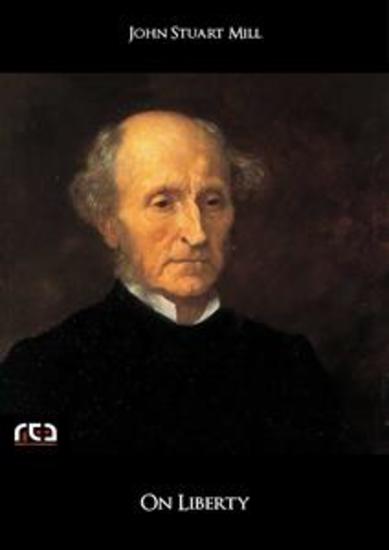
On Liberty - cover

On Liberty

John Stuart Mill

Publisher: REA Multimedia

  • 0
  • 0
  • 0

Summary

On Liberty is an essay by the English philosopher John Stuart Mill. Published in 1859, it applies Mill's ethical system of utilitarianism to society and state. Mill suggests standards for the relationship between authority and liberty. He emphasizes the importance of individuality, which he considers prerequisite to the higher pleasures—the summum bonum of utilitarianism. Furthermore, Mill asserts that democratic ideals may result in the tyranny of the majority. Among the standards proposed are Mill's three basic liberties of individuals, his three legitimate objections to government intervention, and his two maxims regarding the relationship of the individual to society.
On Liberty was a greatly influential and well-received work. Some classical liberals and libertarians have criticized it for its apparent discontinuity with Utilitarianism, and vagueness in defining the arena within which individuals can contest government infringements on their personal freedom of action. The ideas presented in On Liberty have remained the basis of much political thought. It has remained in print since its initial publication. A copy of On Liberty is passed to the president of the British Liberal Democrats as a symbol of office.
Mill's marriage to Harriet Taylor Mill greatly influenced the concepts in On Liberty, which was published shortly after she died.
Available since: 07/26/2023.

Other books that might interest you

  • American Indians - Fourth Edition - cover

    American Indians - Fourth Edition

    William T. Hagan, Daniel M. Cobb

    • 0
    • 0
    • 0
    William Hagan’s classic American Indians has become standard reading in the field of Native American history. Daniel M. Cobb has taken over the task of updating and revising the material, allowing the book to respond to the times. Spanning the arrival of white settlers in the Americas through the twentieth century, this concise account includes more than twenty new maps and illustrations, as well as a bibliographic essay that surveys the most recent research in Indian-white relations. With an introduction by Cobb, and a foreword by eminent historian Patricia Nelson Limerick, this fourth edition was published to mark the fiftieth anniversary of the original publication of American Indians.
    Show book
  • Beyond Good and Evil - Prelude to a Philosophy of the Future - cover

    Beyond Good and Evil - Prelude...

    Friedrich Nietzsche

    • 0
    • 0
    • 0
    🎧 Explore Nietzsche’s Masterpiece of Philosophy — Now in Audiobook Form 
    Beyond Good and Evil by Friedrich Nietzsche is a groundbreaking exploration of morality, truth, and the nature of human existence. In this audiobook edition, Nietzsche’s powerful ideas come to life through engaging narration, allowing listeners to experience one of philosophy’s most influential works in an accessible and immersive way. 
    🧠 A Revolutionary Critique of Morality 
    In this work, Nietzsche challenges traditional moral values, examining their origins and questioning their authority. He introduces the concept of the “will to power” as a central force shaping human behavior, encouraging listeners to think beyond inherited beliefs and explore a more self-directed and creative approach to life. 
    📚 Challenging Truth and Knowledge 
    Beyond Good and Evil explores the nature of truth, suggesting that it is shaped by perspective rather than existing as an absolute. Nietzsche’s provocative reflections invite listeners to rethink assumptions about knowledge, ethics, and human potential, making this audiobook both intellectually stimulating and deeply thought-provoking. 
    ✨ A Timeless Work of Intellectual Brilliance 
    Presented with Nietzsche’s distinctive wit and philosophical depth, this audiobook continues to inspire listeners across generations. Its exploration of power, ethics, and individuality has made it a cornerstone of modern philosophical thought. 
    🎙️ Perfect for students of philosophy, lifelong learners, and anyone interested in exploring profound ideas through listening, this audiobook edition of Beyond Good and Evil offers a compelling way to engage with Nietzsche’s enduring work.
    Show book
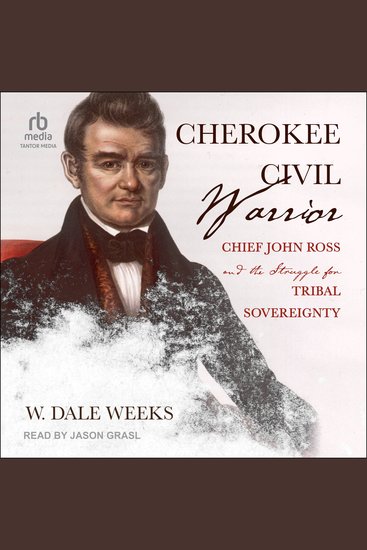
  • Cherokee Civil Warrior - Chief John Ross and the Struggle for Tribal Sovereignty - cover

    Cherokee Civil Warrior - Chief...

    W. Dale Weeks

    • 0
    • 0
    • 0
    John Ross served the Cherokee Nation in a public capacity for nearly fifty years, thirty-eight as its constitutionally elected principal chief. Historian W. Dale Weeks describes Ross's efforts to protect the tribe's interests amid systematic attacks on indigenous culture throughout the nineteenth century. At the outset of the Civil War, Ross called for all Cherokees to remain neutral in a war they did not support—a position that became untenable when the US withdrew its forces from Indian Territory. The vacated forts were quickly occupied by Confederate troops, who pressured the Cherokees to align with the South. 


    Viewed from the Cherokee perspective, these events can be seen in their proper context, as part of the history of US "Indian policy," failed foreign relations, and the Anglo-American conquest of the American West. This approach also clarifies President Lincoln's acknowledgment of the federal government's abrogation of its treaty obligation and his commitment to restoring political relations with the Cherokees—a commitment abruptly ended when Andrew Johnson sought to punish the Cherokees for their perceived disloyalty. 


    Centering a Native point of view, this book recasts and expands what we know about John Ross, the Cherokee Nation, its commitment to maintaining its sovereignty, and the Civil War era in Indian Territory.
    Show book
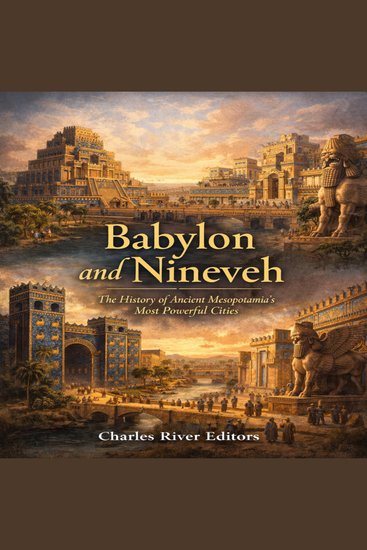
  • Babylon and Nineveh: The History of Ancient Mesopotamia’s Most Powerful Cities - cover

    Babylon and Nineveh: The History...

    Charles River Editors

    • 0
    • 0
    • 0
    Today, Babylon has become a byword for greed, excess, and licentiousness, mostly due to its mention in the Bible, but a closer examination reveals that Babylon was so much more, and even perhaps the most important city in the ancient world. Ancient Babylon was home to great dynasties that produced some of the world’s most influential leaders, most notably Hammurabi and Nebuchadnezzar, and these rulers invoked their wills on the entire ancient Near East and have been remembered as both progressive and cruel all at the same time. Babylon was also the seat of culture in ancient Mesopotamia and the place where scholars made amazing scientific advances that would not be eclipsed for several centuries. An examination of ancient Babylon demonstrates that it was truly the first great city in the ancient world. 
    Of course, the sheer span of history between Babylon’s power and today has produced plenty of historical questions and controversy. One of the things people most closely associate Babylon with is the Hanging Gardens, which, like the Great Pyramid of Giza, were considered both a technological marvel and an aesthetic masterpiece. Babylon was also instrumental in the development of the region’s religions, which continue to captivate people. 
    When Nineveh was at its height, the rulers of the city controlled an empire that encompassed Egypt, Anatolia, Mesopotamia, and parts of Iran. Eventually, the Assyrians overextended themselves and their enemies overthrew them and destroyed much of their cities. Nineveh became lost for centuries, only mentioned in fragments by classical Greek historians, but modern archaeological methods were able to bring the lost city back to life in the nineteenth century. Today, through a combination of archaeological reports, classical Greek accounts, and ancient cuneiform inscriptions, the chronology of Nineveh can be reconstructed. 
    Show book
  • Teaching Primary Programming with Scratch Pupil Book Year 6 - cover

    Teaching Primary Programming...

    Phil Bagge

    • 0
    • 0
    • 0
    Scratch teaching and learning made easy thanks to up-to-date, classroom-tested methodologies. Draws on the expertise of Code-IT and HIAS.
    Show book
  • Summer of 1940 The: The History of the Months that Decided the Fate of Europe in World War II - cover

    Summer of 1940 The: The History...

    Editors Charles River

    • 0
    • 0
    • 0
    One of the most famous people in the world came to tour the city of Paris for the first time on June 28, 1940. Over the next three hours, he rode through the city’s streets, stopping to tour L’Opéra Paris. He rode down the Champs-Élysées toward the Trocadero and the Eiffel Tower, where he had his picture taken. After passing through the Arc de Triomphe, he toured the Pantheon and old medieval churches, though he did not manage to see the Louvre or the Palace of Justice. Heading back to the airport, he told his staff, “It was the dream of my life to be permitted to see Paris. I cannot say how happy I am to have that dream fulfilled today.” Four years after his tour, Adolf Hitler would order the city’s garrison commander, General Dietrich von Choltitz, to destroy Paris, warning his subordinate that the city "must not fall into the enemy's hand except lying in complete debris." 
    The French had not expected the Germans would be able to move armored units through the Ardennes Forests, a heavily wooded region spanning parts of Belgium, France and the Netherlands. To the Allies’ great surprise, the Germans had no trouble rolling across these lands in the span of weeks. And by invading France from the north, the Germans simply avoided the Maginot Line. The French surrendered in June 1940, and the British narrowly escaped disaster by transporting thousands of soldiers and equipment across the English Channel at Dunkirk. Thus, by the middle of 1940, the Axis powers and the Soviet Union had overrun nearly all of Western Europe. With France out of the war, and without active participation by the United States, Great Britain virtually stood alone. 
    However, Operation Dynamo, as the British named the Dunkirk evacuation mission, bolstered British morale and defenses sufficiently to keep the “Sceptered Isle” in the war. This, in turn, led to the eventual entry of the United States, and helped doom Adolf Hitler's “Thousand-Year Reich” to a ruinous end in 1945.
    Show book