Join us on a literary world trip!
Add this book to bookshelf
Grey
Write a new comment Default profile 50px
Grey
Subscribe to read the full book or read the first pages for free!
All characters reduced
Mosby's War Reminiscences - Enriched edition Civil War Memoirs - cover

Mosby's War Reminiscences - Enriched edition Civil War Memoirs

John Singleton Mosby

Publisher: DigiCat

  • 0
  • 0
  • 0

Summary

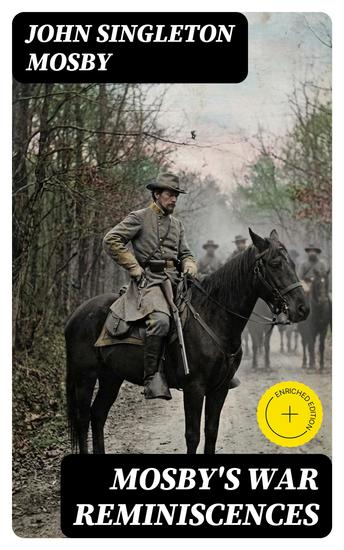
In "Mosby's War Reminiscences," John Singleton Mosby offers a compelling and introspective account of his experiences as a Confederate cavalry officer during the American Civil War. Written with a blend of vivid storytelling and analytical reflection, this memoir delves into the intricacies of guerrilla warfare, the strategic significance of his operations in Virginia, and the personal conflicts faced by soldiers. Mosby employs a first-person narrative style, capturing the dualities of bravery and fear, loyalty and betrayal, all while situating his recounting within the broader context of a country torn apart by war. John Singleton Mosby, known as the "Gray Ghost" of the Confederacy, was driven by a profound sense of duty and an unwavering loyalty to his cause. His firsthand experiences, coupled with his background as a lawyer and his deep understanding of military tactics, shaped his perspective on the war. Mosby's role as a commander of the 43rd Battalion Virginia Cavalry further informed his insights, making his reminiscences a critical primary source for understanding the Southern experience during the conflict. For readers interested in a nuanced and personal perspective on the American Civil War, "Mosby's War Reminiscences" is an invaluable addition to the scholarly exploration of this tumultuous period. Mosby's articulate reflections not only illuminate the harsh realities of war but also provoke profound considerations on the moral complexities faced by those who fought. This memoir is essential for historians, students, and anyone seeking to grasp the human element behind military strategy.

In this enriched edition, we have carefully created added value for your reading experience:
- A succinct Introduction situates the work's timeless appeal and themes.
- The Synopsis outlines the central plot, highlighting key developments without spoiling critical twists.
- A detailed Historical Context immerses you in the era's events and influences that shaped the writing.
- A thorough Analysis dissects symbols, motifs, and character arcs to unearth underlying meanings.
- Reflection questions prompt you to engage personally with the work's messages, connecting them to modern life.
- Hand‐picked Memorable Quotes shine a spotlight on moments of literary brilliance.
- Interactive footnotes clarify unusual references, historical allusions, and archaic phrases for an effortless, more informed read.
Available since: 10/11/2022.
Print length: 158 pages.
Other books that might interest you

  • History of Romania - An Overview of Wars Dictators and Social Changes - cover

    History of Romania - An Overview...

    Kelly Mass

    • 0
    • 0
    • 0
    The earliest evidence of human habitation in what is now Romania dates back to prehistoric times, but one of the first recorded mentions comes from the writings of the ancient Greek historian Herodotus. In his work Histories, Book IV, written around 440 BC, Herodotus described the Getae, a Thracian tribe residing in the region that would later become Romania. According to Herodotus, the Getae were defeated by Persian Emperor Darius the Great during his military campaign against the Scythians. This reference marks an important historical mention of the people inhabiting the area. 
    The Dacians, a branch of the Thracian people, are believed to have been closely related to the Getae mentioned by the Greeks. The Dacians inhabited a region known as Dacia, which included present-day Romania, Moldova, parts of northern Bulgaria, and surrounding areas. Their culture, society, and military strength developed significantly, making them a prominent force in southeastern Europe. The Dacians are often regarded as the ancestors of modern Romanians, and their legacy is a crucial element of Romanian national identity.
    Show book
  • The Man of the Crowd - Edgar Allan Poe and the City - cover

    The Man of the Crowd - Edgar...

    Michelle Van Parys, Scott Peeples

    • 0
    • 0
    • 0
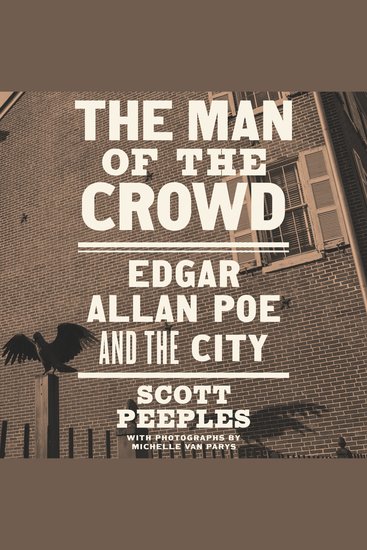
    How four American cities shaped Poe's life and writings 


    Edgar Allan Poe (1809–1849) changed residences about once a year throughout his life. Driven by a desire for literary success and the pressures of supporting his family, Poe sought work in American magazines, living in the cities that produced them. Scott Peeples chronicles Poe's rootless life in the cities, neighborhoods, and rooms where he lived and worked, exploring how each new place left its enduring mark on the writer and his craft. 


    Poe wrote short stories, poems, journalism, and editorials with urban readers in mind. He witnessed urban slavery up close, living and working within a few blocks of slave jails and auction houses in Richmond and among enslaved workers in Baltimore. In Philadelphia, he saw an expanding city struggling to contain its own violent propensities. At a time when suburbs were just beginning to offer an alternative to crowded city dwellings, he tried living cheaply on the then-rural Upper West Side of Manhattan, and later in what is now the Bronx. Poe's urban mysteries and claustrophobic tales of troubled minds and abused bodies reflect his experiences living among the soldiers, slaves, and immigrants of the American city.
    Show book
  • Doggerland and Cantre’r Gwaelod: The History and Legends Associated with the Sunken Lands of the British Isles - cover

    Doggerland and Cantre’r Gwaelod:...

    Editors Charles River

    • 0
    • 0
    • 0
    Among the most significant water displacement phenomena in the Western world was Doggerland on the northern European continent. The notable inundation occurred in both a steady and eruptive fashion covering a vast stretch of former tundra, a land bridge between today’s British Isles and the European continent. The event brought about the modern English Channel and an expanded North Sea, and unlike the early supercontinents, the inundation of Doggerland took place after the appearance of people. Incrementally submerged since roughly 18,000 years ago as the climate warmed, the patch of sea between Britain and Europe is the subject of much recent scientific scrutiny. Several fields are participating in the inquiry as to how and why the inundation took place, and the nature of the peoples that settled there. This encompasses earliest man to Neanderthals and on through the Mesolithic prototype of the modern European.  
    	Wales is a whimsical country with a powerful, complex, myth-filled and oft disputed history. In 2004, geneticists working with geographers and archaeological colleagues undertook a “People of the British Isle” study. They sought out thousands of volunteers, all four of whose grandparents had been born in the same place, and they analyzed their genetic make-up. “Modern genetic analysis can read the patterns of variation in our complete set of DNA . . . that change subtly over time,” producing a genetic signature that reveals geographical origins. This provides a window into history and helps explain why Wales is so singular and self contained. (Settlers: Genetics, geography and the peopling of Britain N D). The results of this project confirmed that the Welsh are unique, despite the common belief that the term “Celtic” is an homogenous concept that can be used as an overall term that includes the Irish, the Welsh, the Scottish clans, and Cornwellians. “Celtic” is much more nuanced. 
    Show book
  • Convivial Futures - Views from a Post-Growth Tomorrow - cover

    Convivial Futures - Views from a...

    Frank Adloff, Alain Caillé

    • 0
    • 0
    • 0
    What steps are needed to make life better and more convivial? The Second Convivialist Manifesto (2020) has presented a short diagnosis of the current crises and sketches of a possible and desirable future. It has been a necessary work of theoretical synthesis, but preserving a viable world also requires passion. It is thus urgent to show what people would gain from a shift to a post-neoliberal and post-growth convivialist future. This volume includes a theoretical debate on convivialism which reflects dystopias and shows the multiple and major obstacles that convivialism will have to face. Mainly, however, the contributors to this volume create sketches of a convivial future and collect accounts of another future world which is attractive for as many as possible.
    Show book
  • Boyne and Culloden: The History of the Decisive Battles that Thwarted the Jacobite Cause - cover

    Boyne and Culloden: The History...

    Editors Charles River

    • 0
    • 0
    • 0
    The striking saga of the Glorious Revolution is one that continues to fascinate historians around the world today. Some chroniclers have referred to these events as the “Bloodless Revolution,” but other historians say otherwise. The ruthless game of politics that William of Orange and England’s King James II played may have been somewhat bloodless in comparison to history's greatest rebellions, but the rebels, soldiers, and other pawns who lost their lives along the way must not be forgotten. The revolution would also pave the path for a series of bloody wars between England and Scotland, the result of which has left quite a legacy of its own.  
    	Furthermore, it’s important to remember that James did try to return to England, and there would be two more years of war before James II gave up the quest to regain the throne. On July 1, 1690, the famous Battle of the Boyne was fought near the town of Drogheda, about five miles west of Baltray. The combatants were the supporters of King James II and King William III, both claiming to be the lawful sovereigns of England, Scotland, and Ireland. The conflict was part of a broader struggle for the destiny of the British Isles, and though it was not the decisive battle of the war, it is the most famous, the commemoration of which still fans tensions between Protestants and Catholics in Northern Ireland and the Republic of Ireland. In its aftermath, James II would again leave the British Isles, this time for good.  
    	The Jacobites conjure up many images to 21st century Britons, including romantic heroism, the Outlander series, and Bonnie Prince Charlie as the doomed hero of the cause, but Jacobitism was a cause that had far reaching consequences across 18th century Europe. The Jacobites were not only supporters of the exiled Stuart monarchy, but also against the political and religious settlements agreed to across the British Isles.
    Show book
  • Diane von Fürstenberg: A short biography - 5 Minutes: Short on time – long on info! - cover

    Diane von Fürstenberg: A short...

    5 Minutes, 5 Minute Biographies,...

    • 0
    • 0
    • 0
    Diane von Fürstenberg, Belgian-American art and fashion icon: Life and work in a short biography! Everything you need to know, brief and concise. Infotainment, education and entertainment at its best!
    Show book