Join us on a literary world trip!
Add this book to bookshelf
Grey
Write a new comment Default profile 50px
Grey
Subscribe to read the full book or read the first pages for free!
All characters reduced
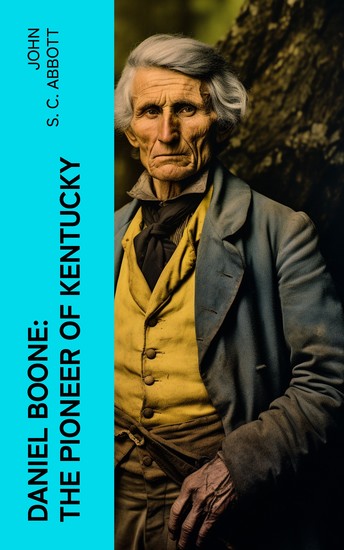
Daniel Boone: The Pioneer of Kentucky - cover

Daniel Boone: The Pioneer of Kentucky

John S. C. Abbott

Publisher: e-artnow

  • 0
  • 0
  • 0

Summary

"Daniel Boone: The Pioneer of Kentucky" by John Stevens Cabot Abbott recounts the fascinating history of one of America's most well-known and quasi-mythological figures, Daniel Boone. Abbot's story weaves a tale of romance, adventure, and action in a way that is sure to grip readers from the very first word until the last page.
Available since: 11/25/2023.
Print length: 495 pages.


Other books that might interest you

  • Ten Thousand Hours in Paradise: Volume 3 - Reckoning - cover

    Ten Thousand Hours in Paradise:...

    Andrew M. Crusoe

    • 0
    • 0
    • 0
    The Reckoning started with the lava flow, threatening to trap Andrew in Puna. Then the hurricane hit. 
    From seeing the hidden fractals within the trees, to meditating in silence for 10 days, to falling in love and seeing that love crumble, the Big Island gives Andrew unparalleled opportunities to grow. Buoyed by a new project, Andrew starts off the new year with a fresh energy and is guided to the biweekly talks of a Hawaiian elder. 
    The elder reminds him of truths that he’d forgotten, and he leads the group through the healing techniques of laulima and ho‘oponopono, giving Andrew a new energy to release the last shred of attachment to a person who simply doesn’t want to be with him. 
    Now that he has created more space and clarity, his social circle expands, and Andrew meets someone who becomes one of the strongest catalysts for joy and growth in his life. But she is leaving the island in just six months. 
    Andrew faces a forking path. All the while, lava is heading toward Pahoa, threatening to isolate all of Puna. The elder taught him that love prevails all trauma, but will that be enough? 
    Ten Thousand Hours in Paradise is a 3-volume true story about the consciousness shift that happens when you embrace Hawaii. Volume 3: Reckoning takes flight with earthshaking changes, powerful healing, a new lava flow, and a hurricane, resulting in a reckoning that changes Andrew forever.
    Show book
  • The Humbugs of the World - An Account of Humbugs Delusions Impositions Quackeries Deceits and Deceivers Generally in All Ages - cover

    The Humbugs of the World - An...

    P. T. Barnum

    • 0
    • 0
    • 0
    P. T. Barnum, best-known for his own use of hoaxes in his popular Barnum & Bailey Circus, found that the use of hoaxes was acceptable when the audience was getting the entertainment they paid for. When it came to religious hoaxes, fraud, and swindling, Barnum was avidly against it. He even went so far as to offer $500 to any medium who could prove that they actually could reach the dead. In this exposé of humbugs and the scams they perpetuate, he goes after religious quacks, witches and sorcerers, and other forms of frauds in all walks of life. He discusses some of the most notable scams of the time and reveals the perpetrators as humbugs. In addition to scams, he also discusses business affairs and his own opinions of the current events of his time.
    Show book
  • Rome's Greatest Generals - Leaders Who Shaped the Empire - cover

    Rome's Greatest Generals -...

    Rogan Fish

    • 0
    • 0
    • 0
    The rise of the Roman general was a gradual yet transformative process that shaped the very foundation of Rome’s military might. In the early days of the Roman Republic, military leadership was closely intertwined with social status and political influence. Unlike later periods where generals held almost absolute power, early Roman commanders were often aristocrats or elected officials whose primary duties lay not only in warfare but also in governance and civil administration. 
    One of the pivotal aspects that shaped the rise of the Roman general was the evolution of military traditions. Initially, Rome’s military structure was heavily influenced by the Etruscans and other neighboring cultures. Early Roman armies were comprised of citizen-soldiers who fought primarily to protect their homeland rather than for conquest. Generals were typically chosen from the patrician class, and their leadership was seen as both a duty and an honor. As Rome expanded, the need for a more organized and strategic military became apparent, leading to the emergence of commanders who were not just noblemen but skilled tacticians. 
    The social and political influences on the role of the general were significant. During the Republic, the Senate played a crucial role in appointing generals, often selecting consuls or appointed military tribunes. These leaders were expected to exemplify Roman virtues such as bravery, discipline, and piety. The successes of early generals not only brought personal glory but also bolstered their political careers. Victorious commanders could parlay their military achievements into political power, as evidenced by figures like Scipio Africanus, who leveraged his triumphs against Carthage to gain influence within the Senate.
    Show book
  • More Than My Scars - The Power of Perseverance Unrelenting Faith and Deciding What Defines You - cover

    More Than My Scars - The Power...

    Kechi Okwuchi, Simon Cowell

    • 0
    • 0
    • 0
    The first thing you will notice when you meet Kechi Okwuchi is her scars. One of just two survivors of a devastating plane crash that killed more than 100 people, sixteen-year-old Kechi was left with third-degree burns over sixty-five percent of her body. More Than My Scars is her incredible story. A story of not just surviving impossible odds but thriving in a world that is too often caught up with how we look on the outside rather than seeing that our true value is within. 


    Now in her early thirties, Kechi has spent the last sixteen years refusing to be defined by her trauma. Follow her as she decides for herself what role her scars will play in her life before society decides for her. Her strong sense of identity, rooted in seeing herself the way God sees her, has allowed her to live authentically in a world that constantly seeks to define us by its ever-changing (and ever-shallow) standards. Kechi's story will inspire you to love and accept yourself as you are and confidently present your true self to the world.
    Show book
  • Priest In Geylang: The Untold Story of the Geylang Catholic Centre - cover

    Priest In Geylang: The Untold...

    Fr. Guillaume Arotçarena

    • 0
    • 0
    • 0
    Cosmopolitan Singapore—emblematic of globalised capitalism—usually calls to mind a number of clichés: orderly, clean and green, a shopping and business paradise, and a model of sound economic management. Tourists, journalists and passing businessmen cast an absent-minded glance at the local society, noting that the food is excellent, e-communication works well and armoured tanks are absent on street corners.  
    But after 17 years living here, the author shows a different side of Singapore: looking at her from the grassroots. Beyond his personal atypical story, he draws with light strokes of the brush, a picture of a warm and generous people, much less passive than one is often given to think. He also describes the difficulties faced by civil society, and tracks the rapid social evolution in the city-state as it is confronted with major challenges: a nose-diving demography, cramped territory with an infrastructure which cannot be extended indefinitely, and massive immigration which is increasingly resented by the local population.  
    Most of all, Fr. Arotcarena places on record the work and significance of the Geylang Catholic Centre, which makes this priest in Geylang himself a legend. 
     
    "In essence, Priest in Geylang is more than a much needed missing piece in the history of Singapore. It is a reflection of how political hypersensitivity and unchecked power can lead to the destruction of something good in civil society. This is a part of history that we might never regain, unless we are able to re-embrace the spirit and dedication of Fr Guillaume Arotçarena and his Geylang Catholic Centre volunteers. This insight is something we might have heard murmured in rumour corridors, but never given the clarity of print from the perspective of an insider... you will find no lack of humour, spirit, and a certain contemplative fortitude." 
    -The Online Citizen
    Show book
  • Public Enemies - cover

    Public Enemies

    Editors Charles River

    • 0
    • 0
    • 0
    Nobody was ever convicted for the “Saint Valentine’s Day Massacre,” the most famous gangland hit in American history, but it’s an open secret that it was the work of America’s most famous gangster, Al Capone. Indeed, “Scarface” has captured the nation’s popular imagination since Prohibition, managing to be the most notorious gangster in America while living a very visible and high profile life in Chicago. 	In the end, it wasn’t the bodies or the violence that landed Capone in the slammer; it was taxes. After being convicted, Capone managed to continue running his business rackets from behind bars, forcing authorities to move America’s most notorious gangster to America’s most notorious prison on Alcatraz Island.  
    	Two months after Franklin D. Roosevelt’s inauguration in 1933, a petty thief who had spent almost a decade behind bars for attempted theft and aggravated assault was released from jail. By the end of the year, that man, John Dillinger, would be America’s most famous outlaw: Public Enemy Number One. From the time of his first documented heist in early July 1933, until his dramatic death in late July of the following year, he would capture the nation’s attention as had no other outlaw since Jesse James. 
    	The man who became Public Enemy Number One after the deaths of John Dillinger and Pretty Boy Floyd was Lester Joseph Gillis, whose alias “George Nelson” eventually gave way to the nickname “Baby Face Nelson”. Despite the almost playfully innocent nickname, and the fact that he was not as notorious as two of his partners in crime, Dillinger and Floyd, Baby Face Nelson was the worst of them all.  
    While the Barrow Gang was no more murderous than other outlaws of the era, their romantic relationship and the discovery of photographs at one of their hideouts added a more human dimension to Bonnie and Clyde. In some way though, the sensationalized version of their life on the run is less interesting than reality.
    Show book