Join us on a literary world trip!
Add this book to bookshelf
Grey
Write a new comment Default profile 50px
Grey
Subscribe to read the full book or read the first pages for free!
All characters reduced
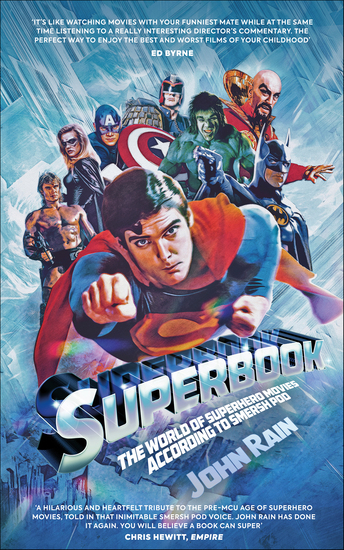
Superbook - The World of Superhero Movies According to Smersh Pod - cover

Superbook - The World of Superhero Movies According to Smersh Pod

John Rain

Publisher: Polaris

  • 0
  • 0
  • 0

Summary

If you mention the word ‘superhero’ these days, everyone and their mum can tell you a potted history of it all, because they’ve sat through numerous phases, extended TV series, and animated side-specials of expansive character-development, culminating in extraordinary final chapters, with the screen literally stacked full of characters battling one another while your eyes bleed with excitement and spectacle.

But before 1997, people would generally only think of a few things: Christopher Reeve smiling as he keeps a watchful eye over Earth’s atmosphere, Michael Keaton running around Gotham while dressed in molded rubber. Nicholas Hammond's Spider-Man being hauled up a wall on a rope, pretending to grip it, while also being a foot away from it. Bill Bixby trying not to get angry, Flash Gordon arriving in another galaxy, that was essentially a soft porn film, Dolph Lundgren mumbling in broken English while Frank Langella hammed behind a mask, and how Michael Crawford dressed like a bird was the closest thing Disney had to a cinematic universe.

Despite starting on a high in 1978, by 1997 there could be no doubt that the genre was dead. Out was the sheen of verisimilitude, and in were Bat-credit-cards, ugly CGI, slashed budgets, rubber nipples and Martin Sheen in a girdle.

So, whatever happened to the heroes? Join John Rain as he walks through every film of note from 1978 to 1997, and examines just what went wrong, and how. Is it a bird? Is it a plane? No, it’s SUPERBOOK.
Available since: 01/09/2024.
Print length: 380 pages.

Other books that might interest you

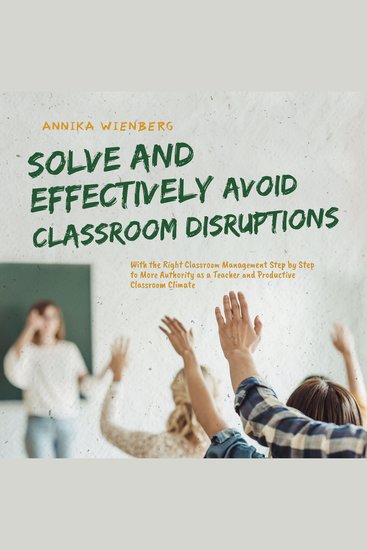
  • Solve and Effectively Avoid Classroom Disruptions With the Right Classroom Management Step by Step to More Authority as a Teacher and Productive Classroom Climate - cover

    Solve and Effectively Avoid...

    Annika Wienberg

    • 0
    • 0
    • 0
    Do you feel drained in your job? Do your students make your life hell? Do you find it hard to get up in the morning because you dread the school day? Then this book can help you. The job of a teacher is not easy. Disruptions and provocative students can significantly complicate your school day and rob you of any fun in teaching. Especially in this professional field, the danger of burnout should not be underestimated. You may already be at a point where you are thinking about throwing in the towel.
    But it doesn't have to be that way. Embark on a journey that will bring you effective change. Both your mental health and your students will thank you!
    Show book
  • The Psychology Of Man's Possible Evolution - cover

    The Psychology Of Man's Possible...

    P.D. Ouspenski

    • 0
    • 0
    • 0
    Ouspensky describes how a man must work simultaneously on his knowledge and his being to find inner unity and why although his development depends on his own efforts, this is very difficult to achieve without guidance from a "School."
    Show book
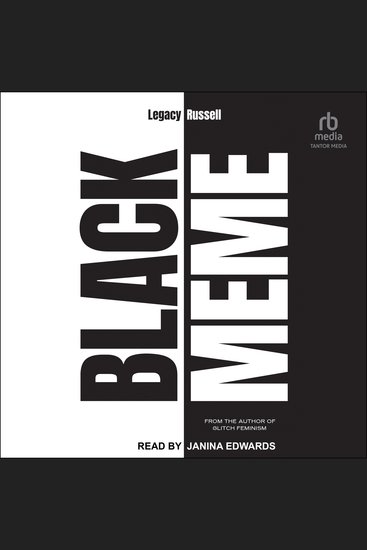
  • Black Meme - A History of the Images that Make Us - cover

    Black Meme - A History of the...

    Legacy Russell

    • 0
    • 0
    • 0
    Representations of Blackness have always been integral to our understanding of of the modern world. In Black Meme, Legacy Russell, author of Glitch Feminism, explores the construct, culture, and material of the "meme" as mapped to Black visual culture from 1900 to present day. Mining archival and contemporary media Russell explores the impact of Blackness, Black life, and death on contemporary conceptions of viral culture, borne in the age of the internet. 


    These meditations include: the circulation of Lynching postcards; Jet magazine's publication of a picture of Emmett Till in his open casket; how the televised broadcast of protesters in Selma enters the nation's living room and changed the debate on civil rights; how a citizen-recorded video of the Rodney King beating at the hands of the LAPD became known as the "first viral video"; what the Anita Hill hearings tell us about the media's creation of the Black icon; Tamara Lanier's fight to reclaim the photos of her enslaved ancestors, Renty and Delia, from Harvard's archive; the Facebook Live recording by Lavish "Diamond" Reynolds of the murder of her partner Philando Castile by the police after being stopped for a broken tail light; and more. Legacy Russell explores the power of these tokens and argues that without the contributions of Black people, digital culture would not exist in its current form.
    Show book
  • Environmental Care - Protecting Our Planet through Strategies for a Sustainable Future (2 in 1) - cover

    Environmental Care - Protecting...

    Jeron Iris

    • 0
    • 0
    • 0
    The two titles in this bundle are: 
    Agriculture - Agriculture stands at the heart of human civilization, sustaining populations, economies, and ecosystems around the globe. As the primary source of food and materials for countless industries, agriculture is fundamental to our daily lives. Yet, as demand for food and resources grows, traditional farming practices have come under scrutiny for their impact on land, water, and ecosystems. This situation has sparked a profound exploration into how agriculture can evolve to meet future needs without compromising environmental health or resource availability. In response to these challenges, sustainable agriculture has emerged as a guiding framework. Rather than depleting resources, sustainable agriculture seeks to work in harmony with nature, fostering productive systems that can endure and even improve over time.  
    Environmental Science - Environmental Science is an interdisciplinary field that integrates various scientific disciplines to study the natural world and the impact of human activities on it. This branch of science explores the complex interactions between living organisms, their physical surroundings, and the broader ecosystems they form. The primary goal of environmental science is to understand how natural systems function, identify environmental problems, and develop strategies for addressing these issues. At its core, environmental science seeks to answer fundamental questions about the earth's resources, how they are used, and how human actions influence the balance of ecosystems. It draws from biology, chemistry, physics, geology, and social sciences to provide a comprehensive understanding of the environment.
    Show book
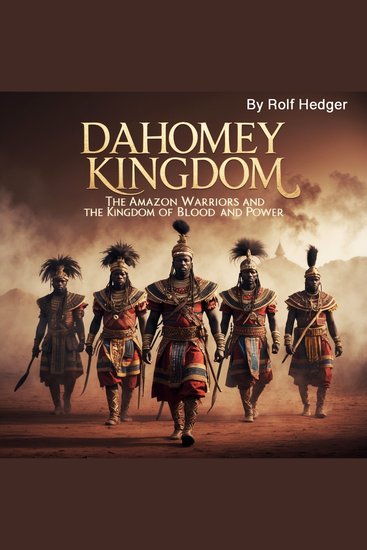
  • Dahomey Kingdom - The Amazon Warriors and the Kingdom of Blood and Power - cover

    Dahomey Kingdom - The Amazon...

    Rolf Hedger

    • 0
    • 0
    • 0
    The Kingdom of Dahomey emerged as a dominant force in West Africa during the early 17th century, rising from a small tribal settlement to a powerful and organized state. Located in present-day Benin, Dahomey was founded by the Fon people, who established a centralized monarchy that would go on to shape the region’s history for centuries. The kingdom’s foundation was marked by military expansion, strategic leadership, and a distinct socio-political structure that set it apart from neighboring states. 
    The origins of Dahomey can be traced back to the reign of King Houegbadja, who ruled in the early 1600s. He is often credited with transforming the region into a formidable kingdom by unifying various smaller communities under a single rule. Before Dahomey’s consolidation, the region was dominated by the more powerful Allada Kingdom. However, through strategic alliances and calculated warfare, the rulers of Dahomey gradually expanded their influence, laying the groundwork for future dominance. 
    One of the key aspects of Dahomey’s rise was its strong central government. Unlike many other African polities of the time, Dahomey’s monarchy operated with an intricate administrative system. The king, known as the Ahosu, wielded absolute power but was supported by a council of advisors and military leaders who ensured efficient governance. This structured political organization allowed Dahomey to maintain stability even as it expanded through military campaigns.
    Show book
  • The Birth of Anarchism - 1849-1887 - cover

    The Birth of Anarchism - 1849-1887

    Pierre-Joseph Proudhon, Mikhail...

    • 0
    • 0
    • 0
    Mankind can rule itself without the force of top-down authority, and freedom is more than just choosing how to meet the needs and demands of capital. Inequality is structural and intentional, not inevitable and necessary. It does not have to be this way. In solidarity, we are better.Think for yourself, and question authority.This is the essence of anarchism, which has a bad name and reputation because it attacks the necessity of centralised power and authority. The media archetype is Tyler Durden, filled with violence and nihilism – yet anarchism is the most positive of political philosophies, one that Jesus and Buddha both preached, stating that empathy and a rejection of authority were key to human flourishing. Neither would disagree with most early anarchists.Proudhon, whose “property is robbery” is perhaps the most well-known anarchist slogan, lays out the conceptual foundation for key anarchist ideas. He argues that usury (charging interest) is a fundamental harm to society, that there is enough for everyone if we simply take other values to be higher than capital gain, that mutualism is inevitable, and that all governments and ideologies make the same mistake, in trying to change society from the top. Positive change must arise from the great masses of humanity, not from their rulers.Bakunin's speeches are about solidarity arising from the masses, and the ground for a global reconfiguration.Louis Lingg was convicted to death with six others, for being one of the ‘Chicago Anarchists’. They were executed to make a political point, based on corrupted evidence and perjury. His statement is one of contempt for the powers that be, and his belief that mankind should be free and should fight until it is.We end with Kropotkin, who firmly believed in decentralized society. He believed that the greatest strength of mankind lies in the masses, not their rulers, and exhorts us to “Act for Yourselves”.
    Show book