Join us on a literary world trip!
Add this book to bookshelf
Grey
Write a new comment Default profile 50px
Grey
Subscribe to read the full book or read the first pages for free!
All characters reduced
The Border and the Buffalo - cover

The Border and the Buffalo

John R. Cook

Publisher: e-artnow

  • 0
  • 0
  • 0

Summary

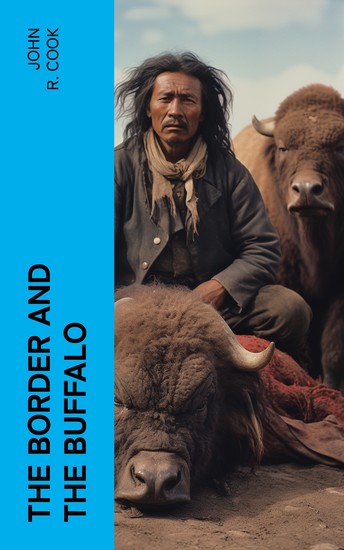
The Border and the Buffalo' is one of the most influential first-hand accounts about buffalo hunting. The writer John R. Cook described the arrangement of hunts, camp routines and marketing of the buffalo coats in detail. In addition, Cook talks about his Civil War experiences through this work. It is worth reading for anyone interested in the Buffalo hunting period of American History.
Available since: 11/23/2023.
Print length: 256 pages.

Other books that might interest you

  • The Kybalion - The Forbidden Knowledge of the Hermetic Philosophy and the 7 Universal Laws: Understanding the Art of Hermetic Alchemy - Annotated and Illustrated - cover

    The Kybalion - The Forbidden...

    Initiates Three, William Walker...

    • 0
    • 0
    • 0
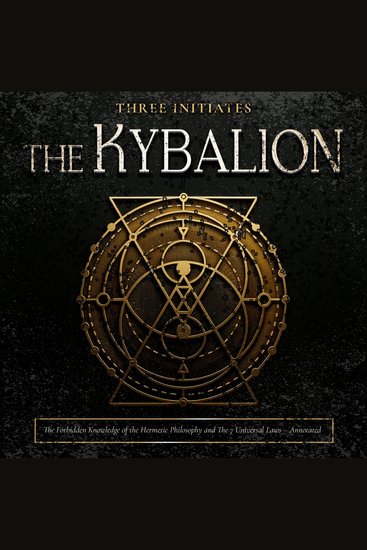
    “The All is Mind; the Universe is Mental.” With this bold statement, The Kybalion, attributed to the mysterious Three Initiates, invites readers into a world where ancient wisdom meets universal truth. First published in 1908, the book distills the essence of Hermetic philosophy, a tradition linked to Hermes Trismegistus, the legendary figure seen as a bridge between human consciousness and divine knowledge. 
    At its core, The Kybalion presents the Seven Hermetic Principles: Mentalism, Correspondence, Vibration, Polarity, Rhythm, Cause and Effect, and Gender. These principles are described as the laws governing both the visible and invisible realms. By understanding them, seekers can align with cosmic patterns, deepen self-mastery, and unlock hidden dimensions of existence. 
    This edition expands upon the original text with valuable insights: commentary and reflections, historical context, advanced Hermetic practices such as Alchemy, Astrology, and Theurgy, comparative analysis with other spiritual traditions, and a Hermetic Q&A for further clarity. 
    Emerging during a wave of fascination with mysticism in the early 20th century, The Kybalion quickly became a cornerstone of Western esotericism. The anonymity of its authors only adds to its allure, leaving readers to wonder at their identities and sources. More than a book, The Kybalion remains a guide to uncovering not only the mysteries of the universe but also the depths of one’s own mind.
    Show book
  • Composing Capital - Classical Music in the Neoliberal Era - cover

    Composing Capital - Classical...

    Marianna Ritchey

    • 0
    • 0
    • 0
    The familiar old world of classical music, with its wealthy donors and ornate concert halls, is changing. The patronage of a wealthy few is being replaced by that of corporations, leading to new unions of classical music and contemporary capitalism. In Composing Capital, Marianna Ritchey lays bare the appropriation of classical music by the current neoliberal regime, arguing that artists, critics, and institutions have aligned themselves—and, by extension, classical music itself—with free-market ideology. More specifically, she demonstrates how classical music has lent its cachet to marketing schemes, tech firm-sponsored performances, and global corporate partnerships. As Ritchey shows, the neoliberalization of classical music has put music at the service of contemporary capitalism, blurring the line between creativity and entrepreneurship, and challenging us to imagine how a noncommodified musical practice might be possible in today’s world.
    Show book
  • The Kubark Counterintelligence Interrogation Manual - cover

    The Kubark Counterintelligence...

    Central Intelligence Agency

    • 0
    • 0
    • 0
    Released by the Freedom of Information Act. This document is a thorough description of how the CIA recommends interrogating a subject. To get the information that is needed there is nothing withheld short of torture. For example in "Threats and Fears," the CIA authors note that "the threat of coercion usually weakens or destroys resistance more effectively than coercion itself. The threat to inflict pain, for example, can trigger fears more damaging than the immediate sensation of pain." Under the subheading "Pain," the guidelines discuss the theories behind various thresholds of pain, and recommend that a subject's "resistance is likelier to be sapped by pain which he seems to inflict upon himself" such rather than by direct torture. The report suggests forcing the detainee to stand at attention for long periods of time. A section on sensory deprivations suggests imprisoning detainees in rooms without sensory stimuli of any kind, "in a cell which has no light," for example.
    Show book
  • The Invisible Hand - Economic Intelligence And Industrial Espionage - cover

    The Invisible Hand - Economic...

    Davis Truman

    • 0
    • 0
    • 0
    "The Invisible Hand" delves deep into the clandestine world of economic intelligence and industrial espionage, where the forces shaping global economies are often unseen and unknown. 
    In this riveting exploration, author Davis Truman unveils the intricate web of intrigue that underpins modern capitalism. From covert operations to sophisticated cyber espionage, this book reveals how nations and corporations deploy their resources relentlessly for competitive advantage. 
    Drawing from real-life examples and historical case studies, "The Invisible Hand" exposes governments' and businesses' shadowy tactics to gain insight into their rivals' strategies, steal trade secrets, and manipulate markets. 
    Show book
  • Go Back to Where You Came From - And Other Helpful Recommendations on How to Become an American - cover

    Go Back to Where You Came From -...

    Wajahat Ali

    • 0
    • 0
    • 0
    Go back to where you came from, you terrorist! 
     
    This is just one of the many warm, lovely, and helpful tips that Wajahat Ali and other children of immigrants receive on a daily basis. Go back where, exactly? Fremont, California, where he grew up, but now an unaffordable place to live? Or  
    Pakistan, the country his parents left behind a half-century ago? 
     
    While living the American Dream, young Wajahat devoured comic books (devoid of brown superheroes) and fielded well-intentioned advice from uncles and aunties (“Become a doctor!”). He had turmeric stains under his fingernails, was  
    accident-prone, suffered from OCD, and wore Husky pants. That is, he was as American as his neighbors, with roots all over the world. Then, while Ali was studying at University of California, Berkeley, 9/11 happened. Muslims replaced  
    Communists as America’s enemy #1, and he became an accidental spokesman and ambassador of all ordinary, unthreatening things Muslim-y. 
     
    Now a middle-aged dad, Ali has become one of the foremost and funniest public intellectuals in America. In Go Back to Where You Came From, he tackles the dangers of Islamophobia, white supremacy, and chocolate hummus, peppering  
    personal stories with astute insights into national security, immigration, and pop culture. In this refreshingly bold, hopeful, and uproarious memoir, Ali offers indispensable lessons for cultivating a more compassionate, inclusive, and delicious America.
    Show book

  • Trail of Tears: An Enthralling Guide to the Choctaw and Chickasaw Removal the Seminole Wars Creek Dissolution and Forced Relocation of the Cherokee Tribe - cover

    Trail of Tears: An Enthralling...

    Billy Wellman

    • 0
    • 0
    • 0
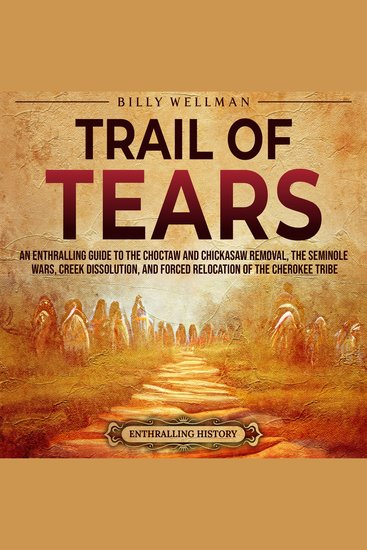
    The removal of the Native Americans west of the Mississippi River during the 1800s to clear the way for settlers is a tragic story that involves human suffering on a grand scale.  
    The policy of Manifest Destiny said America was a morally superior nation that had the right to build an empire from the East Coast to the West Coast, much to the detriment of the Native Americans who stood in the way. This book will document the Trail of Tears, bringing to light many events that occurred in the background while describing a few prominent Native American chiefs, such as Seminole Chief Abiaka and Cherokee Chief John Ross, and some of the European-Americans with whom they clashed.  
    We will also go beyond standard history and take a closer look at the assimilation that occurred between the white settlers and the Native Americans. The unique characteristics of the tribes that met the Spanish settlers who arrived in Florida and the other European settlers who arrived on the East Coast are often not fully realized. We will take a closer look at this blending of cultures to give you a clearer picture of what the Cherokee, Chickasaw, Choctaw, Creek, and Seminoles were like by the time of the Trail of Tears. 
    Here are just some of the things you will discover in this book:Why tribes developed various forms of ChristianityThe reasons behind chiefs signing treaties to give away native landsGeorge Washington’s views on the Native AmericansThe Five Civilized Tribes and how they differed from each otherHow the average person viewed Native Americans in the 19th centuryDavey Crockett’s opinion on the relocation of Native AmericansThe Indian Removal Act of 1830 and how it impacted the Trail of TearsAnd so much more! 
    Scroll up and click the “add to cart” button to begin learning more about the Trail of Tears!
    Show book