Join us on a literary world trip!
Add this book to bookshelf
Grey
Write a new comment Default profile 50px
Grey
Subscribe to read the full book or read the first pages for free!
All characters reduced
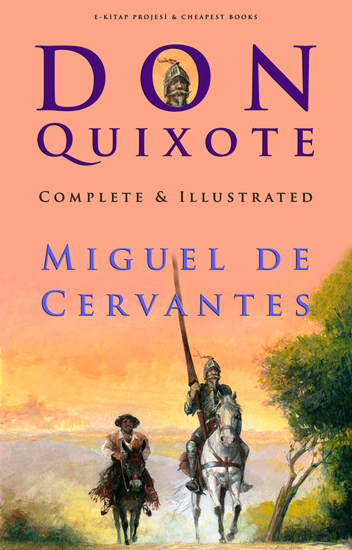
Don Quixote - [Complete & Illustrated] - cover

Don Quixote - [Complete & Illustrated]

John Ormsby, Miguel de Cervantes

Publisher: E-Kitap Projesi & Cheapest Books

  • 0
  • 0
  • 0

Summary

The history of our English translations of "Don Quixote" is instructive. Shelton's, the first in any language, was made, apparently, about 1608, but not published till 1612. This of course was only the First Part. It has been asserted that the Second, published in 1620, is not the work of Shelton, but there is nothing to support the assertion save the fact that it has less spirit, less of what we generally understand by "go," about it than the first, which would be only natural if the first were the work of a young man writing currente calamo, and the second that of a middle-aged man writing for a bookseller.

On the other hand, it is closer and more literal, the style is the same, the very same translations, or mistranslations, occur in it, and it is extremely unlikely that a new translator would, by suppressing his name, have allowed Shelton to carry off the credit.

In 1687 John Phillips, Milton's nephew, produced a "Don Quixote" "made English," he says, "according to the humour of our modern language." His "Quixote" is not so much a translation as a travesty, and a travesty that for coarseness, vulgarity, and buffoonery is almost unexampled even in the literature of that day.

But it is, after all, the humour of "Don Quixote" that distinguishes it from all other books of the romance kind. It is this that makes it, as one of the most judicial-minded of modern critics calls it, "the best novel in the world beyond all comparison." It is its varied humour, ranging from broad farce to comedy as subtle as Shakespeare's or Moliere's that has naturalised it in every country where there are readers, and made it a classic in every language that has a literature.
Available since: 01/25/2024.
Print length: 1000 pages.
Other books that might interest you

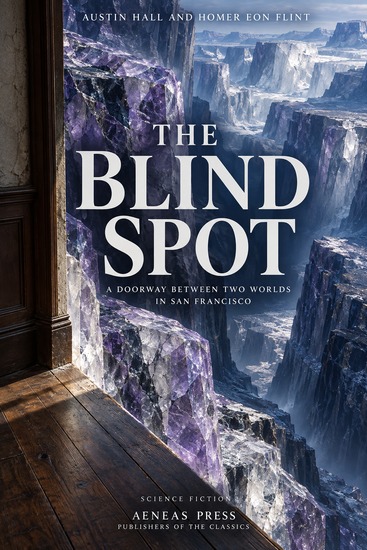
  • The Blind Spot - A Doorway Between Two Worlds in San Francisco - cover

    The Blind Spot - A Doorway...

    Homer Eon Flint, Austin Hall

    • 0
    • 0
    • 0
    A professor vanishes in front of his class while proving that the occult can be measured, leaving behind a blue jewel and a promise; a young man spends years in the house where it happened trying to open the same door. Hall and Flint wrote it for Argosy in 1921, and the pulp readership argued about the ending for a decade. The first half is one of the best mysteries the magazines produced; the second half explains it, which is the risk such books run. Fifty-eight plates by Hammershøi and Grimshaw trace the hush of empty rooms and lamplit streets, the same quiet threshold the novel dares its characters to cross.
    Show book
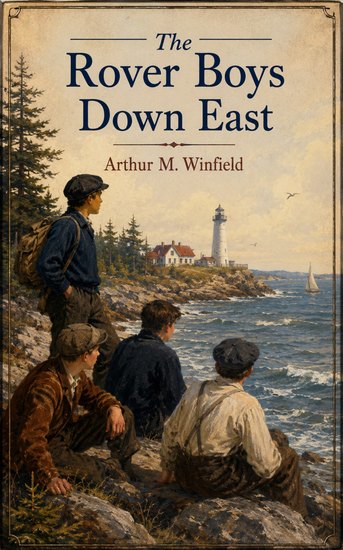
  • The Rover Boys Down East - cover

    The Rover Boys Down East

    Arthur M. Winfield

    • 0
    • 0
    • 0
    The Rover Boys Down East by Arthur M. Winfield is a captivating classic adventure novel that follows the ever-adventurous Rover brothers as they journey to a new region filled with unfamiliar landscapes, intriguing mysteries, and exciting opportunities for discovery. Along the way, they encounter unexpected obstacles, meet memorable characters, and face challenges that test their courage, ingenuity, and unwavering loyalty to one another.
    
    With his signature blend of fast-paced storytelling, suspense, humor, and wholesome values, Arthur M. Winfield crafts an engaging tale that celebrates friendship, perseverance, integrity, and the thrill of exploration. As the Rover brothers unravel mysteries and overcome adversity, readers are drawn into an entertaining adventure that highlights the rewards of determination and teamwork.
    
    A beloved installment in the enduring Rover Boys series, The Rover Boys Down East continues the tradition of action-packed adventures that have captivated generations of readers. Perfect for fans of classic juvenile fiction, historical adventures, and timeless stories of family and discovery, this enduring novel offers an unforgettable journey filled with excitement, curiosity, and heart.
    Show book
  • Scarlet Runners - From their pens to your ears genius in every story - cover

    Scarlet Runners - From their...

    James S Pyke-Nott

    • 0
    • 0
    • 0
    The bookshelves of British literature are incredible collections that have gathered together centuries of very talented authors.  From these Isles their fame spread and whilst among their number many are now forgotten or neglected their talents endure.  Among them is James S Pyke-Nott.
    Show book
  • For the Term of His Natural Life - A Convict in the Tasmanian Penal Colony - cover

    For the Term of His Natural Life...

    Marcus Clarke

    • 0
    • 0
    • 0
    An innocent man is transported to Van Diemen's Land and passes through the whole convict system - the hulks, Macquarie Harbour, Norfolk Island - and out the other side barely human. Clarke researched it in the colonial archives and interviewed survivors; it is the great Australian novel of the convict era. Fifty-seven plates from Hogarth to Holman Hunt, 1732 to 1877, fix the novel in the English social world whose courts and prisons sent its characters to the other side of the earth.
    Show book
  • Kasimir Stanislavovitch - From their pens to your ears genius in every story - cover

    Kasimir Stanislavovitch - From...

    Ivan Bunin

    • 0
    • 0
    • 0
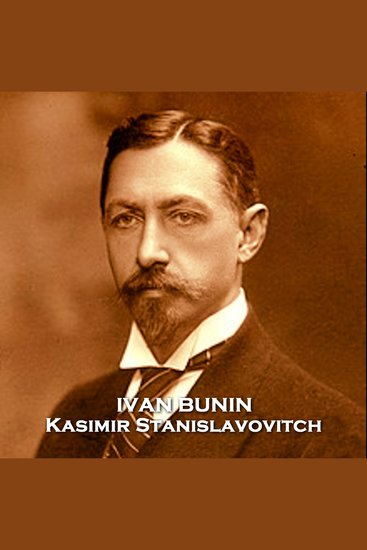
    Ivan Alekseyevich Bunin was born on 22nd October 1870 in Voronezh province, in the South-West of the Russian Empire. 
    His early life was plagued by his Father’s gambling habits which caused his education to be erratic and the family to lose most of their wealth. 
    Bunin published his first poem in 1887 in St Petersburg and later in Oryol he worked for the local paper and became its editor, handily allowing him to publish his own poems and short stories.  There he met and married Varvara Pashchenko.  Ivan Bunin's debut book of poetry ‘Poems (1887–1891)’ was published in 1891. 
    This poetry and his translation of Longfellow garnered him his first Pushkin Prize.  Now he switched to writing prose and his novella ‘Antonov Apples’ is regarded as his first masterpiece.  Many more would follow. 
    The October Revolution of 1905 found Bunin in the Crimea.  Scenes of ‘class struggle’ he saw more as the oppressed people's craving for anarchy and destruction. 
    In November 1906 he began a passionate affair with Vera Muromtseva, within a few months they were touring through Egypt and Palestine.  ‘The Bird's Shadow’ collection was the result.   
    His second Pushkin Prize came in 1909 for Poems (1903–1906) and further translations.  He was now elected to the prestigious Russian Academy. 
    More widespread fame came in 1910 with ‘The Village’, a controversial and bleak portrayal of Russian country life.  Travel too beckoned them back to the Middle East, Ceylon (now Sri Lanka) and for winters in Capri with their friend Maxim Gorky.  
    That friendship suddenly ended in April 1917 as the revolution began to ferment in war-ravaged Russia.  After the Bolsheviks took power and the upheavals continued, he decided to leave Russia, finally achieving that in early 1920.  
    It would take some time to heal the wounds and stress he had been under and for his writing to begin again.  Settled in France, Bunin published many of his previous works and collections of novellas.  He also made regular contributions to the Russian emigre press.  
    Although reluctant to become involved in politics, Bunin was now feted as both a writer and the figurehead of non-Bolshevik Russian values and traditions.  In 1933 he became the first Russian to be awarded the Nobel Prize for Literature ‘for following through and developing with chastity and artfulness the traditions of Russian classic prose.’  
    In 1938 Bunin began working on the celebrated cycle of nostalgic, and erotically themed stories known Dark Avenues (or Dark Alleys).  
    As World War II broke out he chose to remain in Grasse spending the war at his remote Villa Jeanette, high in the mountains.  
    Ivan Bunin was a staunch anti-Nazi, and often, under difficult conditions, sheltered fugitives after Vichy was occupied by the Germans.  He wrote but did not publish during these years until on August 23rd the Nazi’s fled Grasse without a fight.  The next day the Americans came.  
    In May 1945 he returned to Paris and, apart from convalescing at times in Juan-les-Pins, he stayed for the rest of his life. 
    After 1948, with his health deteriorating, Bunin concentrated upon writing his memoirs and a book on Chekhov.  His last years were overshadowed by bitterness and despair at the situation in Russia and the treatment of its peoples.  He was suffering now from asthma, bronchitis and chronic pneumonia. 
    Ivan Alekseyevich Bunin died in a Paris attic flat on 8th November 1953.  Heart failure, cardiac asthma and pulmonary sclerosis were given as the causes of death.  He was 83.
    Show book
  • The Forest Reverie - cover

    The Forest Reverie

    Edgar Allan Poe

    • 0
    • 0
    • 0
    The Forest Reverie: Edgar Allan Poe was an American writer, poet, editor, and literary critic who is best known for his poetry and short stories.
    
    ’Tis said that when
    The hands of men
    Tamed this primeval wood,
    And hoary trees with groans of woe,
    Like warriors by an unknown foe,
    Were in their strength subdued,
    The virgin Earth Gave instant birth
    Show book