Join us on a literary world trip!
Add this book to bookshelf
Grey
Write a new comment Default profile 50px
Grey
Subscribe to read the full book or read the first pages for free!
All characters reduced
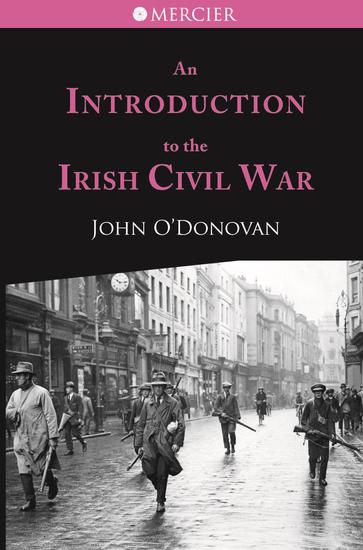
An Introduction to the Irish Civil War - Accessible ePub - cover

An Introduction to the Irish Civil War - Accessible ePub

John O'Donovan

Publisher: Mercier Press

  • 0
  • 0
  • 0

Summary

During the Irish Civil War, events of late 1922 and early 1923 together with waves of 'dishonourable' killings created poisoned relations between Republicans and 'Free Staters' which would last for several generations. The most enduring of these controversies, a policy of summary executions carried out by the Provisional Government from November 1922, continues to surround the argument.


This book offers a fresh perspective on the causes, development and consequences of the Irish Civil War. Triggered by the signing of the Anglo-Treaty, there were those that would accept nothing less than complete Irish independence. Very few IRA commanders active in the field supported the Treaty and, as happens often in the dissection of civil wars, controversy over the conduct of both sides figures heavily within the text, where,  at a local and national level, it left bitter legacies.


This book offers an overview of the war in all regions of Ireland.
Available since: 04/12/2022.
Print length: 160 pages.
Other books that might interest you

  • Instrument of War An - cover

    Instrument of War An

    Martin Hicks

    • 0
    • 0
    • 0
    It is August 1863 and the Confederate Navy Cruiser Palmetto escapes from Charleston harbour to resume her career as a raider, hunting the shipping of the United States.  The succeeding months see her range the Atlantic Ocean before facing a wild passage of Cape Horn, as her Captain Thomas Grover steers his ship for the Orient, seeking ever more victims in his mission to cripple the overseas commerce of the enemy.Martin Hicks lives in Fraserburgh in Aberdeenshire Scotland and began writing after a career in education. “An Instrument of War,” the sequel to “Palmetto,” is his tenth book, all of them set in the war of 1861-65.  He is currently working on the third and final book of the “Palmetto” series.
    Show book
  • Settling the Score -- Part 1: The Favor (first time gay sports erotica) - cover

    Settling the Score -- Part 1:...

    Josh Hunter

    • 0
    • 11
    • 0
    What’s worse than a bully? --A bully who’s the hottest jock in school! 
    Wade Johnson thinks that he can get away with anything, just because he’s the quarterback of our football team. He caught me staring at him during gym class freshman year, and branded me a “queer”. He and his teammates have been making my life hell ever since. 
    But golden boy Wade just slipped up, and now he’s about to lose it all: his spot on the team, his hot cheerleader girlfriend, his college scholarship. And he’s begging for my help. 
    So what am I going to do with an arrogant jock who needs to be taught a lesson?  
    • First time gay BDSM high school jock slave sex story MM erotica •
    Show book
  • Circassians The: The Turbulent History of the Ethnic Group in the North Caucasus - cover

    Circassians The: The Turbulent...

    Editors Charles River

    • 0
    • 0
    • 0
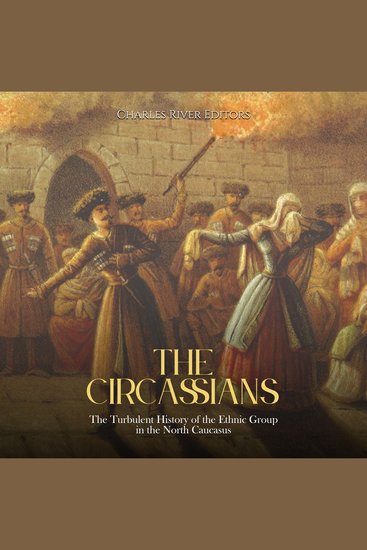
     Circassia could be broadly split into a western and eastern region. Eastern Circassia was inhabited by Kabardians who mainly spoke Kabardian while Western Circassia was made up of Adyghe, who spoke the eponymously-named Adyghe. As a result, discussions about the Circassians tend to split the geography of Circassia into two portions: Eastern Circassia, or Kabardia, and Western Circassia, or Adyghe. Geographically, Kabardia was situated in the middle segment of the Caucasian peninsula, with steppes to the north, and higher mountains to the south. The two key rivers in the Circassia region are the Kuban River, originating near Mount Elbrus in the Caucasus Mountains and flowing from south to north into the Sea of Azov, and the Terek River, originating in the Mtskheta-Mtianeti region of Georgia and flowing from west to east into the Caspian Sea. The Sunzha is another of the major rivers that dissects the region and acts as a tributary of the Terek. These waterways would provide strategic points in the long Russo-Circassian wars. The Caucasus region itself contains a repository of raw materials important in history (and today), including petroleum, natural gas, copper, manganese and tungsten. It also has fertile soil capable of growing wheat, barley, corn, sunflower, and many fruits and vegetables. It is unsurprising, therefore, that outsiders have coveted the region. 
    	 The Circassian people were never united as a single political bloc, which provided a core problem for their survival as larger powers, outsiders and invaders were able to exploit differences. They were invaded on many occasions during their history in the pre-modern period, including by the Mongols and the Khazars.
    Show book
  • How to Kill a Witch - The Patriarchy's Guide to Silencing Women - cover

    How to Kill a Witch - The...

    Zoe Venditozzi, Claire Mitchell

    • 0
    • 0
    • 0
    Scotland, 1563: Crops failed. People starved. And the Devil's influence was stronger than ever―at least, that's what everyone believed. If you were a woman living in Scotland during this turbulent time, there was a very good chance that you, or someone you knew, would be tried as a witch. 
     
    During the chaos of the Reformation, violence against women was codified for the first time in the Witchcraft Act―a tool of theocratic control with one chilling goal: to root out witches and rid the land of evil. What followed was a dark and misogynistic chapter in history that fanned the flames of witch hunts across the globe, including in the United States and beyond. 
     
    In How to Kill a Witch, Zoe Venditozzi and Claire Mitchell, hosts of the popular Witches of Scotland podcast, unravel the grim yet absurdly bureaucratic process of identifying, accusing, trying, and executing women as witches. 
     
    This captivating (and often infuriating) account, which weaves a rich tapestry of trial transcripts, witness accounts, and the documents that set the legal grounds for the witch hunts, exposes how this violent period of history mirrors today's struggles for justice and equality.
    Show book
  • Gowanus Crossing - A Brooklyn Boyhood - cover

    Gowanus Crossing - A Brooklyn...

    Vincent Coppola

    • 0
    • 0
    • 0
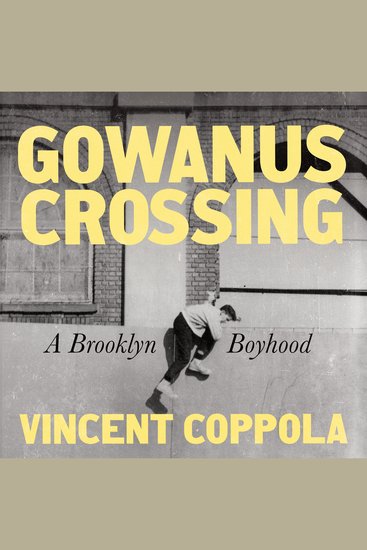
    A veteran journalist's gritty, darkly funny memoir about growing up Italian American in 1960s Brooklyn.Mid-century Gowanus: Decades before the Whole Foods went up and the lofts were refurbished, a raucous, unruly, proudly Italian American enclave clings to the banks of the noxious canal. The Mafia and the Catholic Church—two centuries-old, rigidly hierarchical institutions defined by oppressive codes of silence—dominate the neighborhood.In Gowanus Crossing, Vincent Coppola brings the world of his childhood ferociously to life. A second generation Italian-American, Coppola grew up in old Gowanus, a bookish kid for whom Park Slope, to say nothing of Central Park, might as well have been the moon. His journey through and eventually out of the neighborhood is harrowing, hilarious, and populated with a cast of characters who burst off the page: a four-foot-tall wiseguy who walks a lion on a leash, a predatory priest, mobbed-up undertakers, Coppola’s three wayward brothers, and a host of assorted schemers, scammers, mobsters, bookies, gamblers, and certifiable crazies.Combining Frank McCourt’s gimlet eye with the exuberant menace of a Scorsese movie, Gowanus Crossing captures a lost world in all its glory.
    Show book
  • Ghostriders 1968-1975 - "Mors De Caelis" Combat History of the AC-130 Spectre Gunship Vietnam Laos Cambodia (1) - cover

    Ghostriders 1968-1975 - "Mors De...

    William Walter

    • 0
    • 0
    • 0
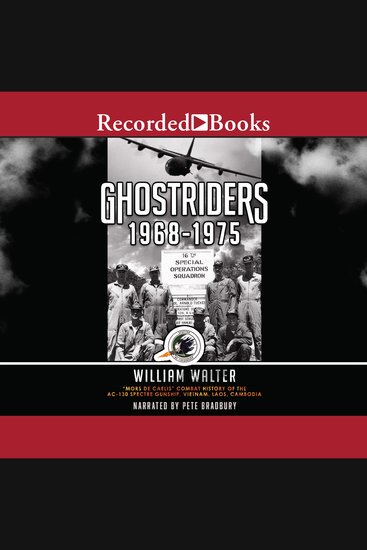
    If necessity is the mother of invention, the AC-130 gunship was definitely her offspring. 
     
    Ghostriders: Mors De Caelis is a comprehensive history of AC-130 gunship combat operations in Vietnam, Laos, and Cambodia. The story begins with the first AC-130 in 1968, and ends in 1975 at the end of the war in Vietnam. It tells the life and  
    death stories of Spectre crews, who faced extreme danger while hunting trucks on the Ho Chi Minh Trail and providing fire support for US and allied ground forces. Though the AC-130 was credited with 10,000 trucks destroyed, this phenomenal  
    achievement came with a hefty price. Fifty-two Spectre crewmen and six AC-130s were lost during combat operations in Laos and Vietnam. 
     
    Written in third-person omniscient point of view by an experienced combat veteran and Spectre historian, all aspects of the story are derived from official declassified records and personal interviews. The level of detail and context  
    figuratively puts the reader in the aircraft as an observer, flying alongside a Spectre crew in combat. Above all, this is the story of Spectre—accurate, detailed, compelling, and unique.
    Show book