¡Acompáñanos a viajar por el mundo de los libros!
Añadir este libro a la estantería
Grey
Escribe un nuevo comentario Default profile 50px
Grey
Suscríbete para leer el libro completo o lee las primeras páginas gratis.
All characters reduced
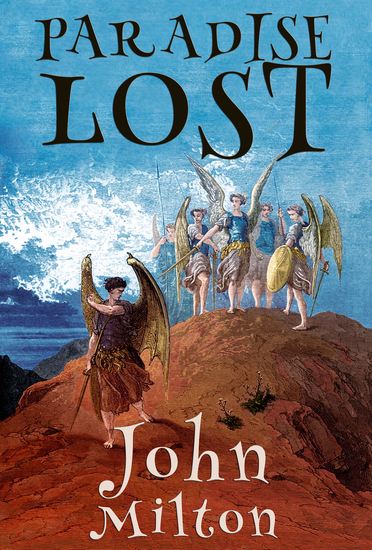
Paradise Lost - cover

Paradise Lost

John Milton

Editorial: E-Kitap Projesi & Cheapest Books

  • 0
  • 0
  • 0

Sinopsis

Paradise Lost is an epic poem in blank verse by the 17th-century English poet John Milton (1608–1674). The first version, published in 1667, consisted of ten books with over ten thousand lines of verse. A second edition followed in 1674, arranged into twelve books (in the manner of Virgil's Aeneid) with minor revisions throughout and a note on the versification. It is considered by critics to be Milton's "major work", and helped solidify his reputation as one of the greatest English poets of his time.

The poem concerns the Biblical story of the Fall of Man: the temptation of Adam and Eve by the fallen angel Satan and their expulsion from the Garden of Eden. Milton's purpose, stated in Book I, is to "justify the ways of God to men"

Short Summary:

The poem is separated into twelve "books" or sections, the lengths of which vary greatly (the longest is Book IX, with 1,189 lines, and the shortest Book VII, with 640). The Arguments at the head of each book were added in subsequent imprints of the first edition. Originally published in ten books, a fully "Revised and Augmented" edition reorganized into twelve books was issued in 1674, and this is the edition generally used today.

The poem follows the epic tradition of starting in medias res (Latin for in the midst of things), the background story being recounted later. Milton's story has two narrative arcs, one about Satan (Lucifer) and the other following Adam and Eve. It begins after Satan and the other rebel angels have been defeated and banished to Hell, or, as it is also called in the poem, Tartarus. In Pandæmonium, Satan employs his rhetorical skill to organise his followers; he is aided by Mammon and Beelzebub. Belial and Moloch are also present. At the end of the debate, Satan volunteers to poison the newly created Earth and God's new and most favoured creation, Mankind. He braves the dangers of the Abyss alone in a manner reminiscent of Odysseus or Aeneas. After an arduous traversal of the Chaos outside Hell, he enters God's new material World, and later the Garden of Eden.

At several points in the poem, an Angelic War over Heaven is recounted from different perspectives. Satan's rebellion follows the epic convention of large-scale warfare. The battles between the faithful angels and Satan's forces take place over three days. At the final battle, the Son of God single-handedly defeats the entire legion of angelic rebels and banishes them from Heaven. Following this purge, God creates the World, culminating in his creation of Adam and Eve. While God gave Adam and Eve total freedom and power to rule over all creation, He gave them one explicit command: not to eat from the Tree of the knowledge of good and evil on penalty of death.
Disponible desde: 30/01/2024.
Longitud de impresión: 400 páginas.


Otros libros que te pueden interesar

  • The Misandrist - cover

    The Misandrist

    Lisa Carroll

    • 0
    • 0
    • 0
    'Maybe it's in the air. Maybe it's the weather. Maybe it's the pace of life. Maybe it's breathing in that black soot everyday on the tube. Maybe it's commuting. Maybe it's the cultural consciousness. Maybe it's being a millennial. Maybe it's the climate crisis. Maybe it's the patriarchy.'
    When 'intimidating' Rachel and eternal 'nice guy' Nick meet at an awkward work Christmas party, what was meant to be a one-night-stand becomes a sexual odyssey of self-discovery… and mutual destruction.
    Adrift, isolated and insecure, they scramble for new ways to connect. Can some playful, passionate pegging provide a pathway through the pitfalls of modern relationships and present the possibility of a deeper bond?
    A penetrating comedy about the search for sexual knowledge, true love and top-notch Tupperware, Lisa Carroll's play The Misandrist was first produced by Metal Rabbit Productions at the Arcola Theatre, London, in May 2023.
    Ver libro
  • All’s Well That Ends Well - cover

    All’s Well That Ends Well

    Tom Wheelwright, William...

    • 0
    • 0
    • 0
    The young and virtuous physician’s daughter Helena desperately loves Count Bertram, but he regards her as beneath his notice. 
    When Helena cures the king of France of a mortal illness, he rewards her with Bertram’s hand, but before their marriage can be consummated, the count flees. To win her husband back again, Helena forms a daring and resourceful plan. 
    A plot to unmask the strutting soldier Parolles makes up another strand in this sometimes disturbing comedy of deception and disguise. 
    ACT IScene 1. Bertram, the young Count of Rossillion, is leaving home to take his place at the court of the King of France, who is gravely ill. Bertram bids farewell to his mother the widowed Countess, her friend the old lord Lafew and the young and virtuous Helena, daugther of a famous doctor now deceased, who lives as a dependent in the old Countess’ household. Helena is passionately in love with Bertram, though without hope because he is so far above her in birth. Parolles, a blustering soldier who has attached himself to Bertram, is also going to the French court and Helena determines to follow. She has learned the mysteries of medicine from her father; if she can cure the King, she may win Bertram’s heart.Scene 2. The ailing King tells of war between the Florentines and Sienese; he will give permission to any young gentleman of France who wishes to go to Italy in search of glory. Bertram arrives and the King greets him warmly. Scene 3. The Countess gently forces Helena to admit her love for Bertram and reveal her plan to attempt the King’s cure. The old lady kindly offers her support. 
    ACT IIScene 1. Lafew announces the arrival at court of a young woman who claims to be able to heal the King. The King is deeply skeptical, but Helena persuades him to allow her to make the attempt. Should she succeed, the King is to grant her the husband of her choice.Scene 2. The Countess’ fool Lavatch is to be sent to the court. He claims that he has a response that will serve him in all social situations, but the Countess exposes his folly.Scene 3. Helena has restored the King to joyful health. He offers her the hand in marriage of any of the young lords at court, but when she chooses Bertram he recoils in horror. Angrily, the King commands Bertram to wed Helena instantly. The marriage takes place, but Bertram vows that he will never sleep with his bride and determines to steal away to the Italian wars at once.Scene 4. Helena receives a letter from Bertram telling her that he has been called away and ordering her to take leave of the King.Scene 5. Lafew warns Bertram that Parolles is a hollow sham. Helena enters and Bertram dismisses her curtly, instructing her to return to the Countess. 
    ACT IIIScene 1. The Duke of Florence prepares to welcome the young Frenchmen who come to fight on his behalf.Scene 2. Helena has received a letter from Bertram: until she can get the ring from his finger, which he has vowed never to remove, and produce a child that she has conceived by him, she will never be able to call him husband.Scene 3. The Duke of Florence, impressed by Bertram’s military promise, has given him an important command. Scene 4. The Countess has received a letter from Helena telling her that she has gone on a pilgrimage to atone for her sin in aspiring to Bertram’s love and freeing him from his responsibility for her. The Countess bitterly deplores her son’s arrogance and blindness.Scene 5. Helena has come to Florence where she meets a kindly widow and her beautiful daughter, Diana. The widow tells her that Bertram has fought heroically in the war but also that he has been attempting to seduce Diana. Scene 6. The French soldiers hatch a plot to convince Bertram of Parolles’ cowardliness; pretending to be enemy soldiers, they will capture him, then see if he is prepared to betray his friends.Scene 7. Helena, too, is setting a plot. Diana is to pretend to yield to Bertram’s suit on condition that he give her his ring. She
    Ver libro
  • More American - cover

    More American

    Sharon Hashimoto

    • 0
    • 0
    • 0
    Sharon Hashimoto reconstructs a collective memory, conjuring the voices of grandparents, children, soldiers, and " those left to tell." In moving detail, these poems convey the realities of assimilation, service, and internment as experienced by Japanese Americans during, and in the decades following, the Second World War. In this stunning collection, Hashimoto reckons with the limitations of language, and by extension, notions of citizenship. She deftly sounds the dissonances in the language of loyalty and allegiance.
    Ver libro
  • Kojak - Tourist Trap - cover

    Kojak - Tourist Trap

    Arthur Korb

    • 0
    • 0
    • 0
    A dramatic performance by the Power Performance Players of one of Kojak's cases from the fictional files of the New York Police Department.
    Ver libro
  • Short Poetry Collection 113 - cover

    Short Poetry Collection 113

    Various

    • 0
    • 0
    • 0
    This is a collection of poems read by LibriVox volunteers for October 2012.
    Ver libro
  • mahogany - cover

    mahogany

    Eric Lewis

    • 0
    • 0
    • 0
    mahogany takes its name from the dark wood prized for its durability, workability, and elegant look, and from the Diana Ross movie, whose theme song asks if what lies ahead is what you really want. This book is the third in a trilogy, and like the first two books it is steeped in pop music. Each poem here takes its title from a line of a Diana Ross and The Supremes song, as well as songs from Diana Ross' solo career. Short lines flow down the page like postmodern psalms, connecting dailyness to timelessness, merging the historical and the beloved through reverence for family, music, and the life we actually live. mahogany is a lament for the passing of time and unimaginable loss, and at the same time it models the daily search for joy, and the deep shine that can arise from the darkest times.[sample poem]i'm like a woman who once knew splendor*sometimes i feel like the pink pantherall naked and pinklost in the morass ofdo the best you can todayand nigga heal thy selfour end of winterspirits breaklike old tibetan snowi rememberyou was conflictedand i found myself alonehere on my ancient hurtthe disquieting humof living historydear god, pleaseput my head above my heartwe can only be togetherif the stories are toldplain facesame instrumentjust a couple of coke bottlesfull of gasolinelike god and rainis a waste of timemy mother used to clean housesas a childsome days i can barelyget out of bedin my mindshe's like diana rossscrubbing the white lady's stairsin lady sings the bluesexcept prettierand with green eyesi've just been livingoff of cough dropsand water and angerjust sitting in the whole foodsparking lot eating pineapplei am literallythe definition of "hot mess"pain changes everythingsomebody comeand pick upmy limp bodyoff the groundi am dyinga slow ohio deathwe miss you starmanit's our first sunrise of the burn* "dark side of the world"erica lewis
    Ver libro