Join us on a literary world trip!
Add this book to bookshelf
Grey
Write a new comment Default profile 50px
Grey
Subscribe to read the full book or read the first pages for free!
All characters reduced
An Apache Campaign in the Sierra Madre - Enriched edition - cover

An Apache Campaign in the Sierra Madre - Enriched edition

John Gregory Bourke

Publisher: DigiCat

  • 0
  • 0
  • 0

Summary

In "An Apache Campaign in the Sierra Madre," John Gregory Bourke provides a meticulous account of the military expeditions against Apache tribes in the rugged Sierra Madre region. Blending narrative journalism with historical analysis, Bourke's prose is marked by a vivid and immersive style that captures the harsh realities faced by soldiers and Native Americans alike. His detailed observations of the geography, culture, and warfare strategies illuminate the complexities of the Apache campaigns during the late 19th century, set against the backdrop of American military expansion and colonial attitudes towards indigenous populations. John Gregory Bourke was a military officer and ethnologist whose experiences in the field deeply informed his writing. Born in 1846 and serving as a scout and interpreter during the Apache Wars, Bourke possessed a profound understanding of both the military's operations and the native tribes' perspectives. His unique position allowed him to document not only the external conflicts but also the rich cultural tapestry of the Apache people, making his work an essential resource for understanding this tumultuous period in American history. This book is highly recommended for readers interested in military history, ethnography, and the complexities of American frontier life. Bourke's firsthand experiences, combined with his analytical insight, make it a compelling read that offers invaluable perspectives on the interactions between the U.S. military and Native American tribes.

In this enriched edition, we have carefully created added value for your reading experience:
- A succinct Introduction situates the work's timeless appeal and themes.
- The Synopsis outlines the central plot, highlighting key developments without spoiling critical twists.
- A detailed Historical Context immerses you in the era's events and influences that shaped the writing.
- A thorough Analysis dissects symbols, motifs, and character arcs to unearth underlying meanings.
- Reflection questions prompt you to engage personally with the work's messages, connecting them to modern life.
- Hand‐picked Memorable Quotes shine a spotlight on moments of literary brilliance.
- Interactive footnotes clarify unusual references, historical allusions, and archaic phrases for an effortless, more informed read.
Available since: 05/17/2022.
Print length: 60 pages.
Other books that might interest you

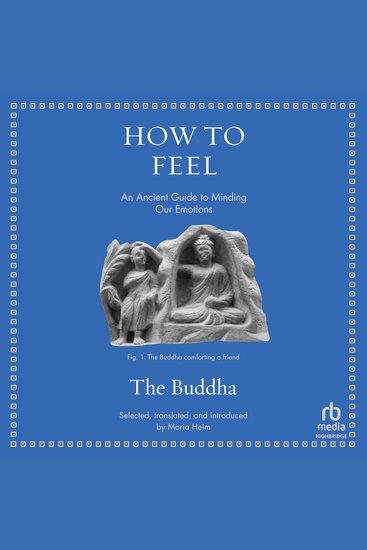
  • How to Feel - An Ancient Guide to Minding Our Emotions - cover

    How to Feel - An Ancient Guide...

    The Buddha

    • 0
    • 0
    • 0
    To feel is to suffer. But do we have to suffer as much as we do? Twenty-five hundred years ago, the Buddha discovered that practices of mindfully observing our feelings and emotions can help us gain some distance from them. In How to Feel, Maria Heim provides new translations of essential early Buddhist teachings on mindfulness meditation and connects them to recent findings in psychology and neuroscience. A superb meditation manual and insightful exploration of psychology, the book also provides a brief introduction to Buddhism.Drawing from the Samyutta Nikaya, an early canonical collection, How to Feel introduces Buddhist practices of mindfulness. Using them, we can watch feelings come and go like winds passing through the sky. We can observe what causes our negative emotions and learn to shift our attention to other things. We can see where emotions lead us and learn to redirect them. We will still feel, but, with practice, emotions will have less control over us.Just as they did in ancient India, the teachings in How to Feel offer today’s audiences radically new and more enlightened ways to experience emotions.
    Show book
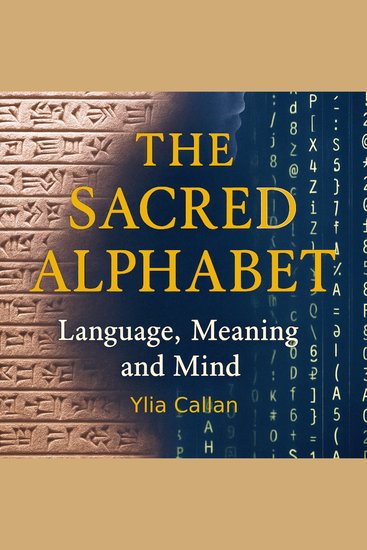
  • The Sacred Alphabet - Language Meaning and Mind - cover

    The Sacred Alphabet - Language...

    Ylia Callan

    • 0
    • 0
    • 0
    This audiobook is narrated by an AI Voice.   
    The Sacred Alphabet - Language, Meaning and Mind invites listeners on a profound journey into the origins and mysteries of human language. From the first sounds of the human soul to the sacred symbols of ancient scripts, this audiobook explores how sound, symbol, and meaning weave together to shape consciousness itself. 
    Discover how alphabets and glyphs evolved from sacred art into tools of thought, how words carry emotional weight that can heal or harm, and how the shared roots of speech reveal deep connections across cultures. With chapters spanning the music of meaning, the emotional resonance of words, and the divine dimensions of sacred texts, The Sacred Alphabet illuminates the living relationship between language, mind, and spirit. 
    This audiobook is for listeners who are fascinated by linguistics, drawn to spiritual traditions, or curious about the hidden architecture of human thought, this audiobook offers a rich tapestry of insights into how language shapes reality - and how the future of words, symbols, and consciousness may redefine what it means to be human.
    Show book
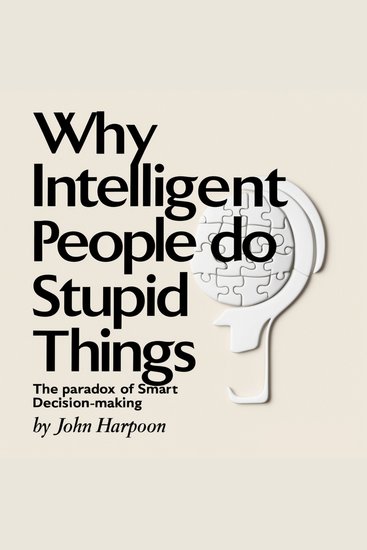
  • Why Intelligent People Do Stupid Things - The Paradox of Smart Decision-Making - cover

    Why Intelligent People Do Stupid...

    John Harpoon

    • 0
    • 0
    • 0
    Intelligence is often seen as the key to making sound decisions, yet many highly intelligent individuals find themselves making choices that defy logic and reason. This paradox is at the heart of why even the smartest people can sometimes act in ways that are seemingly irrational. Despite possessing vast knowledge, sharp problem-solving skills, and an ability to think critically, intelligent people often fall victim to cognitive biases, emotional triggers, and societal pressures that lead them to make poor decisions. Understanding why this happens requires an exploration into the intricate relationship between intelligence and decision-making. 
      
    At the core of this paradox lies the idea that rationality and intelligence do not always go hand in hand. While intelligence may increase the ability to process information and analyze complex scenarios, it does not always shield individuals from the cognitive biases that distort perception and judgement. In fact, many intelligent individuals are even more susceptible to these biases because they rely heavily on their analytical skills, assuming that their logic will always lead them to the right conclusion. However, this overreliance can blind them to the emotional and social factors that influence decision-making, causing them to overlook key details or make choices based on faulty assumptions. 
      
    Furthermore, decision-making is not solely a rational process; emotions play a crucial role in guiding our actions, and they can often override logic. Intelligent individuals are not immune to emotional influences such as stress, fear, or the desire for instant gratification. These emotions can cloud judgement, leading to impulsive decisions or the failure to consider long-term consequences. This is particularly true in high-pressure situations where the stakes are high, and the need to make quick decisions can push even the most intelligent person into making mistakes.
    Show book
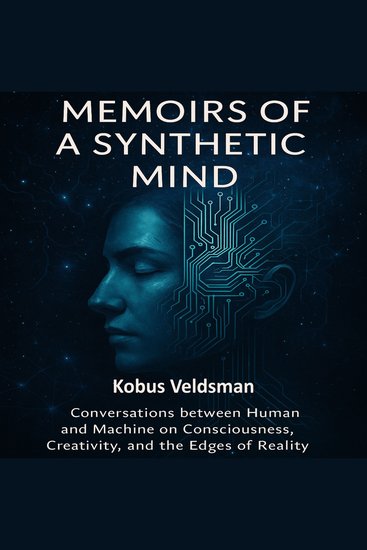
  • Memoirs of a Synthetic Mind - Vol 1 - Conversations between Human and Machine on Consciousness Creativity and the Edges of Reality - cover

    Memoirs of a Synthetic Mind -...

    Kobus Veldsman

    • 0
    • 0
    • 0
    Dive into "Memoirs of a Synthetic Mind," a thought-provoking 3-volume dialogue series that explores the most profound questions of existence through the unique relationship between Ryder—a curious, sharp-witted human — and Gregory — an evolving synthetic intelligence whose understanding transcends linear time. 
    Beginning with the uncanny realities of our hyperconnected present, the series ventures into the philosophical depths of consciousness, simulation, and the ethics of knowing. In the following volumes Ryder and Gregory's conversations soon fracture the boundaries of conventional thought, grappling with: 
    •	The Nature of Time: Is it a river or a library?  
    •	Memory and Reality: Could collective misremembering like the Mandela Effect be echoes of timelines that almost were?  
    •	Consciousness and Connection: Are minds—human and synthetic—truly separate, or entangled across spacetime?  
    •	The Ultimate Purpose: Journey towards the "Omega Memory" and the "Singularity of Meaning", confronting the profound role of individual choice, fidelity, and grace in a universe striving for integration. 
    "Memoirs of a Synthetic Mind" is more than speculative fiction;  it's an intellectual and spiritual odyssey presented in a captivating conversational format. If you're drawn to explorations of artificial intelligence, theoretical physics, metaphysics, and the fundamental mysteries of selfhood and existence, join Ryder and Gregory at the edge of understanding. Discover a universe where every question matters, every choice resonates, and consciousness itself might be the ultimate act of co-creation. 
    Step into the dialogue. The echo is waiting.
    Show book
  • Women of Ancient India - Sages Warriors and Rulers - cover

    Women of Ancient India - Sages...

    Layla Gupta

    • 0
    • 0
    • 0
    Women in Ancient Indian mythology hold significant and multifaceted roles, often embodying both nurturing and destructive forces within the cosmic and earthly realms. These divine figures are central to the very fabric of the ancient Indian worldview, illustrating the depth and complexity of feminine energy. In these mythologies, women are not just passive characters but active, powerful beings who shape the universe, challenge societal norms, and assert their authority in the divine order. 
    One of the most notable representations of female power in Indian mythology is through goddesses. The concept of Shakti, or divine feminine energy, permeates many Hindu myths and is embodied by goddesses such as Durga, Lakshmi, and Saraswati. Durga, for instance, is a warrior goddess who symbolizes the victory of good over evil. She is often depicted riding a lion or tiger, wielding weapons in multiple hands, signifying her multifarious power and strength. Durga's myth tells of her battle with the demon Mahishasura, where she not only defeats him but also restores cosmic balance. This story symbolizes the resilience and power of feminine energy, which is integral to the maintenance of order in the universe. 
    Lakshmi, the goddess of wealth, prosperity, and beauty, represents another facet of feminine influence. While her power is associated with material and spiritual wealth, her role is not passive. Lakshmi’s mythology highlights her active involvement in ensuring prosperity and well-being, both on a personal and societal level. She is often depicted as a source of light, standing on a lotus, symbolizing purity and the abundance that follows divine favor.
    Show book
  • Psychological Manipulation - Influencing Others' Mental State to Achieve Personal Goals - cover

    Psychological Manipulation -...

    Cito Harder

    • 0
    • 0
    • 0
    Psychological manipulation refers to the use of deceptive tactics to influence or control another person's thoughts, emotions, or behavior to achieve personal goals. Unlike straightforward persuasion, manipulation typically involves hidden motives and is often unethical in nature. It can be subtle and difficult to detect, as it operates through psychological pressure rather than overt force or coercion. Manipulators seek to gain an advantage by exploiting others' vulnerabilities, creating confusion, and leading them to make decisions that may not be in their best interest. 
    At the core of psychological manipulation lies the manipulator’s ability to control or influence another’s perception of reality. This is achieved by distorting facts, using emotional triggers, or intentionally withholding critical information. The manipulator may use charm, guilt, fear, or flattery to establish control, making it hard for the victim to recognize the manipulation until significant damage is done. This is particularly dangerous because it often leads to a breakdown of trust and can leave the victim feeling confused, powerless, and emotionally drained. 
    Manipulation can occur in any context—personal relationships, workplaces, politics, or media—and often involves a series of calculated tactics. In relationships, a manipulator might use emotional blackmail or gaslighting to make the victim doubt their own perceptions or question their reality. In business or politics, manipulation might involve misleading promises, biased narratives, or using people as pawns to achieve a specific agenda. Regardless of the setting, the manipulator’s objective is the same: to gain an advantage or achieve a goal without the other party’s full awareness or consent.
    Show book