Join us on a literary world trip!
Add this book to bookshelf
Grey
Write a new comment Default profile 50px
Grey
Subscribe to read the full book or read the first pages for free!
All characters reduced
How We Think - cover

How We Think

John Dewey

Publisher: Interactive Media

  • 0
  • 0
  • 0

Summary

"How We Think" by John Dewey is a groundbreaking exploration of the process of thinking and its role in education and problem-solving. In this influential work, Dewey delves into the nature of intelligence, inquiry, and reflective thought, offering valuable insights into how individuals can enhance their thinking abilities and engage in meaningful learning experiences. The book begins by challenging traditional notions of thinking as a passive, linear process and instead presents thinking as an active and dynamic activity. Dewey argues that thinking involves more than the mere accumulation of information; it requires the active engagement of the mind, curiosity, and a willingness to question assumptions. In summary, "How We Think" presents a compelling and accessible exploration of the nature of thinking and its role in learning and problem-solving. Dewey's ideas and principles continue to resonate, urging readers to embrace active, reflective, and inquiry-based approaches to thinking and education for personal growth and the betterment of society.
Available since: 07/06/2023.
Print length: 172 pages.

Other books that might interest you

  • Utopia (Burnet translation) - cover

    Utopia (Burnet translation)

    Thomas More

    • 0
    • 0
    • 0
    This book is all about the fictional country called Utopia. It is a country with an ‘ideal’ form of communism, in which everything really does belong to everybody, everyone does the work they want to, and everyone is alright with that. This country uses gold for chamber pots and prison chains, pearls and diamonds for children’s playthings, and requires that a man and a woman see each other exactly as they are, naked, before getting married. This book gave the word 'utopia' the meaning of a perfect society, while the Greek word actually means ‘no place’. Enjoy listening to this story about a country that really is too good to be true. (Summary by Jenilee.)This is the 17th century translation by Gilbert Burnet, edited in the 19th century by Henry Morley.
    Show book
  • The Spanish Influenza Of 1918 - cover

    The Spanish Influenza Of 1918

    Mike Parson

    • 0
    • 0
    • 0
    The 1918 Influenza Pandemic moved worldwide in three waves, infecting up to 500 million people and causing over 40 million deaths. Several things tended to be present in areas that ended the pandemic with lower mortality rates than average. These include low rates of poverty, widespread access to healthcare, well-funded and general public health measures, and well-managed record keeping. Areas that ended the pandemic with high mortality rates tended to lack the above – they had high rates of poverty, limited access to healthcare, public health measures were unfunded or ineffective, and recordkeeping and communication were unreliable or unclear. It is essential to learn from the success and mistakes of nations passed so that we as a planet are better prepared for any pandemics that should arise in the future. Preparing involves high vaccination rates, fighting drug-resistant pathogens, and working to lower global poverty.
    Show book
  • To the Lighthouse - cover

    To the Lighthouse

    Virginia Woolf

    • 0
    • 0
    • 0
    What does it mean to truly see the people we love?
    
    First published in 1927, To the Lighthouse by Virginia Woolf is widely regarded as one of the greatest novels of the twentieth century. Set in a summer house by the sea, the novel follows the Ramsay family and their guests over two days separated by a decade, revealing how time, memory, and loss shape human relationships.
    
    Through Woolf's masterful stream-of-consciousness style, the story moves fluidly between inner thoughts and quiet moments, capturing the emotional depth beneath ordinary life. The novel's central journey to the lighthouse becomes a powerful symbol of longing, perception, and artistic vision.
    
    This modernist masterpiece explores themes of family, creativity, impermanence, and the passage of time with extraordinary sensitivity.
    
    Inside this eBook, you'll explore:
    
    One of the defining works of literary modernism
    
    Woolf's innovative narrative technique
    
    A profound meditation on memory and change
    
    A richly layered portrait of family and identity
    
    Frequently studied in literature courses and celebrated for its emotional power, To the Lighthouse remains essential reading for anyone drawn to classic fiction and modernist storytelling.
    
    Journey toward the lighthouse and discover a novel that continues to illuminate the inner life. Buy now and experience one of Virginia Woolf's greatest works.
    Show book
  • A Father's Daughter - Daughters abduction leaves a father fighting for justice through the UK Family Courts - cover

    A Father's Daughter - Daughters...

    Stephen Bradley-Waters

    • 0
    • 0
    • 0
    In this heartbreaking true story, the abduction of his daughter has a father on an emotional and difficult journey through Family Court in pursuit of justice. The battle is bitter and brutal with the child stuck in the middle of a heartless and inept UK legal system. Constant and baseless accusations from the mother further derail proceedings, causing delays and torment for their daughter. This is a story of courage, angst, perseverance, selfishness, love, and pain. Two sides rivalling for the residency of their daughter. One trying to bring her back home to the life she adores. The other, starting a new life in an unfamiliar location many miles away from family and friends.
    Show book
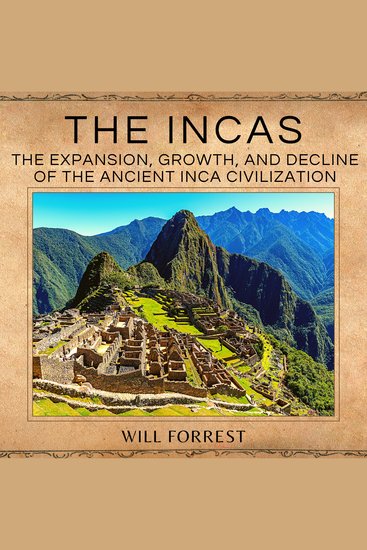
  • The Incas - The Expansion Growth and Decline of the The Ancient Inca Civilization - cover

    The Incas - The Expansion Growth...

    Will Forrest

    • 0
    • 0
    • 0
    Travel back in time to explore an amazing culture that changed our world forever!  
    Our book guides you through every corner of the Inca civilization. 
    - From their Land of the Four Quarters to Machu Picchu. - The Forgotten City. 
    Trace their astounding rise to power and follow them into battle against Spanish Conquistadors. 
    Learn about the Inca's secrets buried beneath centuries of dust. 
    Buy this book Now! And experience a part of history like never before. 
    Show book
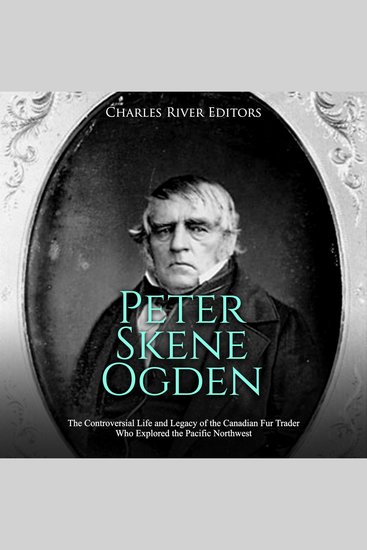
  • Peter Skene Ogden: The Controversial Life and Legacy of the Canadian Fur Trader Who Explored the Pacific Northwest - cover

    Peter Skene Ogden: The...

    Charles River Editors

    • 0
    • 0
    • 0
    The fur industry was by extension the face of every world power pursuing a stake in the West, and the rivalries were ruthless. The Mexican border during this era lay far north of its present position, and the Canadian border was as yet nonexistent, pending the outcome of competing British, American, Russian and Spanish interests. Despite the American outpost established early at the mouth of the Columbia River in what would become Astoria, Britain ruled as the preeminent military power in the region. That authority was evident in the vast Hudson’s Bay Company, which imposed its own judicial structure wherever it went, on land or by sea. The Americans responded with rival companies operating out of the Midwest and traveling over Lewis and Clark’s original route. 
    Among the most prodigious and influential personalities to emerge from that protracted battle was Peter Skene Ogden, a Canadian fur trader and explorer. As a zealous member of Canada’s North West Fur Company, his vicious campaign against Hudson’s Bay Company members marked him as one of the most dangerous personalities on the continent, unpredictable and capable of the lowest tactics for unseating the great British power. So talented was Ogden that when the rivals finally merged in the following decade, he rose to the top echelons of his greatest rival’s industry. 
    During that period, he traveled the continent in several extensive expeditions, and with the solidification of the American-Canadian border, well to the north of what was originally anticipated, it was Ogden the negotiator who held Russia at bay in the Alaskan country. More than any other individual, Ogden spent years shaping the international dynamics of the beaver fur trade, “continental in reach, [and in] rapacious competition for wealth,” yet no comprehensive biography has been produced for a man who not only served as a central catalyst for a continent, but did so in such a colorful manner. 
    Show book