Join us on a literary world trip!
Add this book to bookshelf
Grey
Write a new comment Default profile 50px
Grey
Subscribe to read the full book or read the first pages for free!
All characters reduced
How We Think - cover

How We Think

John Dewey

Publisher: Interactive Media

  • 0
  • 0
  • 0

Summary

"How We Think" by John Dewey is a groundbreaking exploration of the process of thinking and its role in education and problem-solving. In this influential work, Dewey delves into the nature of intelligence, inquiry, and reflective thought, offering valuable insights into how individuals can enhance their thinking abilities and engage in meaningful learning experiences. The book begins by challenging traditional notions of thinking as a passive, linear process and instead presents thinking as an active and dynamic activity. Dewey argues that thinking involves more than the mere accumulation of information; it requires the active engagement of the mind, curiosity, and a willingness to question assumptions. In summary, "How We Think" presents a compelling and accessible exploration of the nature of thinking and its role in learning and problem-solving. Dewey's ideas and principles continue to resonate, urging readers to embrace active, reflective, and inquiry-based approaches to thinking and education for personal growth and the betterment of society.
Available since: 07/06/2023.
Print length: 172 pages.

Other books that might interest you

  • Coping with disappointments unhappiness Transform your emotional body coaching session & healing meditations - connect to your soul regain passions in life joy abundance health love - cover

    Coping with disappointments...

    LoveAndBloom

    • 0
    • 0
    • 0
    Life is not always going in the direction of what we planned. We felt disappointed when things go wrong. There is sadness and a feeling of loss. We feel stuck and do not know what to do next. You do have the strength inside you to overcome life challenges. 
    In this course, we will be your personal coach. We will use coaching sessions, and healing meditations to help you to transform your emotional body. We release the toxic thought in your mental body through our therapeutic coaching session. Then we will heal your emotional body in deep transformative meditation. We will attract helpful friends using meditations so that you feel hope and support in your journey. 
    In this course, we willBe your personal coachRelease toxic thoughtDetox your mental bodyDeep healing meditationTransform your emotional bodyAttract helpful friendsHarness the power of the law of attractionChange your mood instantly by hypnosisAnd much more
    Show book
  • Proposed Roads to Freedom - cover

    Proposed Roads to Freedom

    Bertrand Russell

    • 0
    • 0
    • 0
    In this work, Russell presents his views on the problems of modern society and offers his proposals for a better future. He critiques both capitalism and socialism as inadequate solutions, and instead advocates for a system based on guild socialism, where workers control the means of production and are organized into functional groups. Russell argues that the ultimate goal of society should be the development of the individual, and proposes a society that is organized around individual freedom and fulfillment rather than material wealth. He advocates for the abolition of the wage system and the establishment of a system of economic cooperation and communal ownership. He also discusses the role of education in a free society, arguing that it should be aimed at cultivating creativity, critical thinking, and individuality. Read in English, unabridged.
    Show book
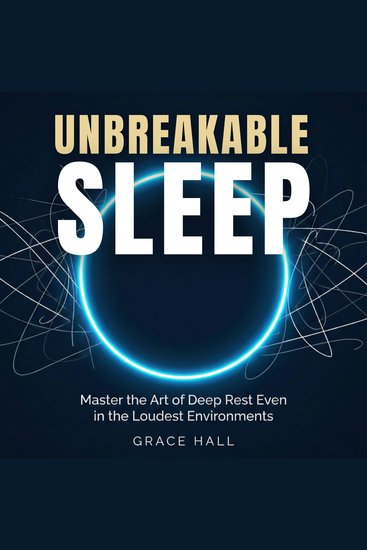
  • Unbreakable Sleep - Master the Art of Deep Rest Even in The Loudest Environments - cover

    Unbreakable Sleep - Master the...

    Grace Hall

    • 0
    • 0
    • 0
    This audiobook is narrated by an AI Voice.   
    Is urban noise constantly hijacking your sleep? Reclaim your nights and master the art of deep rest, no matter how loud your world gets. 
    You're tired of feeling hyper-vigilant, frustrated by sounds you can't control, and worried about losing your health and productivity. Your brain is wired to stay alert, turning every distant siren or neighbor's footstep into a threat. 
    This isn't about blocking sound; it's about disarming your brain's primal alert system. We move from passive protection to active neuro-adaptation, teaching your mind to render noise irrelevant. 
    Perfect for you if you're done being a victim of your environment and crave the invulnerable peace of truly deep sleep. 
    With ""Unbreakable Sleep,"" you'll gain a powerful neuro-behavioral protocol to silence the chaos and unlock consistent, profound rest. 
    What you'll learn: 
    *   Disarm urban noise by stripping its emotional power. 
    *   Build mental shields against external chaos and sudden interruptions. 
    *   Reframing noise: turn traffic into a calming tide. 
    *   Create internal auditory anchors to override jarring sounds. 
    *   Utilize somatic silence to lower your brain's vigilance. 
    *   Manage neighbor noise and sudden disruptions with proven protocols. 
    *   Condition your brain for deep sleep, making environmental noise irrelevant. 
    Even if earplugs have failed you, or you believe your environment is beyond your control, this scientifically-backed program will empower you to create your own fortress of calm. 
    Stop fighting the noise. Start transforming your sleep. Take back control of your nights and build your Unbreakable Fortress of Rest today.
    Show book
  • Disappearance of the Surcouf The: The Mysterious Sinking of the Allies’ Largest Submarine during World War II - cover

    Disappearance of the Surcouf...

    Editors Charles River

    • 0
    • 0
    • 0
    When the Surcouf launched in 1929, it was a technological marvel. This wasn’t a conventional submarine at all, but a 3,300-ton, 300-foot-long submersible light cruiser. Armed not just with torpedoes but also a pair of eight-inch guns, the Surcouf had a range of over 10,000 miles and was equipped with a seaplane in a hanger and a prison capable of holding up to 40 prisoners. When it was launched, the submarine looked like something out of the novels of Jules Verne, and many people believed it would make all existing submarines (and many surface warships) obsolete. However, by the time France found itself at war with Nazi Germany in 1939, the Surcouf was outdated and basically irrelevant, though it was still in active service with the French Navy. 
    When France was defeated by Nazi Germany in June 1940, the majority of French troops and warships ceased fighting. However, some relocated to Britain, the only nation still fighting Germany, to join Free French forces under the command of the charismatic General Charles De Gaulle. The crew of the Surcouf joined the Free French Navy and served from late 1940 to February 1942, when she called in at the British port of Bermuda before sailing for the island of Tahiti, French Polynesia, in the South Pacific. On February 12, the Surcouf left Bermuda en route for Tahiti via the Panama Canal and was never seen again. 
    There have been many theories about what might have happened to the Surcouf and her 130-man crew, ranging from an accidental collision to sabotage and even accidental (or deliberate) attacks by her allies. As a result, the fate of the Surcouf has become one of the most enduring and baffling maritime mysteries, and it still generates a great deal of debate.
    Show book
  • The Middle Way and other essays - cover

    The Middle Way and other essays

    M. O'C. Walshe

    • 0
    • 0
    • 0
    This is an audiobook of Bodhi Leaves No.99 by M. O’C. Walshe, "The Middle Way and other essays" found in the Pariyatti Edition of Collected Bodhi Leaves Vol. IV. 
     
    Excerpt: 
    "It is always a good idea to seek the middle way, or the golden mean, between extremes whether in politics, in one’s personal view and behaviour, or in fact in any walk of life. The difficulty arises when we attempt to discover what, in practice, is the middle way. It is not, as some appear to suppose, the mid-point between truth and falsehood, or between right and wrong! In fact the middle way itself is true, and is right: the difficulty lies merely in finding it. Here are some examples: it is the mean between (as the Buddha said) self-indulgence and self-mortification, or (the same thing as applied to other persons and animals) between pampering and cruelty. 
     
    "The middle way, even at a fairly modest, mundane level, is not very popular in the world today. Probably it never was. But in these restless times it is perhaps especially needed, and at the same time especially hard to achieve. It is fatally easy to indulge in nostalgia, to conjure up a false and idealised picture of earlier times which in fact, whatever period of history we may envisage, all had their grave disadvantages of one kind or another. All the same, until recent times it may be said that, in general, life usually had a kind of placidity that has now been lost, and which is hard to recapture, except in the atmosphere of some temple, church, meditation centre or the like. This, however, may simply mean that in earlier times the tendency towards sloth and indolence was, on the whole, greater than that towards worry and flurry."
    Show book
  • Fixing America - An Engineer’s Solution to our Social Cultural and Political Problems - cover

    Fixing America - An Engineer’s...

    William M Taggart IV

    • 0
    • 0
    • 0
    Have you been wondering about the big issues dominating the news? Is climate change a massive threat or not? What is really going on with immigration? More importantly, how did American politics become so divided and hostile?  What if we approached American social, cultural and political problems from a purely rational perspective? What if we focus on functional systems instead of division? Careful analysis of readily available data can help us discover patterns and uncover the real issues. An engineering perspective allows us to focus on what needs to be fixed rather than ideological divisions.  
       Finally, one of America's top engineers has brought these topics and others together in a thought-provoking book. This book is rooted in history, facts, and logic, and it lays out solutions to America's problems. A book focused to get Americans talking to one another again, so we can rise to the occasion and solve today's problems together.  
        William Taggart has over thirty years as a professional engineer in industry. He has travelled the world, building some of industry’s biggest projects and solving some of their thorniest problems. Now, he has applied analytical skills developed in industry, coupled with his natural inquisitiveness and thirst for creative solutions, to the problems of modern-day American politics. Seeking answers to questions many of us have been asking, he has focused his keen mind on researching these, and other big issues. He invites everyone to think about what America really needs.
    Show book