Join us on a literary world trip!
Add this book to bookshelf
Grey
Write a new comment Default profile 50px
Grey
Subscribe to read the full book or read the first pages for free!
All characters reduced
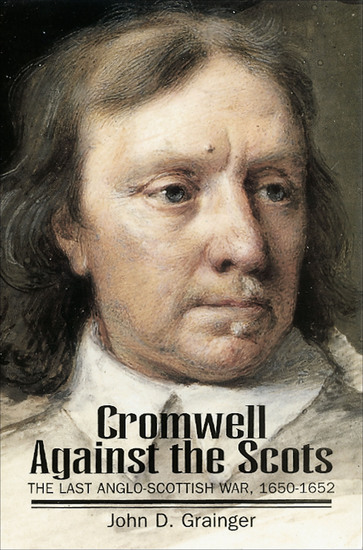
Cromwell Against the Scots - Last Anglo-Scottish War 1650-52 - cover

Cromwell Against the Scots - Last Anglo-Scottish War 1650-52

John D. Grainger

Publisher: John Donald

  • 0
  • 0
  • 0

Summary

After an introduction establishing Cromwell's war against the Scots from July 1650 to May 1652, this book discusses Charles' landing and Fairfax's resignation as commander-in-chief of the English Republican Army, both events occurred on the same day. It then addresses the causes of the war, Charles II's landing in Northern Scotland from the Continent. The story continues chronologically, from Cromwell's invasion of Scotland, through the Battle of Dunbar, and the slow establishment of the king's power over the Scottish government. The end came with the fall of the last of the Scottish castles, Dunnottar, to English conquest. The Scots enjoyed a distinct military recovery after the Dunbar defeat, but their aims and those of the king were always at cross purposes: the king was intent on the invasion of England, the Scots on resistance to English conquest. Finally, Cromwell's manoeuvres in the summer of 1651, and the English victory at Inverkeithing, allowed the king to invade England. This ended in another Scots defeat at Worcester. The removal of the Scots Army to England meanwhile allowed the English under Monck to complete their conquest of Scotland. Throughout, the political dimension, particularly in Scotland, is kept in view. At the end, the author comments on the relevance of these events to the present Scottish situation.
Available since: 09/07/2022.
Print length: 220 pages.

Other books that might interest you

  • Spanish Empire in the Americas The: The History of Spain’s Colonization across Central America and South America - cover

    Spanish Empire in the Americas...

    Editors Charles River

    • 0
    • 0
    • 0
    By the time Christopher Columbus started setting east from the New World, he had explored San Salvador in the Bahamas (which he thought was Japan), Cuba (which he thought was China), and Hispaniola, the source of gold. As the common story goes, Columbus, en route back to Spain from his first journey, called in at Lisbon as a courtesy to brief the Portuguese King John II of his discovery of the New World. King John subsequently protested that according to the 1479 Treaty of Alcáçovas, which divided the Atlantic Ocean between Spanish and Portuguese spheres of influence, the newly discovered lands rightly belonged to Portugal. To make clear the point, a Portuguese fleet was authorized and dispatched west from the Tagus to lay claim to the “Indies,” which prompted a flurry of diplomatic activity in the court of Ferdinand and Isabella. At the time, Spain lacked the naval power to prevent Portugal from acting on this threat, and the result was the hugely influential 1494 Treaty of Tordesillas. 
    	The Treaty of Tordesillas was one of the most important documents of its kind of the age, for it established the essential parameters of the two competing empires, the first of the major European imperial entities. The Treaty of Tordesillas drew an imaginary line from pole to pole, running 100 leagues west of the westernmost islands of the Azores. According to the terms of a supporting papal bull, all the lands to the west of that belonged to Spain, and all of those to the east belonged to Portugal. What this meant in practical terms was that Portugal was given Africa and the Indian Ocean while Spain was granted all the lands to the west, including the Americas and the Caribbean, all collectively known as the “Indies,” or the New World. Perhaps inevitably, a regional rivalry had developed as the Portuguese began to establish a colony in Brazil and push its boundaries southwards. 
    Show book
  • Himalayan Doomsday Device - The Misplaced Weapon Threatening a Nation - cover

    Himalayan Doomsday Device - The...

    John Harpoon

    • 0
    • 0
    • 0
    In the vast expanse of the Himalayas, hidden beneath centuries of snow and ice, lay a secret that had been buried for generations. The towering peaks, once home to monks and ancient civilizations, now shielded a dark legacy that time itself had forgotten. The truth about this forgotten legacy, however, was about to resurface, altering the course of history and threatening the very future of a nation. 
    The story began long before the world had even begun to recognize the geopolitical importance of this remote region. Ancient texts, passed down through generations of sages, spoke of a powerful device buried in the heart of the mountains. These writings, written in a language long extinct, described an artifact of unimaginable power—an object designed to protect a kingdom, but one that, if misused, could bring about devastation on an unimaginable scale. 
    Over time, the knowledge of this device faded into obscurity. Wars, invasions, and the relentless march of history erased most traces of the past. Yet, the stories never fully disappeared. They were whispered by the elders, passed along in cryptic folklore, and tucked away in the corners of forgotten libraries. But for centuries, no one believed the legends were more than myths, the wild imaginings of storytellers and mystics.
    Show book
  • BreakProof - 7 Strategies to Build Resilience and Achieve Your Life Goals (How to Reach Your Life Goals) - cover

    BreakProof - 7 Strategies to...

    Jenn Drummond

    • 0
    • 0
    • 0
    Discover resilience in adversity. BreakProof chronicles Jenn Drummond's pursuit to conquer the Seven Second Summits, despite no mountain climbing experience. Through this emotional and physical journey toward that audacious goal, the world record-holding mountaineer provides lessons on never giving up, cultivating resilience, and finding strength in the face of life's greatest challenges. 


    Embark on a journey of personal growth. Mountain climbers consider the second-highest mountains on all seven continents to be technically more complex than the seven highest. Jenn's experiences on the mountains serve as metaphors for achieving life goals and inspiring continuous self-improvement. In BreakProof, she shares her struggles and victories and delivers potent insights into achieving balance, setting meaningful objectives, and living life to its fullest. 


    Inside, discover actionable strategies and exercises to take the first steps, build resilience, and handle life's challenges; the importance of goal setting and continuous self-improvement and personal growth; ways to troubleshoot seemingly insurmountable obstacles; and inspiration for becoming a go-getter, never giving up, embracing life balance, and living life to the fullest.
    Show book
  • Precision Agriculture - Harnessing Technology for Sustainable Farming and Enhanced Productivity - cover

    Precision Agriculture -...

    Ben Rizer

    • 0
    • 0
    • 0
    In an age where global food demand is rising, and environmental sustainability is paramount, Precision Agriculture: Harnessing Technology for Sustainable Farming and Enhanced Productivity offers an insightful exploration into the future of farming. This comprehensive guide delves into how cutting-edge technologies such as IoT, artificial intelligence, remote sensing, and big data are transforming agriculture, making it more efficient, sustainable, and profitable. 
    From managing soil health and optimizing irrigation to monitoring crops with satellite imagery and drones, this book breaks down the essential tools and techniques that are revolutionizing the agricultural landscape. It highlights how precision agriculture empowers farmers to make data-driven decisions, reduce waste, conserve resources, and ultimately boost productivity while preserving the environment. 
    Precision Agriculture is an essential resource for anyone committed to the future of farming and food security. 
     
    Show book
  • North American Revolutions - Historical Details about the Revolution in Cuba Mexico and the United States - cover

    North American Revolutions -...

    Kelly Mass

    • 0
    • 0
    • 0
    These three topics will be addressed in this book: 
    Cuban Revolution - Less than a decade after the Second World War, the Cuban revolution happened. It went on and off, irregularly causing riots and rebel actions, as well as tyrannical government suppression, and it all lingered on during the Cold War between the Soviet Union and the United States. What was it that typified the Cuban Revolution? Who were the players and what did they do? Which battles were most significant?And last but not least, what was the final result it all led to in the end? These and many other questions will be answered in this comprehensive guide, which will give you a better understanding about the history of one of the most controversial economies on the huge island near the United States coastline. 
    American Revolution - Between 1765 to 1791, the American Revolution was an ideological and political revolution in British America. In the American Revolutionary War (between 1775 to 1783), the Americans in the Thirteen Groups established sovereign countries that beat the British, getting independence from the British Crown and establishing the USA of America, the first modern-day constitutional liberal democracy. 
    Mexican Revolution - The Mexican Revolution was a great revolution that included a series of army local battles instead of a single united struggle. It destroyed the Federal Force and changed it with an innovative army, changing Mexican civilization and governance at the same time It also culminated in the adoption of a new constitution that included the revolutionaries' ideal visions. In spite of the fact that President Porfirio Daz's (from about 1880 to 1911) rule had grown progressively out of favor over the prior 31 years, there was no indicator that a transformation would break out in the year 1910.
    Show book
  • Ancient Aliens - cover

    Ancient Aliens

    Raphael Terra

    • 0
    • 0
    • 0
    They came, they saw and they settled. Ancient aliens landed on our planet thousands of years ago and became the Gods of mankind. From the Annunaki to the Shining Ones, these tall, elegant and powerful beings from the planet Nibiru changed the course of human history and are still doing so.
    Show book