Join us on a literary world trip!
Add this book to bookshelf
Grey
Write a new comment Default profile 50px
Grey
Subscribe to read the full book or read the first pages for free!
All characters reduced
Visions and Revisions: A Book of Literary Devotions - cover

Visions and Revisions: A Book of Literary Devotions

John Cowper Powys

Publisher: DigiCat

  • 0
  • 0
  • 0

Summary

In 'Visions and Revisions: A Book of Literary Devotions,' John Cowper Powys offers a rich tapestry of reflections that delve into the essence of literary creation. This work encompasses an eclectic blend of literary criticism, personal musings, and philosophical inquiries, framed by Powys's distinctive and often baroque prose style. Through a series of essays, he navigates the landscapes of poetry, fiction, and drama, inviting readers into a contemplative dialogue that echoes the existential themes prevalent in early 20th-century literature. The book's context lies within the modernist movement, showcasing Powys's engagement with the metaphysical undercurrents and artistic innovations of his time. John Cowper Powys, a Welsh author and philosopher known for his sprawling narratives and deep psychological insights, draws from his broad intellectual pursuits and personal quests. His experiences in academia and his profound appreciation for literature, philosophy, and spirituality profoundly shaped his worldview. Influenced by the likes of Nietzsche and ancient myth, Powys's reflections in 'Visions and Revisions' reveal the complexities of artistic creation and the human condition, showcasing his lifelong commitment to exploring the interplay between existence and expression. This book is highly recommended for readers seeking a deeper understanding of literary art and the philosophical inquiries that underpin it. Powys's meditative approach not only enriches our appreciation of literary heritage but also prompts us to reconsider our relationship with art and its transformative power. 'Visions and Revisions' is an essential read for lovers of literature, philosophy, and the intricate workings of the creative mind.
Available since: 09/16/2022.
Print length: 189 pages.

Other books that might interest you

  • Lectures on the History of Philosophy - Volume 1 - Introduction to the History of Philosophy - cover

    Lectures on the History of...

    Georg Wilhelm Friedrich Hegel

    • 0
    • 0
    • 0
    Meaning Incorporated presents, for the first time in audio, Hegel's Lectures on the History of Philosophy, volume 1. The lectures in this installment cover Hegel's demarcation of the history of philosophy as a discipline distinct from philosophy itself. He provides the intellectual context for the work in the way that only Hegel can, as part of his larger project to systematically approach the concept of Mind and the Absolute. Subsequent editions will be devoted to lectures from various historical periods. This work is intended for anyone interested in primary source material for human intellectual history, for researchers, students and hobbyists alike. If you enjoy this reading, please see other titles offered by Meaning Incorporated.
    Show book
  • Learning Our Names - Asian American Christians on Identity Relationships and Vocation - cover

    Learning Our Names - Asian...

    La Thao, Linson Daniel, David de...

    • 0
    • 0
    • 0
    What's your name? 


    Asian Americans know the pain of being called names that deny our humanity. We may toggle back and forth between different names as a survival strategy. But it's a challenge to discern what names reflect our true identities as Asian Americans and as Christians. In an era when Asians face ongoing discrimination and marginalization, it can be hard to live into God's calling for our lives. 


    Asian American Christians need to hear and own our diverse stories beyond the cultural expectations of the model minority or perpetual foreigner. A team from East Asian, Southeast Asian, and South Asian backgrounds explores what it means to learn our names and be seen by God. They encourage us to know our history, telling diverse stories of the Asian diaspora in America who have been shaped and misshaped by migration, culture, and faith. As we live in the multiple tensions of being Asian American Christians, we can discover who we are and what God may have in store for us and our communities.
    Show book
  • Battle of White Mountain The: The History and Legacy of the First Major Battle of the Thirty Years’ War - cover

    Battle of White Mountain The:...

    Editors Charles River

    • 0
    • 0
    • 0
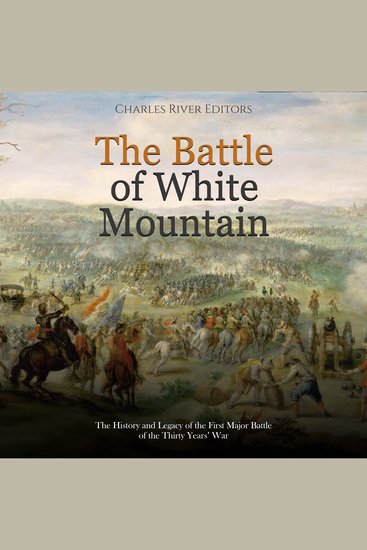
    It has been famously pointed out that the Holy Roman Empire was neither holy, nor Roman, but it was also not an empire in the sense people expect when hearing the term. In theory, the emperor was the highest prince in Christendom, and his dominion extended the length and breadth of Western Europe. The tensions between the Holy Roman Empire and Church over the power to invest bishops with authority led to decades of civil war in Germany on the way to establishing the relationship between Church and State, elevating the status of the papacy and weakening the Holy Roman Empire. 
    	The Thirty Years' War was one of the most horrific conflicts in history, resulting in the deaths of nearly two-thirds of Germany's population, and the Battle of White Mountain in 1620 was the first major battle of that war. The battle was fought mainly due to Holy Roman Emperor Ferdinand II’s dealings with the Bohemians and their new king, Frederick of the Palatinate, who Ferdinand regarded as illegitimate. It was also partly a struggle between the centralizing attempts of the Habsburg dynasty conflicting with the traditional regional autonomy that existed within the legislative institutions called the Estates. What gave it an emotional element was the enmity between Bohemian Protestantism and Ferdinand II’s zealous Catholicism, and that would help draw in several European powers. At the Battle of White Mountain, the armies of the Bohemian Confederation and the Habsburgs met each other near Prague, and the combatants included officers and soldiers from nearly every nation in Europe, including the Netherlands, Germany, Italy, Poland, Bohemia, Moravia, Bavaria, Italy, Spain, Hungary, Transylvania, England, Scotland, and Ireland. The decisive result would permanently affect the course of the conflict over the coming decades, and with it the fate of modern Europe. 
    Show book
  • Summary of Quiet - The Power of Introverts in a World That Can't Stop Talking - cover

    Summary of Quiet - The Power of...

    Brooks Bryant

    • 0
    • 0
    • 0
    DISCLAIMER: THIS IS A SUMMARY! NOT THE OFFICIAL BOOK 
    Embrace the power within silence and introspection through this comprehensive summary of Susan Cain's revolutionary book, "Quiet: The Power of Introverts". 
    Our summary unravels the rich, enlightening insights presented by Cain, illuminating the hidden strengths that introverts bring to the table. This isn't just a book for introverts; it's a gateway for everyone to understand the silent force within our society. 
    With our world seemingly dominated by extroversion, this summary boldly challenges the status quo, offering a fresh perspective on how introverts can harness their unique traits and thrive in an extroverted world. Cain's extensive research and heartfelt anecdotes are condensed into an easily digestible format, giving you the essence of her groundbreaking findings in a fraction of the time. 
    In this summary, you'll discover why solitude matters, how 'quiet' leadership can be powerful, and how introverts, often overlooked, have been behind some of the greatest achievements in history. You will learn to see introversion not as a hindrance, but as an asset. 
    If you're an introvert, this summary will help you find comfort and power in your solitude. If you're an extrovert, it will help you understand the introverts around you and appreciate the balance they provide in our hyper-social society. 
    So step into a world that celebrates introversion. Unfold the power of 'Quiet' and explore the strength in introspection. It's time to change how we perceive the quiet and the reserved. Start by diving into this incisive summary, and embrace the potential that lies within the power of introverts.
    Show book
  • Disarming the Narcissist - Surviving and Thriving with the Self-Absorbed Third Edition - cover

    Disarming the Narcissist -...

    LCSW Wendy T. Behary, MD Daniel...

    • 0
    • 0
    • 0
    Do you know someone who is overly arrogant, shows an extreme lack of empathy, or exhibits an inflated sense of entitlement? Do they exploit others, or engage in deluded thinking? These are all traits of narcissistic personality disorder, and when it comes to dealing with narcissists, it can be difficult to get your point across. So, how do you handle the narcissistic people in your life? You might interact with them in social or professional settings, and you might even love one—so ignoring them isn't really a practical solution. 


    Now a self-help classic, Disarming the Narcissist is a practical, step-by-step communication guide to help you cope with and confront the narcissist in your life. Based on fan feedback, this fully revised and updated third edition features new information on shame, hypersexuality, and infidelity in narcissism; legal information to help you if you are divorcing a narcissist; and the impact of narcissism on children. 


    With this how-to guide, you'll learn how to separate yourself from a narcissist's traps, and gain the respect and validation you deserve—while side-stepping unproductive power struggles and senseless arguments with someone who is at the center of his or her own universe. Finally, you'll learn how to set limits with your narcissist and when it's time to draw the line on unacceptable behavior.
    Show book
  • The Capital Dilemma - Balancing Growth and Fairness in the Free Market - cover

    The Capital Dilemma - Balancing...

    Arlo Holders

    • 0
    • 0
    • 0
    The free market and capitalism have long been foundational principles of economic systems around the world. At their core, they represent the idea that economic decisions, such as production, investment, and distribution, should be guided by the forces of supply and demand with minimal government intervention. In a truly free market, goods and services are exchanged in a competitive environment where prices are determined by the collective actions of consumers and producers rather than by central planning or state control. 
    Capitalism, as an economic system, emerged during the early stages of the Industrial Revolution in the 18th and 19th centuries. Its roots trace back even further to mercantilist policies that prioritized trade and accumulation of wealth through colonial ventures. Over time, capitalism has evolved from simple trade systems to complex global markets, driven by the desire for profit and the expansion of economic activities. The central tenet of capitalism is the pursuit of self-interest, where individuals or organizations are motivated to create wealth by competing in open markets. 
    This system offers several advantages, such as fostering innovation, encouraging efficiency, and enabling individuals to accumulate wealth. By allowing businesses and entrepreneurs to operate freely, capitalism encourages the creation of new products, services, and technologies, which in turn leads to economic growth and increased standards of living. Moreover, the competitive nature of free markets ensures that resources are allocated efficiently, as businesses strive to meet consumer demands at the lowest cost.
    Show book