¡Acompáñanos a viajar por el mundo de los libros!
Añadir este libro a la estantería
Grey
Escribe un nuevo comentario Default profile 50px
Grey
Suscríbete para leer el libro completo o lee las primeras páginas gratis.
All characters reduced
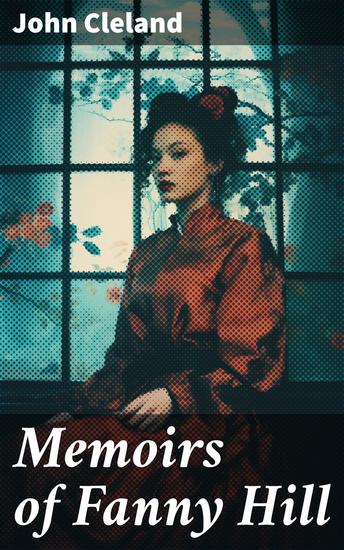
Memoirs of Fanny Hill - A Provocative Journey into 18th-Century London's Sexual Underground - cover

Memoirs of Fanny Hill - A Provocative Journey into 18th-Century London's Sexual Underground

John Cleland

Editorial: Good Press

  • 0
  • 0
  • 0

Sinopsis

In "Memoirs of Fanny Hill," John Cleland crafts an audacious narrative that explores the life and liberties of an orphaned young woman navigating the complexities of love, desire, and sexual awakening in 18th-century England. Written in a vibrant first-person perspective, the novel is both a social commentary and a celebration of sensuality, reflecting the shifting attitudes toward sexuality during the Enlightenment. With its lush prose and candid depictions of eroticism, Cleland'Äôs work challenges the moral constraints of his time while entering the canon of early English erotic literature, marking a significant departure from the prevailing themes of the period. John Cleland, born in 1709, was influenced by his own tumultuous experiences, including financial struggles and imprisonment that inform the novel's existential explorations. His background in literature and commerce, as well as his encounters with moralistic censorship, motivated him to create a work that not only entertains but also provokes thought about personal freedom and societal norms. His unique positioning at the intersection of vice and virtue evokes a narrative rich with pathos and humor. For readers drawn to provocative literature that questions social conventions, "Memoirs of Fanny Hill" stands as an essential text. Cleland's masterful blend of wit and sensuality invites readers to reconsider the boundaries between moral propriety and personal autonomy, making this work a timeless exploration of human desire that remains relevant today.
Disponible desde: 13/12/2023.
Longitud de impresión: 177 páginas.

Otros libros que te pueden interesar

  • The Voyage Out - cover

    The Voyage Out

    Virginia Woolf

    • 0
    • 0
    • 0
    Twenty-four-year-old Rachel Vinrace is launched into a journey of self-discovery when she embarks on a sea voyage to South America with her aunt and uncle. Originally from a London suburb, she meets a menagerie of interesting people while on the trip and strikes up life-changing conversations with them. As her experiences start to shape her into a worldly woman, she begins to find her sense of self and determine what she wants most in the world.
    Ver libro
  • George Silverman's Explanation - cover

    George Silverman's Explanation

    Charles Dickens, Dominic Gerrard

    • 0
    • 0
    • 0
    George Silverman’s Explanation (published in The Atlantic in 1868) is one of Charles Dickens’ rarer short stories. Here the author immerses himself entirely in his character of George Silverman: addressing the reader in a dramatic monologue in which he is reticent, perhaps even unwilling to open up to us, but at the same time compelled to unburden his heart.  
    So deeply does Dickens embody the role of Silverman that in a letter to an editor he writes that: 'I feel as if I had read something (by somebody else) which I should never get out of my head …’ 
    This tale is an indictment against poverty as powerful as you will find in any of Dickens’ larger works. It is also a biting satire against the 'daring ignorance' and little 'meannesses' found in many non-conformist movements. Above all it is a deeply affecting examination of how far a childhood of of both want and punishing religious control can impact a man’s self-worth and future happiness. 
    Narrated by Dominic Gerrard 
    Cover Art by Léna Gibert
    Ver libro
  • Les Misérables: Volume 2: Cosette - Book 7: Parenthesis (Unabridged) - cover

    Les Misérables: Volume 2:...

    Victor Hugo

    • 0
    • 0
    • 0
    Victor-Marie Hugo (26 February 1802 - 22 May 1885) was a French poet, novelist, essayist, playwright, and dramatist of the Romantic movement. During a literary career that spanned more than sixty years, he wrote abundantly in an exceptional variety of genres: lyrics, satires, epics, philosophical poems, epigrams, novels, history, critical essays, political speeches, funeral orations, diaries, and letters public and private, as well as dramas in verse and prose.
    BOOK 7: PARENTHESIS: Such being the case, and a convent having happened to be on our road, it has been our duty to enter it. Why? Because the convent, which is common to the Orient as well as to the Occident, to antiquity as well as to modern times, to paganism, to Buddhism, to Mahometanism, as well as to Christianity, is one of the optical apparatuses applied by man to the Infinite.
    Ver libro
  • An Antarctic Mystery - cover

    An Antarctic Mystery

    Jules Verne

    • 0
    • 0
    • 0
    ules Verne’s sequel to Poe’s classic The Narrative of Arthur Gordon Pym of Nantucket.    ???   ?A captain seeking a lost brother.   ???   ?A sailor obsessed with redemption as he hides a dark secret.   ???   ?A wealthy onlooker intrigued by possibility.   ???   ?Brought together by coincidence, they embark on a journey into the uncharted waters of the Antarctic.   ???   ?Jules Verne weaves a story of exploration, adventure, and mystery in this exciting tale. An Antarctic Mystery is the unauthorized sequel to Edgar Allan Poe’s The Narrative of Arthur Gordon Pym of Nantucket and brings closure to Poe’s cliffhanger ending.   ???   ?Journey through the Antarctic as Verne reveals the shocking conclusion to one of his favorite childhood tales.
    Ver libro
  • In Our Time - cover

    In Our Time

    Ernest Hemingway

    • 0
    • 0
    • 0
    "He was alone, and he was comfortable. He felt he had left everything behind, the need for thinking, the need to understand."
    
    In Our Time is a collection of vignettes and short stories that marked the arrival of Ernest Hemmingway as a bold new voice in American literature. The works contained herein explore the themes of war, loss, love, alienation and disillusionment that are prominent in much of the author's work while encapsulating the struggles faced by individuals in the rapidly changing, post-war world. From the trenches of World War I to quiet moments of reflection in nature, Hemingways use of spare, precise prose delivers a sense of moral value and a powerful punch of emotional truth.
    
    The titles included in this collection, in order of appearance, are:
    
    - On the Quai at Smyrna
    - Indian Camp
    - The Doctor and the Doctor's Wife
    - The End of Something
    - The Three-Day Blow
    - The Battler
    - A Very Short Story
    - Soldier's Home
    - The Revolutionist
    - Mr. and Mrs. Elliot
    - Cat in the Rain
    - Out of Season
    - Cross-Country Snow
    - My Old Man
    - Big Two-Hearted River: Part 1
    - Big Two-Hearted River: Part 2
    - L' Envoi
    Ernest Hemingway (1899–1961) was an American novelist, short story writer, and journalist renowned for his econimical, understated prose, adventurous lifestyle and outspoken public image. He began his career as a reporter and published a number of short stories before gaining fame with novels such as The Sun Also Rises (1926) and A Farewell to Arms (1929), and his experiences during the Spanish Civil War informed the best-selling For Whom the Bell Tolls (1940). He was awarded the Nobel Prize in Literature in 1954, and some of his seven novels, six short-story collections and two non-fiction works have become classics of American literature.
    This audiobook is fully indexed. Once downloaded, each book and chapter will be listed so you can easily navigate to the individual sections.
    Ver libro
  • After Twenty years - From their pens to your ears genius in every story - cover

    After Twenty years - From their...

    O Henry

    • 0
    • 0
    • 0
    William Sydney Porter was born on 11th September 1862 in Greensboro, North Carolina. At age 3 his mother died from tuberculosis. From an early age it was clear Porter had a large appetite for reading as he absorbed the world around him. 
    He first attended at a school run by his aunt before enrolling at the Lindsey Street High School and then worked at his uncle’s drugstore and gained a pharmacists’ license in 1881.  
    A persistent cough took him to Texas in the hope that a change of climate would help his symptoms. He took on various types of work, initially from ranch hand and cook and then as varied as pharmacist, draftsman, bank teller and journalist. He also began to write, though for now, purely as a hobby. 
    He was a member of several singing and dramatic groups when he met 17 year old Athol Estes, daughter of a wealthy Austin family. Despite her mother’s objection owing to Athol’s tuberculosis, they began courting and in July 1887, they eloped and soon married. 
    Athol, impressed by his writing, encouraged him to get them published. A job as a draftsman at the Texas General Land Office paid a healthy $100 dollars per month and life was good. 
    But then life turned cruel. His son died a few hours after birth although a daughter, Margaret, came the following year.  His job had to be vacated but another was found at the First National Bank of Austin. The bank operated informally and Porter was careless in keeping the books. He lost that job but began writing for the humourous weekly The Rolling Stone and the Houston Post. Some time later the federal Bank auditors went through his former accounts and he was arrested on charges of embezzlement. 
    Porter fled the day before his trial to Honduras. Holed up for several months he began to write.  Athol had become too ill to travel to meet him and learning that her health was deteriorating he surrendered to the court in February 1897.  Bail was obtained so that he could stay with Athol during her final days.  
    Porter was sentenced to five years at the Ohio Penitentiary in Columbus. His pharmacy qualifications got him the job of night druggist.  His sentence also gave him time to write and publish fourteen short stories. In December 1899 in McClure’s Magazine he published a short story as O Henry.  
    He was released two years early in July 1901, and reunited with Margaret, now 11, in Pittsburgh.  He now began his most prolific period of writing; a short story per week for the New York World, while also publishing works in other magazines.  Eventually over 600 of his short stories were published. 
    Porter was a heavy drinker and in 1908 his health, which had deteriorated for several years, took a dramatic turn for the worse, as did his writing. 
    O Henry died of cirrhosis of the liver complicated by diabetes and an enlarged heart on 5th June 1910.<
    Ver libro