Join us on a literary world trip!
Add this book to bookshelf
Grey
Write a new comment Default profile 50px
Grey
Subscribe to read the full book or read the first pages for free!
All characters reduced
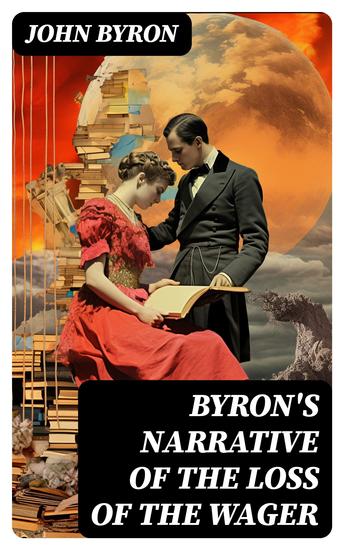
Byron's Narrative of the Loss of the Wager - cover

Byron's Narrative of the Loss of the Wager

John Byron

Publisher: DigiCat

  • 0
  • 0
  • 0

Summary

In "Byron's Narrative of the Loss of the Wager," John Byron crafts a compelling memoir that recounts the harrowing shipwreck of HMS Wager in 1741. This account is marked by vivid descriptions and gripping detail, capturing the despair and resilience of the shipwrecked crew as they navigate treacherous terrains and face insurmountable odds. Byron's narrative style blends the immediate urgency of a personal testimony with the reflective insight of an experienced navigator, situating the text within the broader tradition of maritime literature and exploration narratives of the 18th century. As both an adventure tale and a meditation on survival, the book reveals the psychological and physical challenges faced by the survivors in extreme conditions. John Byron, an officer in the Royal Navy and grandfather of the famous poet Lord Byron, infused his rich maritime experience into this gripping tale. His firsthand perspective as a witness to the trials of the ship's crew lends authenticity to the narrative, while also shedding light on the broader themes of leadership, camaraderie, and human endurance in the face of adversity. Byron's own encounters at sea helped him appreciate the nuances of nature's ferocity and the fragility of human life. "Byron's Narrative of the Loss of the Wager" is a must-read for enthusiasts of naval history, adventure seekers, and those interested in the psychological exploration of survival. This book not only provides a remarkable historical account but also engages with universal themes of hope and despair. Byron's rich prose and oscillation between tragedy and triumph will resonate with readers, inviting them to reflect upon the limits of human resolve.
Available since: 11/12/2023.
Print length: 105 pages.
Other books that might interest you

  • How to Talk About Love - An Ancient Guide for Modern Lovers - cover

    How to Talk About Love - An...

    Plato

    • 0
    • 0
    • 0
    What is love? In poetry, songs, fiction, movies, psychology, and philosophy, love has been described, admired, lamented, and dissected in endless ways. Is love based on physical attraction? Does it bring out our better selves? How does it relate to sex? Is love divine? Plato's Symposium is one of the oldest, most influential, and most profound explorations of such questions—it is even the source of the idea of "Platonic love." How to Talk about Love introduces and presents the key passages and central ideas of Plato's philosophical dialogue in a lively new translation. 


    The Symposium is set at a fictional drinking party during which prominent Athenians engage in a friendly competition by delivering improvised speeches in praise of Eros, the Greek god of love and sex. The aristocrat Phaedrus, the legal expert Pausanias, the physician Eryximachus, the comic playwright Aristophanes, and the tragic poet Agathon—each by turn celebrates different aspects of love before Socrates proposes not to praise love but to tell the truth about it. In the final speech, the politician and libertine Alcibiades argues that Socrates himself is the epitome of love. 


    Deftly capturing the essence and spirit of Plato's masterpiece, How to Talk about Love makes the Symposium more accessible and enjoyable than ever before.
    Show book
  • The Inventions of Ancient Egypt - Pioneering Technologies and Ideas - cover

    The Inventions of Ancient Egypt...

    Omar Khalil

    • 0
    • 0
    • 0
    Ancient Egypt's writing systems stand as a testament to human ingenuity and cultural expression. The development of writing marked a pivotal point in Egyptian civilization, allowing for the documentation of history, religion, and daily life. Among the most significant inventions were hieroglyphs, which evolved into more simplified forms such as hieratic and demotic scripts. These writing systems not only served practical purposes but also played a crucial role in shaping Egypt’s legacy. 
    The invention of hieroglyphs can be traced back to around 3100 BCE. These symbols, composed of pictorial and phonetic elements, were carved into stone monuments and written on papyrus scrolls. Hieroglyphs were primarily used for religious texts, inscriptions on temples, and royal decrees. The complexity and beauty of this script were not just artistic but symbolic, as each symbol held both sound and meaning. Hieroglyphic writing required skilled scribes, who underwent rigorous training to master the hundreds of characters used in various contexts. 
    Over time, the need for quicker, more practical writing gave rise to hieratic script, a simplified and cursive form of hieroglyphs. Hieratic was used mainly for administrative and literary texts, allowing scribes to write more efficiently on papyrus. This new form retained the symbolic power of hieroglyphs but adapted to the demands of record-keeping and correspondence. As hieratic became more widespread, it bridged the gap between the formal, ceremonial writing of hieroglyphs and the everyday needs of administration and commerce.
    Show book
  • American History - Details about the Revolution John Adams Benjamin Franklin and Alexander Hamilton - cover

    American History - Details about...

    Kelly Mass

    • 0
    • 0
    • 0
    This set of books contains the following titles: 
    1: Benjamin Franklin was an author, physicist, innovator, statesman, diplomat, printer, publisher, and political thinker who resided in America. Franklin was just one of the Founding Fathers of the United States, a drafter and signer of the US Declaration, and the first postmaster general of the United States. 
    2: Alexander Hamilton was a Caribbean-born American leader, political leader, legal scholar, army leader, legal representative, lender, and economic expert who lived from January eleventh, 1755 or 1757 till July twelfth, in 1804. He was a founding father of the US of America. 
    3: John Adams was the 2nd president of the United States, serving from 1797 to 1801. He was an American leader, lawyer, diplomat, author, and Founding Father. He was the first vice president of the U.S.A. and a leader of the American Revolution, which caused the nation's independence from Great Britain. 
    4: Between 1765 to 1791, the American Revolution was an ideological and political revolution in British America. In the American Revolutionary War (between 1775 to 1783), the Americans in the Thirteen Groups established sovereign countries that beat the British, getting independence from the British Crown and establishing the USA of America, the first modern-day constitutional liberal democracy. 
    5: The Industrial Revolution was a period of shift in Britain, continental Europe, and the USA from around 1760 till at some point between 1820 and 1840, when new production innovations were introduced. The shift from hand to device production, new chemical and iron production strategies, increased use of steam and waterpower, the development of device tools, and the rise of the mechanized factory system were all part of this change. The Industrial Revolution also introduced a period of remarkable population growth.
    Show book
  • The Essentials of Leadership - cover

    The Essentials of Leadership

    Santiago Machain

    • 0
    • 0
    • 0
    The Essentials of Leadership is your foundational guide to becoming an effective, inspiring, and impactful leader. Whether you’re stepping into a leadership role for the first time or looking to refine your skills, this book provides the tools, insights, and strategies you need to succeed. From self-awareness and communication to vision and integrity, each chapter explores a critical aspect of leadership, offering practical advice, relatable examples, and actionable steps to help you grow. 
    This book is more than a manual—it’s a roadmap for your leadership journey. It challenges you to reflect on your strengths, embrace continuous learning, and lead with authenticity and purpose. By the end, you’ll have a solid foundation to build upon, empowering you to inspire others, drive meaningful change, and achieve your goals.
    Show book
  • Unabashed Women - The Fascinating Biographies of Bad Girls Seductresses Rebels and One-of-a-Kind Women - cover

    Unabashed Women - The...

    Marlene Wagman-Geller

    • 0
    • 0
    • 0
    A thrilling journey into the badass women whose non-conventional lives left their DNA on history. 


    Amazing women with a story to tell. Join Mae West as she shakes up the entertainment industry with her wit and wisdom or create colorful art pieces with Yayoi Kusama that are larger than life itself. These women in history defied the expectations of conventional society to live the lives they chose, regardless of what others thought. 


    Words of Wisdom. Society may have labeled these fierce femmes as rebels, badass, wild, or uppity. But, these amazing women still dared to be different. With an out-of-the-box perspective, you'll find inspiration from an array of fabulous females who will give you a lesson in being one-of-a-kind. 


    Unabashed Women offers you: lessons on how to break the glass ceiling; biographies of trailblazing women from all walks of life; empowerment through famous females who dared to go against the grain; and discover the motivational women who found their voice and inspire you to do the same.
    Show book
  • The Kraken - Myth or Reality? Investigating the Legend of the Sea Monster - cover

    The Kraken - Myth or Reality?...

    John Harpoon

    • 0
    • 0
    • 0
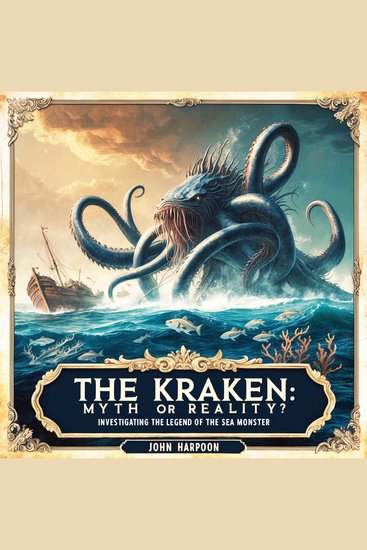
    The Kraken, a legendary sea monster whose name evokes images of terror and fascination, has captivated the imaginations of people for centuries. First emerging from the shadows of Scandinavian folklore, this giant creature—often described as a massive octopus or squid—has become one of the most iconic symbols of the unknown depths of the ocean. The allure of the Kraken lies in its mysterious nature, its ability to stir both fear and wonder, and the enduring question: is it merely a myth, or could there be some truth behind the legend? 
      
    For sailors of old, the Kraken represented the dangers of the sea, a vast and untamable force filled with peril. Tales of ships being pulled under the water, disappearing without a trace, were often attributed to the Kraken’s monstrous tentacles dragging them to their doom. These stories, passed down through generations, grew in magnitude and detail, transforming the Kraken into a creature of unimaginable size and strength. The Kraken’s enormous presence on the open sea symbolized the boundary between the known world and the vast, dark waters that were beyond human control. 
      
    Yet, despite its fearsome reputation, the Kraken has also been embraced as a symbol of mystery and curiosity. Its mythical status has made it an enduring figure in literature, art, and popular culture, where it is often portrayed as both a terrifying threat and an awe-inspiring force of nature. From the pages of Jules Verne’s *Twenty Thousand Leagues Under the Sea* to blockbuster films like *Pirates of the Caribbean*, the Kraken continues to embody humanity’s fascination with the sea and the creatures that may lie beneath its surface.
    Show book