Join us on a literary world trip!
Add this book to bookshelf
Grey
Write a new comment Default profile 50px
Grey
Subscribe to read the full book or read the first pages for free!
All characters reduced
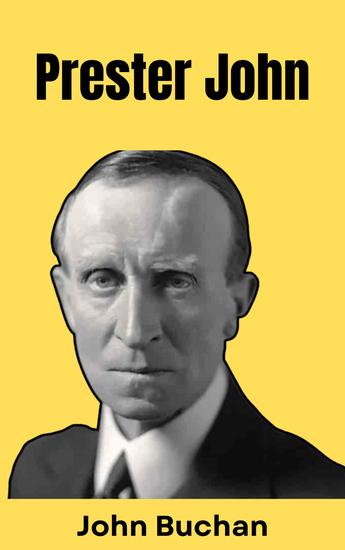
Prester John - cover

Prester John

John Buchan

Publisher: DD Sales & Distributors

  • 0
  • 0
  • 0

Summary

The town of Kirkcaple, of which and its adjacent parish of Portincross my father was the minister, lies on a hillside above the little bay of Caple, and looks squarely out on the North Sea. Round the horns of land which enclose the bay the coast shows on either side a battlement of stark red cliffs through which a burn or two makes a pass to the water's edge. The bay itself is ringed with fine clean sands, where we lads of the burgh school loved to bathe in the warm weather. But on long holidays the sport was to go farther afield among the cliffs; for there there were many deep caves and pools, where podleys might be caught with the line, and hid treasures sought for at the expense of the skin of the knees and the buttons of the trousers. Many a long Saturday I have passed in a crinkle of the cliffs, having lit a fire of driftwood, and made believe that I was a smuggler or a Jacobite new landed from France. There was a band of us in Kirkcaple, lads of my own age, including Archie Leslie, the son of my father's session-clerk, and Tam Dyke, the provost's nephew. We were sealed to silence by the blood oath, and we bore each the name of some historic pirate or sailorman. I was Paul Jones, Tam was Captain Kidd, and Archie, need I say it, was Morgan himself. Our tryst was a cave where a little water called the Dyve Burn had cut its way through the cliffs to the sea. There we forgathered in the summer evenings and of a Saturday afternoon in winter, and told mighty tales of our prowess and flattered our silly hearts. But the sober truth is that our deeds were of the humblest, and a dozen of fish or a handful of apples was all our booty, and our greatest exploit a fight with the roughs at the Dyve tan-work...FROM THE BOOKS.
Available since: 08/16/2019.
Print length: 249 pages.
Other books that might interest you

  • Orlóff and His Wife - Tales of the Barefoot Brigade - cover

    Orlóff and His Wife - Tales of...

    Maxim Gorky

    • 0
    • 0
    • 0
    A cobbler and his wife in a Volga cellar quarrel, drink and beat each other until cholera comes to the town and both are taken on as hospital orderlies. Gorky published "Orlóff and His Wife" in 1897 out of the tramping years that made him; the other stories here come from the same road. Nothing is resolved and nobody is redeemed, which was the offence and the point. Fifty-five plates by painters including Perov and Repin bring the hard world of these tales into view, from peasant huts to an operating room, 1821 to 1915.
    Show book
  • Lights - From their pens to your ears genius in every story - cover

    Lights - From their pens to your...

    Vladimir Korolenko

    • 0
    • 0
    • 0
    Vladimir Galaktionovich Korolenko was born in Zhytomyr, Ukraine, then part of the Russian Empire on 27th July 1853. 
    His father died when he was 13 and life was then often struck with bouts of poverty, which resulted in his education being somewhat erratic.   A spell in exile at 23 was followed by another as the politics of the times opposed his volatile but heart-felt passions. 
    Writing was also coming to the fore and in 1879 his debut short story telling of a young Narodnik searching for social and spiritual identity, was published. 
    In 1881, Korolenko refused to swear allegiance to the new Russian Tsar and was again exiled, this time much farther afield.  He spent the next three years doing manual work, but took time to study local customs and history.  These impressions in exile provided rich material for his writings. 
    In 1885 he was allowed to settle in Nizhny, where again he repeatedly questioned the authorities.  That same year ‘Makar's Dream’ established his literary reputation and was part of his first collection ‘Sketches and Stories’, the following year. 
    In the early 1890’s when famine struck Central Russia, he went to work on relief missions, collecting donations, supervising the delivery and distribution of food, opening 45 free canteens, all this while writing the graphic reports that would later be published as ‘In the Year of Famine’ in 1893. 
    By 1896 despite some psychological disorders, he was well regarded amongst Russian writers and was even a member of the Russian Academy of Sciences.  Throughout his writing career Korolenko was a staunch advocate of human rights, putting that sacred activity above what he called his 'part-time-writing'. 
    In the Revolutionary year of 1905, under his editorship, Russkoye Bogatstvo published the Manifest by the Petersburg Soviet of the Workers' deputies. Korolenko was now repeatedly harassed by the authorities, had his flat raided many times and materials confiscated. 
    As a lifetime opponent of Tsarism, he guardedly welcomed the Revolution of 1917.  Once the nature of Bolshevism was established, he soon started to criticize it. During the Russian Civil War that ensued, he condemned both the Red Terror and the White Terror.  
    Despite suffering from a progressive heart disorder, he collected food packages for children in famine-stricken Moscow and Petrograd as well as organised orphanages and shelters for the homeless.  
    Vladimir Korolenko died in Poltava, Ukraine, of the complications of pneumonia on 25th December 1921.  He was 68.
    Show book
  • Typee - A Romance of the South Seas - cover

    Typee - A Romance of the South Seas

    Herman Melville

    • 0
    • 0
    • 0
    In "Typee: A Romance of the South Seas," Herman Melville recounts the riveting adventures of Tommo, a sailor who escapes his whaling ship and finds refuge in the seemingly idyllic valley of Typee on a Polynesian island. As Tommo becomes immersed in the lush, exotic lifestyle of the natives, he grapples with the duality of their serene beauty and underlying savagery. Melville's richly descriptive narrative explores themes of cultural conflict, freedom, and the allure of the unknown.
    Show book
  • The Marvelous Land of Oz - cover

    The Marvelous Land of Oz

    L. Frank Baum

    • 0
    • 0
    • 0
    Return to the enchanting world of Oz in L. Frank Baum’s "The Marvelous Land of Oz." Follow Tip, a spirited young boy, as he escapes from the clutches of the wicked witch Mombi with his magical creations—a wooden man named Jack Pumpkinhead and the animated Saw-Horse. Alongside familiar friends like the Scarecrow and the Tin Woodman, Tip encounters new adventures and uncovers surprising secrets. Brimming with whimsy and wonder, this timeless tale celebrates courage, friendship, and self-discovery.
    Show book
  • The Mysterious Affair At Styles - cover

    The Mysterious Affair At Styles

    Agatha Christie

    • 0
    • 0
    • 0
    We rely on your support to help us keep producing beautiful, free, and unrestricted editions of literature for the digital age. Will you support our efforts with a donation ? The Mysterious Affair at Styles isn't just Agatha Christie's first Poirot novel, it was the only Poirot novel in the public domain until 2019. It was written on a bet that Christie couldn't write a detective novel in which the reader couldn't deduce the criminal. Her attempt laid the foundation for one of literature's most famous detectives. In this novel we're introduced to Poirot as he's settling in to a new life in England. After a woman is murdered at the country estate he's visiting, he has to use his detective skills to catch the criminal. The Mysterious Affair at Styles sets the stage for the Golden Age of Detective Fiction, and has everything you'd expect from a story rich in those classic detective fiction tropes. Agatha Christie (died 1976) was a significant literary figure of the 20th century. Their work has endured across generations and continues to be read and studied worldwide. As a work of classic literary fiction, The Mysterious Affair At Styles exemplifies the narrative craft and social insight that defined great storytelling of its era. Literary fiction of this period was characterized by careful attention to character psychology, social milieu, and the moral questions that animated public discourse.
    Show book
  • The Rangers - or The Tory's Daughter - cover

    The Rangers - or The Tory's...

    Daniel P. Thompson

    • 0
    • 0
    • 0
    Vermont in 1777: Burgoyne coming down from Canada, the Green Mountain Boys, Bennington, and a Tory's daughter caught between her father's loyalty and her own. Thompson was a Vermont judge who collected the testimony of the men who fought it while they were still alive to give it — the campaign here is history taken down from witnesses and then told as a story. Fifty-nine plates of winter landscapes and village scenes, among them works by Gainsborough and Munch, echo the snowbound campaign and the rural world the Rangers knew.
    Show book