Join us on a literary world trip!
Add this book to bookshelf
Grey
Write a new comment Default profile 50px
Grey
Subscribe to read the full book or read the first pages for free!
All characters reduced
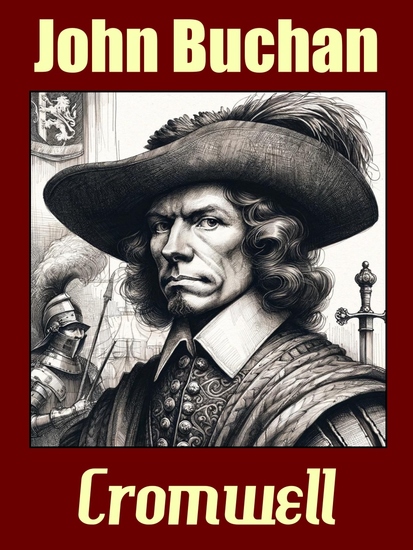
Cromwell - cover

Cromwell

John Buchan

Publisher: Alien Ebooks

  • 0
  • 0
  • 0

Summary

This biography by John Buchan provides a nuanced look at the life of Oliver Cromwell, seeking to balance popular perceptions of the controversial English soldier and statesman. Buchan starts with Cromwell's origins, detailing his childhood and youth to set the stage. As the biography unfolds, Buchan argues that Cromwell developed into a military leader and strategist on a grand scale, showcasing talents beyond just tactical prowess. Buchan contends that Cromwell's evolving leadership and statesmanship during this period of his military career should be considered when assessing his place among history's great generals and captains. This biography aims to provide a full portrait of Cromwell by starting with his early life and demonstrating his growth into a multifaceted leader.
Available since: 11/07/2023.
Print length: 353 pages.

Other books that might interest you

  • The Old Adam - From their pens to your ears genius in every story - cover

    The Old Adam - From their pens...

    D H Lawrence

    • 0
    • 0
    • 0
    David Herbert Lawrence was born on the 11th September 1885 in Eastwood, Nottinghamshire, a coal mining town where the reality of a harsh life was only useful as experiences for future literary works. 
    He was educated at Beauvale Board School and became the first local boy to receive a scholarship to attend Nottingham High School. After 3 years he became a junior clerk in Haywood’s surgical appliances factory. He was also attempting a literary career which, in the short term, led to a teacher training position in Eastwood and later a teaching qualification from University College, Nottingham.  
    Lawrence’s first efforts were poems, short stories and a draft of ‘The White Peacock’. Moving to London and a teaching position in Croydon his writing attracted the attention of Ford Madox Ford, editor of The English Review, and he commissioned him to write ‘Odour of Chrysanthemums’.  
    Wanting to write full-time he now began work on what would become ‘Sons and Lovers.   
    In 1912 he met the older and married mother-of-three Frieda Weekley. They eloped to Germany and here Lawrence could see for himself the growing tensions with France.  So keen was his interest that he was arrested and accused of being a British spy.  
    In early 1914 Frieda obtained her divorce and they returned to Britain to be married just days before the outbreak of war. Owing to her German parentage, and his own public dislike of militarism and violence, the couple were treated with contempt and suspicion throughout the war years.  
    Despite this he continued to write but his reputation in England was so tarnished and, mirrored by his own disdain for the country, he and Frieda left England in November 1919, first for Europe and then America via Ceylon and Australia. 
    They bought a ranch in Taos, New Mexico and visited Mexico several times. The third visit in March 1925 caused a near fatal attack of malaria. To convalesce they moved to Florence. Here he continued work on ‘Lady Chatterley’s Lover’ which for many years would cause controversy. A renewed interest in oil painting resulted in an exhibition in 1929 which was raided by the police and several works were confiscated.  
    D H Lawrence died of complications arising from a bout of tuberculosis on the 2nd of March 1930 in Vence, France.  He was 44.
    Show book
  • Behind the Wall - From their pens to your ears genius in every story - cover

    Behind the Wall - From their...

    Violet Jacob

    • 0
    • 0
    • 0
    The bookshelves of British literature are incredible collections that have gathered together centuries of very talented authors.  From these Isles their fame spread and whilst among their number many are now forgotten or neglected their talents endure.  Among them is Violet Jacob.
    Show book
  • Oscar Piastri - A Biography - cover

    Oscar Piastri - A Biography

    Anthony Meredith

    • 0
    • 0
    • 0
    Sorry, we have no synopsis for this book right now. Sign in to read it on 24symbols.com
    Show book
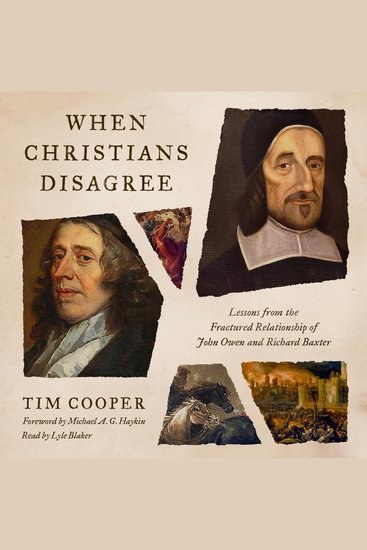
  • When Christians Disagree - Lessons from the Fractured Relationship of John Owen and Richard Baxter - cover

    When Christians Disagree -...

    Tim Cooper, Michael A. G. Haykin

    • 0
    • 0
    • 0
    Two Oppositional Figures in Church History Shed Light on Division in the Church Today
    Our current culture seems to be increasingly divided on countless issues, including those affecting the church. But for centuries, theological disagreements, political differences, and issues relating to church leadership have made it challenging for Christians to foster unity and love for one another.
    In this book, author Tim Cooper explores this polarization through the lives of two oppositional figures in church history: John Owen and Richard Baxter. Cooper highlights their individual stories while showing how their contrasting life experiences, personalities, and temperaments led to their inability to work together. After exploring these lessons from the past, readers will gain insights into their own relationships, ultimately learning how to love and live in harmony with their fellow believers despite their disagreements.
    
    - Timely: In today's deeply divided culture, this book offers past examples to help spur unity among believers today
    - Historical: Biographical examination of two Puritan writers from the 17th century: John Owen and Richard Baxter
    - Accessible: Short format and crisp writing style offer an engaging story with no background knowledge required
    Show book
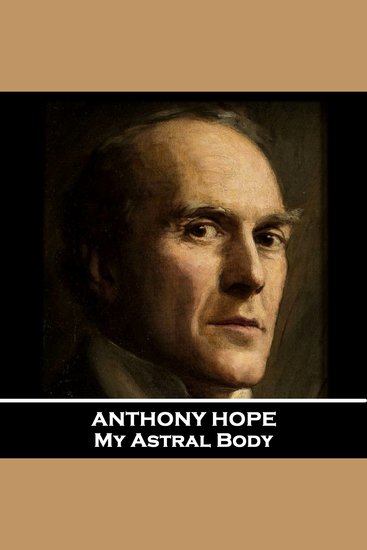
  • My Astral Body - From their pens to your ears genius in every story - cover

    My Astral Body - From their pens...

    Anthony Hope

    • 0
    • 0
    • 0
    Sir Anthony Hope Hawkins was born on 9th February 1863 in Clapton, London.  
    He was educated at St John's School, Leatherhead, Marlborough College and Balliol College, Oxford.  Hope trained as a lawyer and barrister and was called to the Bar by the Middle Temple in 1887. Despite what was thought to be a promising legal career he had literary ambitions and wrote in his spare time. 
    His early works appeared in various periodicals of the day but for his first book ‘A Man of Mark’ (1890), with no publisher interested, he published with his own resources.  
    More novels and short stories followed, including the mildly successful ‘Mr Witt's Widow’ in 1892. Hope even found time to run as the Liberal candidate for Wycombe in the election that same year but was unsuccessful. 
    His first major literary success came with ‘The Dolly Dialogues’, a collection of previously published magazine pieces followed very quickly by his instant classic, ‘The Prisoner of Zenda’. He now gave up the vestiges of his legal career to pursue writing full-time. 
    Despite never again reaching the same pinnacle of success he was popular and wrote prolifically across novels, plays and of course, short stories though his writing output rapidly diminished after the war. 
    In 1918 he was knighted for his contribution to propaganda efforts during World War I.  
    His short stories are delicate, mannered and often surprising with their wit, humour and interplay of characters who say one thing and usually mean another.  He was very definitely a writer of escapist rather than serious fare but they are no less enjoyable for that. 
    Anthony Hope died of throat cancer on 8th July 1933 at his country home, Heath Farm at Walton-on-the-Hill in Surrey. He was 70.
    Show book
  • Kennedys The: The History of America’s Most Famous Family - cover

    Kennedys The: The History of...

    Editors Charles River

    • 0
    • 0
    • 0
    In many ways, John Fitzgerald Kennedy and his young family were the perfect embodiment of the ‘60s. The decade began with a sense of idealism, personified by the attractive Kennedy, his beautiful and fashionable wife Jackie, and his young children. Months into his presidency, Kennedy exhorted the country to reach for the stars, calling upon the nation to send a man to the Moon and back by the end of the decade. In 1961, Kennedy made it seem like anything was possible, and Americans were eager to believe him. The Kennedy years were fondly and famously labeled “Camelot,” by Jackie herself, suggesting an almost mythical quality about the young President and his family. As it turned out, the ‘60s closely reflected the glossy, idealistic portrayal of John F. Kennedy, as well as the uglier truths.  
    	Americans were fascinated by the young First Lady’s style, and the manner in which she glamorously positioned both the First Family and the White House in those years, and Jackie remains one of the country’s most popular First Ladies. But it was in the face of adversity that she truly made her lasting mark, with the country taking its cue from her in the aftermath of the president’s assassination. Having devised and lit the eternal flame at JFK’s tombstone, Jackie also set about securing her husband’s legacy, a time still fondly and mythically remembered as Camelot today, despite his legendary transgressions and infidelities.   
    	Eventually, with the deaths of his brothers, Bobby rose to become the leader of the Kennedy family, at the same time his political prominence rose. Today, unfortunately, Bobby is best remembered for his assassination, the way in which it helped perpetuate the “Kennedy Curse”, and the fact that his political promise, including potentially becoming president in 1968, was never fulfilled. 
    Show book