Join us on a literary world trip!
Add this book to bookshelf
Grey
Write a new comment Default profile 50px
Grey
Subscribe to read the full book or read the first pages for free!
All characters reduced
Studies of the Greek Poets (Vol 1&2) - Complete Edition - cover

Studies of the Greek Poets (Vol 1&2) - Complete Edition

John Addington Symonds

Publisher: Good Press

  • 0
  • 0
  • 0

Summary

In "Studies of the Greek Poets (Vol. 1&2)," John Addington Symonds delves into the intricate world of ancient Greek literature, offering a profound analysis of the works of poets such as Homer, Sappho, and Pindar. Symonds's literary style is characterized by its elegance and depth, combining a meticulous examination of the poetic text with a passionate engagement with its historical and cultural contexts. His exploration of themes such as beauty, love, and the human experience provides readers with an enriching perspective on the significance of these poets in the tapestry of Western literature. John Addington Symonds, a Victorian poet, biographer, and literary critic, was profoundly influenced by his own struggles with identity and societal norms, which led him to explore themes of individuality and beauty in his work. His scholarship is underscored by a groundbreaking perspective on aestheticism and homoeroticism, reminiscent of the very themes prevalent in ancient Greek poetry. Symonds'Äô scholarly pursuits not only reflect his academic rigor but also his personal quest for authenticity and understanding in a repressive society. This work is recommended for both scholars and enthusiasts of classical literature, as it unveils the timeless relevance of Greek poetry while inviting readers to partake in Symonds's own journey of discovery. His analyses inspire a renewed appreciation for these foundational texts, making it essential reading for anyone looking to deepen their understanding of the literary heritage of the ancient world.
Available since: 12/15/2023.
Print length: 735 pages.

Other books that might interest you

  • The History of the Vikings - cover

    The History of the Vikings

    History Nerds

    • 0
    • 0
    • 0
    Embark on an epic voyage through the tumultuous era of Norse exploration and conquest. From their legendary expeditions to distant lands to their fierce battles and enigmatic culture, Theodore Zepher's rich narration brings to life the indomitable spirit of these seafaring warriors in this series Box Set. 
    Contains: 
    Book 1 : Vikings 
    Book 2 : Longships on Restless Seas 
    Few are those that have not heard of the fearsome Vikings and their daring exploits. These Northern seafarers, the scourge of the Middle Ages, left their mark on the world’s history in a grand fashion. Courageous, defiant, and driven by the desire for exploration, the Norsemen were the most feared of all Medieval conquerors. Many thought them invincible, and they held many struggling Christian nations in their sway. From Scotland, England, France, and Ireland, down to the shores of Spain and the Baltic, the Vikings left their undeniable mark. Brutal conquest was not the only tool of their trade: these men were able seafarers and great explorers. Vikings discovered and established colonies in the Faroe Islands, Iceland, Greenland, and North America. Many agree that they were the first to set foot in the land we know today as Canada. All in all, the Vikings hold a vital role in the history of the world. Who knows how our world would look today if it weren’t for these grand Norsemen?
    Show book
  • Becoming Batman - The Possibility of a Superhero - cover

    Becoming Batman - The...

    E. Paul Zehr, James Kakalios

    • 0
    • 0
    • 0
    Possessing no supernatural powers, Batman is the most realistic of all the superheroes. His feats are achieved through rigorous training and mental discipline, and with the aid of fantastic gadgets. Drawing on his training as a neuroscientist, kinesiologist, and martial artist, E. Paul Zehr explores the question: Could a mortal ever become Batman? 


    Zehr discusses the physical training necessary to maintain bad-guy-fighting readiness while relating the science underlying this process, from strength conditioning to the cognitive changes a person would endure in undertaking such a regimen. In probing what a real-life Batman could achieve, Zehr considers the level of punishment a consummately fit and trained person could handle, how hard and fast such a person could punch and kick, and the number of adversaries that individual could dispatch. He also tells us what it would be like to fight while wearing a batsuit and the amount of food we'd need to consume each day to maintain vigilance as Gotham City's guardian. 


    A fun foray of escapism grounded in sound science, Becoming Batman provides the background for attaining the realizable—though extreme—level of human performance that would allow you to be a superhero.
    Show book
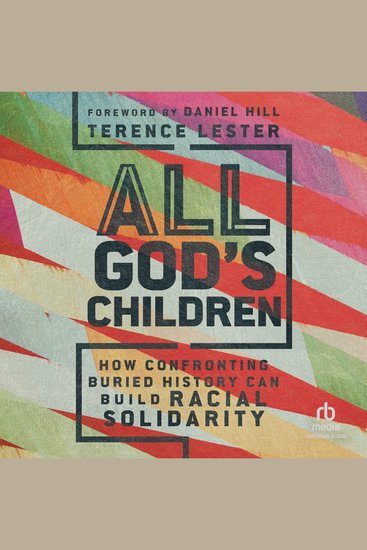
  • All God's Children - How Confronting Buried History Can Build Racial Solidarity - cover

    All God's Children - How...

    Terence Lester

    • 0
    • 0
    • 0
    The more you understand someone's history, the better you can see their humanity. This is true for individuals as well as for society at large. Race relations have suffered because of the erasure of important Black history and cultural context. As we fill in the gaps of our collective knowledge, communities can grow in understanding, empathy, and solidarity. 


    Terence Lester shares the buried history of the struggles Black people have faced against unjust systems. He tells powerful stories of courage, injustice, pain, and triumph, including ones from his own history. He also unpacks the sociological and cultural dynamics of unconscious bias and inattentional ignorance that keep us apart, and how they can be overcome. This honest account of what it's like to be Black in America paves the way for the church to move beyond showing support from a distance toward loving one another in long-term solidarity, advocacy, and friendship.
    Show book
  • The Witchcraft Collection Volume One - Dictionary of Satanism Dictionary of Witchcraft and Dictionary of Pagan Religions - cover

    The Witchcraft Collection Volume...

    Wade Baskin, Harry E. Wedeck,...

    • 0
    • 2
    • 0
    Three authoritative yet accessible reference books explaining the terms, concepts, histories, and significant personalities of occult systems and practices.Dictionary of Satanism is a concise yet wide-ranging reference guide for the casual reader. It features essential information on the important concepts, issues, people, places, and events associated with Satanism. Also covered are the myriad forms and names that satanic worship has taken from ancient times to the present.   Following its original publication in 1818, Collin de Plancy’s Dictionary of Witchcraft became a landmark study of demonology and the occult. A significant influence on the Romantic literary movement and notably consulted by author Victor Hugo, de Plancy’s work remains an essential reference text for any student of the dark arts.  Dictionary of Pagan Religions offers a wide-ranging survey of the many religious cults that have flourished around the world from the Stone Age to the present. From Egyptian to Celtic traditions and Gnosticism to Cabala, coauthors Harry E. Wedeck and Wade Baskin have compiled information about the rites, rituals, and influences of these religious systems.    
    Show book
  • Feudalism - The Structure of Medieval Society - cover

    Feudalism - The Structure of...

    Harris Ropes

    • 0
    • 0
    • 0
    Feudalism emerged in Western Europe as a response to the collapse of centralized authority following the fall of the Roman Empire. As Roman institutions crumbled in the 5th century, Europe descended into a period of instability and fragmentation. Without the protection and infrastructure once provided by Rome, people turned to local leaders for safety and organization. These leaders—often wealthy landowners or military figures—became the foundation of a new social and political structure that emphasized land ownership, loyalty, and mutual obligation. 
    The early roots of feudal practices can be traced to the relationships that formed during this chaotic period. In the absence of a strong central government, powerful individuals began offering protection to those around them in exchange for service or labor. Over time, this informal system developed into a structured hierarchy, with clearly defined roles and responsibilities. Lords granted land, known as fiefs, to their vassals, who in return pledged loyalty and military support. This mutual dependency became the backbone of medieval society and formalized the relationships that had organically formed during the earlier periods of uncertainty. 
    Localized power became the defining feature of feudal Europe. With no single empire to unify the continent, authority became decentralized. Kings often ruled in name only, while real control rested in the hands of regional lords and nobles. These lords governed their own territories, enforced laws, and maintained private armies. In turn, they depended on the support of lesser vassals and knights, who managed smaller portions of land and fulfilled military duties. This layered structure ensured that each level of society relied on those above and below, creating a rigid yet stable social order.
    Show book
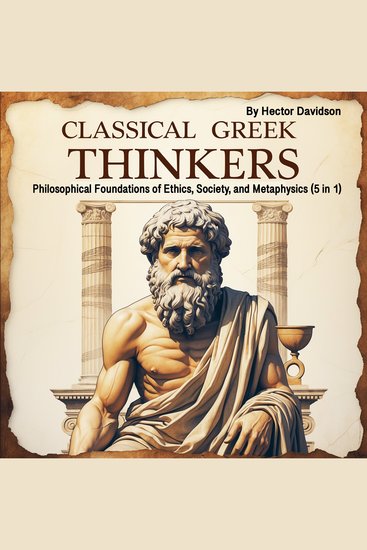
  • Classical Greek Thinkers - Philosophical Foundations on Ethics Society and Metaphysics (5 in 1) - cover

    Classical Greek Thinkers -...

    Hector Davidson

    • 0
    • 0
    • 0
    This book contains five titles, which are the following: 
    - Democritus  
    - Diogenes  
    - Empedocles  
    - Epicurus  
    - Socrates  
    Get this discounted deal now!
    Show book