
Join us on a literary world trip!
Add this book to bookshelf
Grey
Write a new comment Default profile 50px
Grey
Subscribe to read the full book or read the first pages for free!
All characters reduced
Iphigenia in Tauris - cover

Iphigenia in Tauris

Johann Wolfgang von Goethe

Publisher: Memorable Classics eBooks

  • 0
  • 0
  • 0

Summary

Iphigenia in Tauris by Johann Wolfgang von Goethe Iphigenia in Tauris (German: Iphigenie auf Tauris) is a reworking by Johann Wolfgang von Goethe of the ancient Greek tragedy Ἰφιγένεια ἐν Ταύροις (Iphigeneia en Taurois) by Euripides. Euripides' title means "Iphigenia among the Taurians", whereas Goethe's title means "Iphigenia in Taurica", the country of the Tauri.

Goethe wrote the first version of his play in six weeks, and it was first performed on April 6, 1779, in prose form. He rewrote it in 1781, again in prose, and finally in 1786 in verse form. He took the manuscript of Iphigenia in Tauris with him on his famous Italian Journey.

Beloved by the gods for his wisdom, the demigod Tantalus was once invited to their fellowship. Becoming boisterous whilst celebrating with them, he began to boast, and he stole the gods' nectar and ambrosia, their food of immortality. When the gods came to see Tantalus in turn, he tested their omniscience by offering his own son Pelops to them as their meal.

Offended by the deception, the gods banished Tantalus from their community to Tartarus and cursed him and his family, the House of Atreus. This became known as the curse on the Tantalids, in which descendants from Tantalus in every subsequent generation were driven by revenge and hatred to the killing of their own family members.
Available since: 06/01/2022.

Other books that might interest you

  • The Story of An Hour - cover

    The Story of An Hour

    Kate Chopin

    • 0
    • 0
    • 0
    American author Kate Chopin's "The Story of an Hour" was written in April of 1894 and originally published in Vogue in December of that year. The title refers to the time elapsed between the moments at which the protagonist, Louise Mallard, hears that her husband is dead, then discovers that he is alive after all. The short story is a mainstay of feminist literary study.
    Show book
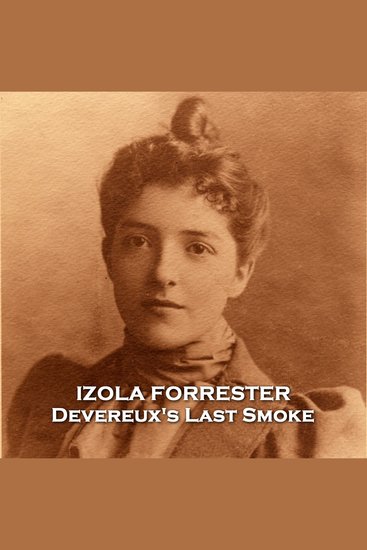
  • Devereux's Last Smoke - From their pens to your ears genius in every story - cover

    Devereux's Last Smoke - From...

    Izola Forrester

    • 0
    • 0
    • 0
    The bookshelves of American literature are incredible collections that have gathered together centuries of very talented authors.  From this continent their fame spread and whilst among their number many are now forgotten or neglected their talents endure.  Among them is Izola Forrester.
    Show book
  • Hans Christian Andersen - All Fairy Tales - cover

    Hans Christian Andersen - All...

    Hans Christian Andersen, Classic...

    • 0
    • 0
    • 0
    Enter a world of imagination, beauty, and timeless wisdom with the complete fairy tales of Hans Christian Andersen. This collection includes nearly all of his iconic stories, from The Little Mermaid, The Snow Queen, and The Ugly Duckling to lesser-known gems filled with emotion, magic, and depth.Andersen's fairy tales go beyond simple children's stories—they are rich with meaning, often touching on love, sacrifice, and the human spirit. Whether you're listening alone or with family, this audiobook brings generations together through the power of storytelling.
    Show book
  • The Iron Heel - cover

    The Iron Heel

    Jack London

    • 0
    • 0
    • 0
    "The Iron Heel will walk upon our faces... and yet we must dream of the Brotherhood of Man."
    
    Presented as the "Everhard Manuscript," a document discovered seven centuries in the future, The Iron Heel tells the story of the 20th-century collapse of democracy. The narrative follows Ernest Everhard, a charismatic labor leader, as he challenges the "Oligarchy"—a ruthless cabal of industrial titans who seize control of the United States. As the Oligarchy (the "Iron Heel") crushes dissent with private armies and secret police, Everhard and his wife Avis are driven into a violent underground resistance. This is a visceral, high-stakes exploration of class warfare, revolutionary fervor, and the terrifying resilience of absolute power.
    
    A Blueprint for Dystopia: London's vision is unique because it doesn't just show the fall; it explains the mechanics of how a superpower turns into a police state. From the manipulation of the press to the creation of "Labor Castes" designed to divide the working class, London's political insights remain startlingly relevant to the modern age.
    
    The "People of the Abyss": The novel's climax, featuring the "Chicago Commune," is one of the most intense sequences in political fiction. London portrays the raw, desperate fury of the downtrodden as they face the high-tech weaponry of the state. It is a sobering reminder of the human cost of systemic inequality and the enduring hope for a more just world.
    
    Read the book that inspired the masters of dystopia. Purchase "The Iron Heel" today.
    Show book
  • A Rainy Day - From their pens to your ears genius in every story - cover

    A Rainy Day - From their pens to...

    Mary Elizabeth Hawker writing as...

    • 0
    • 0
    • 0
    The bookshelves of British literature are incredible collections that have gathered together centuries of very talented authors.  From these Isles their fame spread and whilst among their number many are now forgotten or neglected their talents endure.  Among them is Mary Elizabeth Hawker.
    Show book
  • War and Peace (Book Two: 1805) - cover

    War and Peace (Book Two: 1805)

    Leo Tolstoy

    • 0
    • 0
    • 0
    War and Peace is a literary work mixed with chapters on history and philosophy by the Russian author Leo Tolstoy. It was first published serially, then published in its entirety in 1869. It is regarded as one of Tolstoy's finest literary achievements and remains an internationally praised classic of world literature.
    Book 2: 1805: In October, 1805, a Russian army was occupying the villages and towns of the Archduchy of Austria, and yet other regiments freshly arriving from Russia were settling near the fortress of Braunau and burdening the inhabitants on whom they were quartered. Braunau was the headquarters of the commander in chief, Kutúzov.
    Show book