Join us on a literary world trip!
Add this book to bookshelf
Grey
Write a new comment Default profile 50px
Grey
Subscribe to read the full book or read the first pages for free!
All characters reduced
History of the Philippine Islands (Vol 1&2) - Their Discovery Population Language Government Manners Customs Productions and Commerce (Complete Edition) - cover

History of the Philippine Islands (Vol 1&2) - Their Discovery Population Language Government Manners Customs Productions and Commerce (Complete Edition)

Joaquín Martínez de Zúñiga

Translator John Maver

Publisher: DigiCat

  • 0
  • 0
  • 0

Summary

In "History of the Philippine Islands (Vol. 1 & 2)", Joaquín Martínez de Zúñiga offers a comprehensive and insightful examination of the Philippines from its earliest records to the late 19th century. His narrative weaves together rich historical accounts, vivid descriptions of the social and cultural fabric, and detailed observations of the islands' geography and demography. Employing a literary style infused with both scholarly rigor and engaging prose, Zúñiga situates his work within the broader context of colonial literature and historiography, making a vital contribution to the understanding of Philippine history during Spanish rule. Martínez de Zúñiga, a Spanish priest and historian, was deeply entrenched in the socio-political landscape of colonial Philippines. His firsthand experiences and scholarly background allowed him to explore the complexities of Filipino society and the impacts of colonialism. His dual perspective as both a participant and observer provides readers with a nuanced understanding of the cultural dynamics of the period, enriching the historical dialogue around the islands. I enthusiastically recommend this seminal work to historians, scholars, and anyone interested in the intricacies of Philippine history. Zúñiga's meticulous documentation and narrative artistry render it a vital resource that not only enlightens but also engages the reader in the rich tapestry of the Philippines' past.
Available since: 11/16/2023.
Print length: 288 pages.

Other books that might interest you

  • History of Romania - An Overview of Wars Dictators and Social Changes - cover

    History of Romania - An Overview...

    Kelly Mass

    • 0
    • 0
    • 0
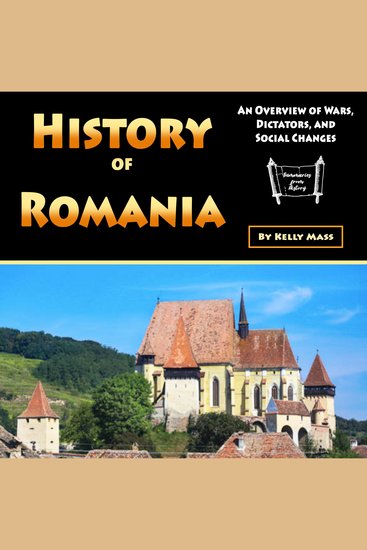
    The earliest evidence of human habitation in what is now Romania dates back to prehistoric times, but one of the first recorded mentions comes from the writings of the ancient Greek historian Herodotus. In his work Histories, Book IV, written around 440 BC, Herodotus described the Getae, a Thracian tribe residing in the region that would later become Romania. According to Herodotus, the Getae were defeated by Persian Emperor Darius the Great during his military campaign against the Scythians. This reference marks an important historical mention of the people inhabiting the area. 
    The Dacians, a branch of the Thracian people, are believed to have been closely related to the Getae mentioned by the Greeks. The Dacians inhabited a region known as Dacia, which included present-day Romania, Moldova, parts of northern Bulgaria, and surrounding areas. Their culture, society, and military strength developed significantly, making them a prominent force in southeastern Europe. The Dacians are often regarded as the ancestors of modern Romanians, and their legacy is a crucial element of Romanian national identity.
    Show book
  • Law The: Book Summary & Analysis - cover

    Law The: Book Summary & Analysis

    Miles Thatcher

    • 0
    • 0
    • 0
    This content is an independent and unofficial summary created for informational and educational purposes only. It is not affiliated with, authorized, approved, licensed, or endorsed by the original author or publisher. All rights to the original work belong to its respective copyright holders. This summary is not intended to substitute the original book, but to offer a concise overview and interpretation of its main ideas
     
    This classic work explores the principles of justice, liberty, and the proper role of government in society. It argues for the protection of individual rights, the limitations of state power, and the importance of free markets in fostering human prosperity. With a clear and concise style, the book delivers a timeless critique of overreaching government intervention while defending the rights of individuals to life, liberty, and property. It remains a foundational text for anyone interested in philosophy, economics, and political thought.
    Show book
  • Namwayut—We Are All One - A Pathway to Reconciliation - cover

    Namwayut—We Are All One - A...

    Robert Joseph

    • 0
    • 0
    • 0
    BC and Yukon Book Prizes, Winner of the Bill Duthie Booksellers’ Choice Award, 2023We all share a common humanity. No matter how long or difficult the path ahead, we are all one.Reconciliation belongs to everyone. In this profound book, Chief Robert Joseph, globally recognized peacebuilder and Hereditary Chief of the Gwawaenuk People, traces his journey from his childhood surviving residential school to his present-day role as a leader who inspires individual hope, collective change, and global transformation.Before we get to know where we are going, we need to know where we came from. Reconciliation represents a long way forward, but it is a pathway toward our higher humanity, our highest selves, and an understanding that everybody matters. In Namwayut, Chief Joseph teaches us to transform our relationships with ourselves and each other. As we learn about, honour, and respect the truth of the stories we tell, we can also discover how to dismantle the walls of discrimination, hatred, and racism in our society.Chief Joseph is known as one of the leading voices on peacebuilding in our time, and his dedication to reconciliation has been recognized with multiple honorary degrees and awards. As one of the remaining first-language speakers of Kwak'wala, his wisdom is grounded in Indigenous ways of knowing while making space for something bigger and better for all of us.
    Show book
  • Canaletto and Guardi - Views of Venice at the Wallace Collection - cover

    Canaletto and Guardi - Views of...

    Lelia Packer, Charles Beddington

    • 0
    • 0
    • 0
    A gorgeous celebration of the beauty of Venice as conveyed in the paintings of Canaletto and his followers.
    Among the renowned Old Master paintings at the Wallace Collection in London is an important group of 27 eighteenth-century views of Venice, known as vedute, by Canaletto and his followers, including Francesco Guardi. They hang together in a dedicated gallery known as the Canaletto Room, but until recently the majority had not been cleaned since the nineteenth century and their original beauty was obscured by multiple layers of discoloured varnish.
    The paintings have now been restored and rephotographed, following a multi-year conservation and research project that has also led to a reappraisal of them. This book presents these pictures in their renewed splendour. It features essays and commentaries by Charles Beddington, the global expert on vedute, and by Wallace Collection curator Lelia Packer. Together they provide fresh insights into the artists' creative processes, the dating of pictures and their authorship.
    Show book
  • Mali Empire - Gold Mansa Musa and the Wealth of West Africa - cover

    Mali Empire - Gold Mansa Musa...

    Rolf Hedger

    • 0
    • 0
    • 0
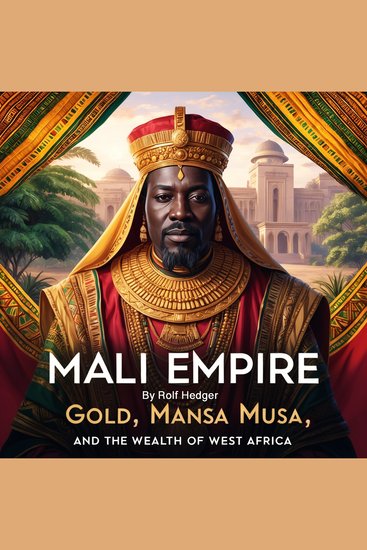
    The Mali Empire emerged in the early 13th century, rising from the remnants of the Ghana Empire and the consolidation of the Malinke people under a visionary leader, Sundiata Keita. The region that would become Mali was already a center of commerce, culture, and political organization, benefiting from its strategic position along the trans-Saharan trade routes. However, it was the collapse of Ghana and the subsequent struggle for power that allowed Mali to emerge as a dominant force in West Africa. 
    The Ghana Empire, which had once controlled vast gold reserves and major trade routes, began to decline due to internal conflicts, overexpansion, and pressure from external forces such as the Almoravid invasions. As Ghana weakened, many of its vassal states and ethnic groups, including the Malinke people, sought independence and new opportunities for leadership. The Malinke, a subgroup of the Mande-speaking people, inhabited the area along the upper Niger River and had long engaged in trade and farming. Their political organization had been fragmented, but under Sundiata Keita, they would come together to form a unified and powerful state. 
    Sundiata Keita’s rise to power is deeply rooted in legend and oral tradition, preserved in the Epic of Sundiata. According to the narrative, Sundiata was born into the Keita royal family but faced exile due to political rivalries. During this time, the Sosso Kingdom, under the rule of Sumanguru Kanté, expanded its influence and sought to dominate the Malinke. Sundiata, gathering allies among different clans and neighboring groups, returned from exile to lead a coalition against Sumanguru at the Battle of Kirina around 1235. His victory in this decisive conflict not only ended Sosso rule but also laid the foundation for the Mali Empire.
    Show book
  • Hind Swaraj - The Aural Cinematic Experience - NA - cover

    Hind Swaraj - The Aural...

    M K Gandhi

    • 0
    • 0
    • 0
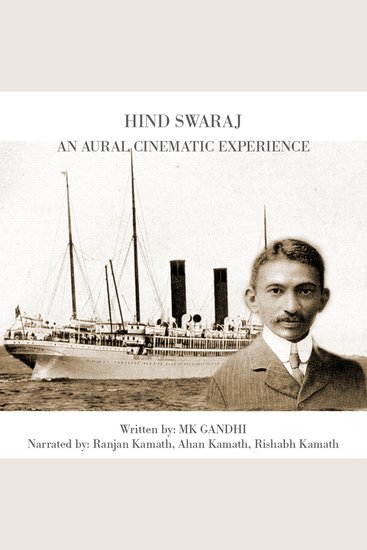
    Hind Swaraj is Mahatma Gandhi's fundamental work. It is a key to understanding not only his life and thoughts but also the politics of South Asia in the first half of the twentieth century. Hind Swaraj is the seed from which the tree of Gandhian thought has grown to its full stature. For those interested in Gandhi's thought in a general way, it is the right place to start, for it is here that he presents his basic ideas in their proper relationship to one another. Dharma For Life, Gandhi felt that the time had come to redefine the scope of dharma to include notions of citizenship, equality, liberty, fraternity, and mutual assistance. 
    And in Hind Swaraj, he presents in simple language his notion of such a redefined dharma, the vision of a new Indian or Gandhian civic humanism, one that the Gita and the Ramayana had always contained in potentia, but something which Indian civilization had not actualized fully in practice. In Hind Swaraj, a conscious attempt is being made to actualize that potential. 'This is not a mere political book', he writes. 'I have used the language of politics, but I have really tried to offer a glimpse of dharma. What is the meaning of Hind Swaraj? It means the rule of dharma or Ramarajya'). 'We may read the Gita or the Ramayana or Hind Swaraj. But what we have to learn from them is a desire for the welfare of others. 
    On casual listening, the book may strike the listener as being a rather simple one. This would not be an unwarranted reaction, since Gandhi sought simplicity in all things, including the way he presented his ideas. But first impressions in this case can be, and are, deceptive, for the book contains in compressed form the author's conception of what modern India ought to become and how politics may be made into the highest form of the active life.
    Show book