Join us on a literary world trip!
Add this book to bookshelf
Grey
Write a new comment Default profile 50px
Grey
Subscribe to read the full book or read the first pages for free!
All characters reduced
Homeschooling on a Budget - cover

Homeschooling on a Budget

Jessica Marie Baumgartner

Publisher: Defiance Press and Publishing

  • 0
  • 0
  • 0

Summary

In "Homeschooling on a Budget," veteran homeschooling mother Jessica Marie Baumgartner dismantles the myth that quality education requires thousands of dollars in specialized materials and programs. Drawing from her decade of experience teaching four children on a modest family income, she delivers a practical, no-nonsense guide that proves excellent homeschooling is achievable for families of all economic backgrounds.
 
Baumgartner walks readers through every aspect of affordable homeschooling, from utilizing free community resources like libraries and museums to finding low-cost curriculum materials and enrichment activities. She offers candid insights about navigating homeschooling co-ops, conventions, online resources, and workforce training without breaking the bank. The book addresses common concerns about socialization, graduation requirements, and preparing students for higher education or careers.
 
With refreshing honesty and pragmatism, Baumgartner shares her family's journey through various educational approaches, teaching readers to identify what truly matters in education versus expensive trappings that add little value. She provides concrete examples of how to stretch each dollar while providing rich, customized learning experiences that cater to each child's unique needs and interests.
 
Whether you're a seasoned homeschooler looking to reduce costs or a family considering homeschooling but worried about affordability, this guide provides the encouragement and practical tools needed to confidently educate your children without financial strain.
 
If you enjoyed "The Brave Learner," "The Homeschool Highway," or "Homeschooling for Absolute Beginners," you'll love "Homeschooling on a Budget."
Available since: 06/28/2022.
Print length: 168 pages.

Other books that might interest you

  • Leadership Is Influence - A Three-Pronged Approach To Becoming A Leader of Influence - cover

    Leadership Is Influence - A...

    Paul Lawrence Vann

    • 0
    • 0
    • 0
    Why do some people become good leaders, yet never become leaders of influence? Furthermore, do good leaders know their primary function is to influence members of their staff, including their managers, and employees? 
    "The most important leadership lessons I have learned in over thirty years of leadership, says Vann, is to influence and develop others around you." 
    In order for a good leader to become a leader of influence, they must develop all members of their staff to become leaders. By developing other leaders, the organization as a whole maximizes its human potential, develops a competitive advantage in its industry, and improves its bottom line. 
    The fact of the matter is this, no matter whether you are an employee or manager without the title of the leader of a company or organization, you are still a leader in your role. You do not have to have the title of a leader to be one. Leadership Is Influence can help you to become a leader and over time, you can become a leader of influence, you have to do the work to make it happen.
    Show book
  • Independent Thinking on Being a SENDCO - 113 tips for building relationships saving time and changing lives - cover

    Independent Thinking on Being a...

    Ginny Bootman

    • 0
    • 0
    • 0
    What is a SENDCO? A voice. An advocate. A messenger (don't shoot!). A calm in the storm. A connection. A friend. A forgiveness seeker, not a permission requester. A shot in the dark. A shot at life. The one who listens. The one who knows. The one who cares.The educational professional who campaigns tirelessly on behalf of the children who need more support than most to navigate a system that, at times, seems purposely set up to make them fail.
    Relationships are pivotal when working with children with special educational needs (SEN). Trust, honesty and empathy play a vital role in these relationships and is key to these individuals thriving in school and at home. In this book, Ginny Bootman offers a fresh perspective on how SENDCOs can build strong, lasting and effective relationships between those who work with children with additional needs and explores why forming these relationships is so important to help children achieve the best they can and take away positive experiences.
    Independent Thinking on Being a SENDCOis designed to help you become a compassionate, honest and determined SENDCO, combining your professionalism with empathy, the ability to listen properly and a desire to understand what the lives of others are like and how you can help. It is a book full of tips that will save you time and energy, useful hacks to help you overcome obstacles and bumps in the road, and proven strategies that will benefit your relationships.
    Suitable for SENDCOs, primary and secondary school teachers and leaders, as well as parents of children with additional needs.
    Show book
  • Summary of H Keith Melton and Robert Wallace’s The Official CIA Manual of Trickery and Deception - cover

    Summary of H Keith Melton and...

    Falcon Press

    • 0
    • 0
    • 0
    Buy now to get the main key ideas from H. Keith Melton and Robert Wallace’s The Official CIA Manual of Trickery and Deception 
      
    Just like magicians, spies need to do their job without anyone noticing. In the 1950s, the CIA even hired magicians to teach its agents how to use stealth and trickery. In The Official CIA Manual of Trickery and Deception (2009), espionage experts H. Keith Melton and Robert Wallace detail how and why the CIA hired its first magician, John Mulholland. They then reproduce Mulholland’s manual of magic for spies - once considered top secret - which taught agents how to evade the eyes of enemies and exchange undetected information.
    Show book
  • Ministry of Truth - Democracy Reality and the Republicans' War on the Recent Past - cover

    Ministry of Truth - Democracy...

    Steve Benen

    • 0
    • 0
    • 0
    A searing, vital investigation of the Republican Party’s dangerous campaign to rewrite history in real time, from the Emmy Award-winning Rachel Maddow Show producer and bestselling author of The Impostors. 
    “There is nobody…who has more influence on the way I think about politics than Steve Benen.” —Rachel Maddow  
    For as long as historical records have existed, authoritarian regimes have tried to rewrite history to suit their purposes, using their dictatorial powers to create myths, spread propaganda, justify decisions, erase opponents, and even dispose of crimes. 
    Today, as America’s Republican Party becomes increasingly radicalized, it’s not surprising to see the GOP read from a similarly despotic script. Indeed, the party is taking dangerous, aggressive steps to rewrite history—and not just from generations past. Unable to put a positive spin on Trump-era scandals and fiascos, GOP voices and their allies have grown determined to rewrite the stories of the last few years—from the 2020 election results and the horror of January 6th to their own legislative record—treating the recent past as an enemy to be overpowered, crushed, and conquered. The consequences for our future, in turn, are dramatic. 
    Extraordinarily timely and undeniably important, Steve Benen’s new book tells the staggering chronicle of the Republican party’s unsettling attempts at historical revisionism. It reveals not only how dependent they have grown on the tactic, but also how dangerous the consequences are if we allow the party to continue. The stakes, Benen argues, couldn’t be higher: the future of democracy hinges on both our accurate understanding of events and the end of alternative narratives that challenge reality. 
    Supplemental enhancement PDF accompanies the audiobook.
    Show book
  • The Gut-Brain Connection - How An Healthy Diet Improve Memory And Cognition Through The Relationship Of The Immune System Nervous System And Hormones - cover

    The Gut-Brain Connection - How...

    Jim Colajuta

    • 0
    • 0
    • 0
    The immune system, neurological system, neurotransmitters, and hormones constantly communicate between the gut and the brain. Alterations in the gut, particularly the gut microbiome, can alter the brain, resulting in behavioral and cognitive changes. A healthy and diversified microbiome acquired by a high fiber diet or probiotic or prebiotic therapy has been linked to cognitive gains.Gut dysbiosis and a decrease in microbial diversity, which can be caused by a Western diet or antibiotic treatments, have been linked to cognitive decline and memory loss. The immune system, metabolites, gut hormones, and neurotransmitters are all plausible mechanisms by which these alterations in the gut operate to change cognition.
    Show book
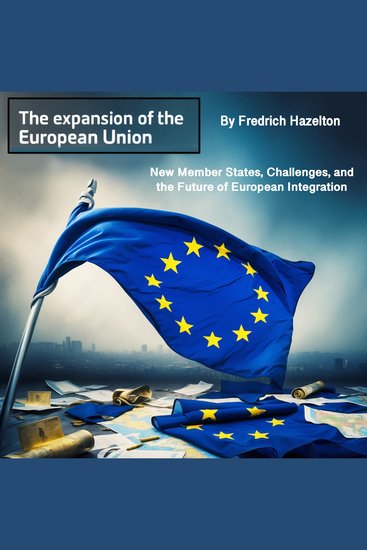
  • The Expansion of the European Union - New Member States Challenges and the Future of European Integration - cover

    The Expansion of the European...

    Fredrich Hazelton

    • 0
    • 0
    • 0
    The European Union (EU) stands as one of the most ambitious projects of regional integration in modern history. The concept of a unified Europe, born out of the devastation of World War II, has evolved from an economic community among six founding nations to a political and economic powerhouse with 27 member states. The expansion of the EU has been a gradual process, driven by the desire to promote peace, stability, and prosperity across the continent. This expansion has not only reshaped the political landscape of Europe but also influenced the global order in profound ways. 
      
    The early history of the EU was marked by the establishment of the European Economic Community (EEC) in 1957, aimed at fostering economic cooperation and reducing the likelihood of future conflicts. Over time, the EEC transformed into the European Union, encompassing broader goals such as political cooperation, human rights, and environmental standards. Each enlargement of the EU has brought new nations into this framework, solidifying the idea of a united Europe. The process of integrating new member states, however, has not been without its challenges. Issues of economic disparity, political alignment, and social integration have tested the limits of the union and sparked debates about the future direction of the EU. 
      
    The most significant expansion occurred in 2004, when ten countries, predominantly from Central and Eastern Europe, joined the EU in a historic enlargement. This expansion marked the end of the Cold War divide and brought former communist nations into the European fold. Yet, it also highlighted the complexities of integrating countries with differing political histories, economic conditions, and social structures. The subsequent expansions in 2007 and 2013 saw Romania, Bulgaria, and Croatia join the EU, furthering the union’s reach into the Balkans.
    Show book