Join us on a literary world trip!
Add this book to bookshelf
Grey
Write a new comment Default profile 50px
Grey
Subscribe to read the full book or read the first pages for free!
All characters reduced
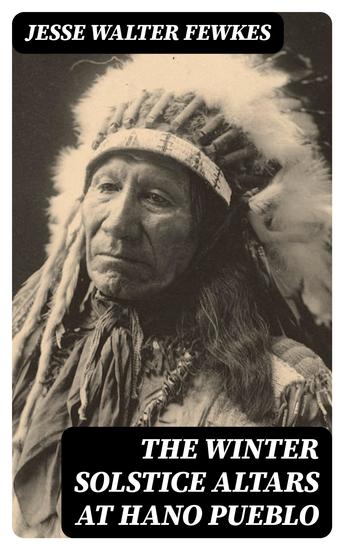
The Winter Solstice Altars at Hano Pueblo - cover

The Winter Solstice Altars at Hano Pueblo

Jesse Walter Fewkes

Publisher: DigiCat

  • 0
  • 0
  • 0

Summary

In "The Winter Solstice Altars at Hano Pueblo," Jesse Walter Fewkes meticulously explores the rich cultural practices and beliefs surrounding the winter solstice among the Hopi tribe. Employing a blend of ethnographic observation and detailed descriptive analysis, Fewkes portrays the significance of the altars constructed during this sacred time, illuminating the interplay between ritual, spirituality, and the natural world. The work is grounded in the early 20th-century context of American anthropology, presenting a firsthand account that highlights the importance of preserving indigenous traditions amidst the encroachment of modernity. Jesse Walter Fewkes, an esteemed anthropologist and a notable figure in the study of Native American cultures, was deeply influenced by his explorations and interactions with Indigenous communities in the Southwest. His commitment to documenting and understanding Hopi traditions was driven by a conviction to present their perspectives in an age when such narratives were often overshadowed or misrepresented. Fewkes's academic rigor and cultural respect imbue this work with profound authenticity and depth. I highly recommend "The Winter Solstice Altars at Hano Pueblo" to readers interested in anthropology, cultural studies, or Indigenous spirituality. Fewkes's rich documentation offers invaluable insights into the Hopi worldview, ensuring that the significance of these practices resonates with contemporary audiences while also serving as an important contribution to the preservation of indigenous narratives.
Available since: 06/02/2022.
Print length: 26 pages.

Other books that might interest you

  • Summary: The Millionaire Next Door - The Surprising Secrets of America's Rich by Thomas J Stanley PhD & William D Danko PhD: Key Takeaways Summary & Analysis - cover

    Summary: The Millionaire Next...

    Brooks Bryant

    • 0
    • 0
    • 0
    Disclaimer: This is NOT the official book; this is a summary! This book also does not Accompany the official book. 
    Inspired by Thomas J. Stanley Ph.D. & William D. Danko Ph.D.'s ground-breaking work, this summary book distills the essential wisdom of 'The Millionaire Next Door' into a concise and accessible format. Designed to save you time while enhancing your financial knowledge, this book provides a rapid route to understanding the habits and mindsets of the truly wealthy. 
    'Who are the real millionaires?' 'How do they think, invest, and live?' This summary book delivers the key insights and data from the original, answering these critical questions. It sheds light on the surprising truth about wealth in America, breaking down the barriers between you and your financial goals.
    Show book
  • Feudalism and Its Transition - The Evolution of Feudal Systems and Their Collapse (3 in 1) - cover

    Feudalism and Its Transition -...

    Arlo Holders

    • 0
    • 0
    • 0
    This book contains the following titles: 
      - The Feudal System: Feudalism was a dominant social, economic, and political system in medieval Europe that shaped the lives of millions from the 9th to the 15th centuries. Rooted in the decline of the Roman Empire, it emerged as a response to the need for local defense, stability, and order. With the fall of centralized authority, particularly in the wake of the collapse of Roman imperial power, local leaders, and warriors filled the vacuum, giving rise to a new hierarchical structure that became the backbone of medieval society. 
      - The End of Feudalism: Feudalism was a social, political, and economic system that dominated medieval Europe, particularly from the 9th to the 15th century. Its structure was based on the exchange of land for loyalty, military service, and labor. At its core, feudalism established a hierarchical order in which the king, or monarch, granted land, known as fiefs, to vassals (nobles) in exchange for their service. In turn, these vassals would grant portions of their land to serfs or peasants, who worked the land in return for protection and sustenance. This land-based economy was highly localized, with power concentrated in the hands of a few, and much of daily life revolved around agricultural production.
    Show book
  • The Pearl On The String - cover

    The Pearl On The String

    Jenny Richter

    • 0
    • 0
    • 0
    Embark on a karmic odyssey with ”The Pearl on the String,” delving into the cosmic saga of Sekhmet, a member of a galactic pioneer group instrumental in initiating the human race through DNA creation. In ancient Egypt, the alien gods utilized giants and an inherent understanding of frequency as instruments to structure energy into settlements with unparalleled vibrancy. Yet, as Rah`s prophesy of a cataclysmic era looms, Sekhmet`s steadfast belief in humanity`s potential to pull itself out of the darkness becomes her exile sentence, propelling her into a cycle of karmic entanglement. 
    Across five incarnations spanning epochs and civilizations, Sekhmet grapples with her karmic wound amidst the rise and fall of empires. From Persia`s alchemical marvels to North America`s collision with fate, her journey echoes through time, guided by her intrinsic soul connection, yet lost within the era of forgetting and separation consciousness. 
    As the shadows of World War II engulf the world, Sekhmet`s voice transcends temporal confines, offering guidance in a turbulent era.  
    Rooted in the numerological wisdom of change, symbolized by the number 5, the narrative weaves a tapestry of personal destiny and human spirituality, inviting readers to uncover their own voices through the ages. 
    Amidst the ebb and flow of history, a revelation emerges—the cyclical flow of energy unveils a profound truth: abundance originates from within. Shedding the chains of savior thinking, a new epoch emerges—one where humanity seeks its own illumination, forging a cosmic path and awakening to its limitless potential within. ”The Pearl on the String” is an enthralling exploration of humanity`s evolution—from the cradle of guided cosmic infancy to the transformative embrace of self-empowerment—inviting readers on a journey of healing, discovery, and cosmic enlightenment.
    Show book
  • How to Analyze People - Understand Human Behavior Read People’s True Characters and Decode Body Language - cover

    How to Analyze People -...

    Derek North

    • 0
    • 0
    • 0
    Ever wish you could see through people—know what they’re really thinking, feeling, or hiding behind a smile? 
    Every day, you're surrounded by clues. In conversations. On first dates. At work. During negotiations. 
    And yet—most people miss them. They hear words, but not intentions. They sense tension, but can't explain it. They nod along, but don’t really understand. 
    This audiobook changes that. 
    It gives you the power to analyze people quickly, read body language like a pro, and decode the real motivations behind their behavior—even when they don’t say a word. 
    Whether you're dealing with clients, colleagues, family, or strangers—you’ll start noticing things others completely miss. 
    You’ll discover how to:Understand the core mechanics of human behavior—and what really drives people.Decode micro-expressions and nonverbal cues to tell when someone’s bluffing or holding back.Spot emotional triggers and deal with difficult people without escalating.Apply behavioral psychology in real-life scenarios—from the office to romantic relationships.Recognize patterns in body language across eyes, face, posture, and gestures.Build trust faster using empathy-based communication, not manipulation.Read someone’s personality type and adjust your approach for instant rapport.Tap into your own emotions with clarity—and avoid being hijacked by them.Learn the psychology of habit-forming (and how to break or build new habits for good). 
    You don’t need to be a mind reader. You just need to know what to look for—and how to interpret it.If you're ready to understand people on a whole new level—this is where it starts.
    Show book
  • The New Middle East - What Everyone Needs to Know® - cover

    The New Middle East - What...

    James L. Gelvin

    • 0
    • 0
    • 0
    In the second edition of The New Middle East, renowned scholar James L. Gelvin explains how in the aftermath of the collapse of the USSR, the American invasion of Iraq, and the Arab uprisings of 2010-11, a new Middle East has emerged. Syria, Libya, and Yemen have become "crisis states," where warlords vie against governments and each other. The economies of Iran, Turkey, and Lebanon, weakened by corruption, sanctions, and neoliberal economic policies, have imploded. Some states have doubled-down on repression, while others intervene in the internal affairs of their neighbors with impunity. 


    This edition explores these hallmarks of the New Middle East, along with the end of American hegemony in the region, the expansion of "conflict zones," the continued centrality of the Saudi-Iranian competition, and the ramifications of the breakdown of the Israel-Palestine peace process. It also highlights the crisis of human security brought on by the COVID-19 pandemic, bad governance, stagnant economies, poor healthcare and educational delivery systems, climate change, food and water insecurity, population growth and imbalance, and the unprecedented displacement of populations. Gelvin outlines the social, political, and economic contours of the New Middle East, illuminating the current crisis in the region and exploring how it is likely to evolve in the decades to come.
    Show book
  • COVID Lockdown Insanity - The COVID Deaths It Prevented the Depression and Suicides It Caused What We Should Have Done and What It Shows We Could Do Now to Address Real Crises - cover

    COVID Lockdown Insanity - The...

    Hugh McTavish Ph.D.

    • 0
    • 0
    • 0
    A Ph.D. biochemist and immunologist goes through the data on one of the greatest public policy disasters in human history—the lockdown response to COVID.  How deadly was COVID originally and after it had evolved for a year or two?  How many COVID deaths were prevented by the lockdowns?  How many people did the lockdowns throw into depression? How many people did the lockdowns kill by deaths of despair?  	But the good news from the lockdowns is it shows citizens are willing to make enormous sacrifices for their society and that we can transform society on a dime.  What if we used that for good purposes?  What if we governed for the goal of happiness instead of maximizing GDP? What if we governed to protect the planet, instead of with the exclusive goal of extending the lives of the oldest and sickest people in society, even at the cost of killing the young and middle aged by deaths of despair and destroying the education and lives of children?
    Show book