Join us on a literary world trip!
Add this book to bookshelf
Grey
Write a new comment Default profile 50px
Grey
Subscribe to read the full book or read the first pages for free!
All characters reduced
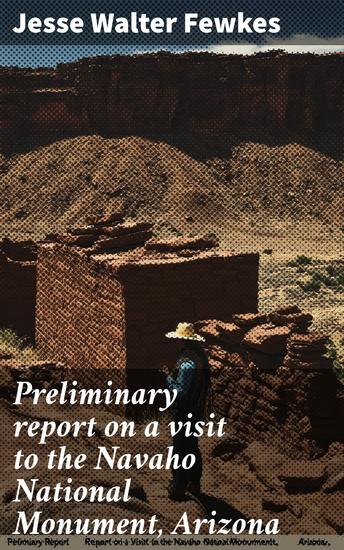
Preliminary report on a visit to the Navaho National Monument Arizona - cover

Preliminary report on a visit to the Navaho National Monument Arizona

Jesse Walter Fewkes

Publisher: Good Press

  • 0
  • 0
  • 0

Summary

In "Preliminary Report on a Visit to the Navaho National Monument, Arizona," Jesse Walter Fewkes presents an insightful exploration of the cultural and archaeological significance of the Navaho National Monument. This meticulously crafted report combines detailed field observations with a vivid narrative style, reflecting Fewkes's scientific rigor and passion for anthropology. The text emerges from the broader context of early 20th-century American archaeology, where burgeoning interest in Native American cultures sought to document and preserve indigenous practices and histories amid growing external pressures from modernity. Fewkes's work stands as a cornerstone in the ethnographic record of the Southwest, juxtaposing scientific inquiry with a deep appreciation for indigenous traditions. Jesse Walter Fewkes was a prominent American archaeologist and ethnologist, recognized for his contributions to the study of Native American cultures. As a member of the Bureau of American Ethnology, his extensive fieldwork spans various tribal communities, reflecting his commitment to understanding their histories and revitalizing interest in their cultural practices. Fewkes's dedication to documenting vivid details of his subjects' lives was likely inspired by the ongoing erosion of native customs at the time. This significant report is recommended for anyone interested in anthropology, Native American studies, or the intricate tapestry of American history. Fewkes's nuanced observations offer readers a rare glimpse into the cultural landscape of the Navaho, making this text essential for scholars and enthusiasts alike.
Available since: 03/02/2025.
Print length: 230 pages.

Other books that might interest you

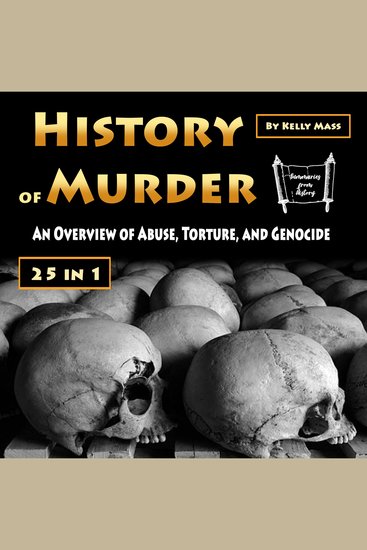
  • History of Murder - An Overview of Abuse Torture and Genocide - cover

    History of Murder - An Overview...

    Kelly Mass

    • 0
    • 0
    • 0
    This is a combination of books that will expose you to the darker side of mankind and some of the atrocities committed in history. The following topics will be addressed: 
    1 Alexander the Great 
    2 Attila the Hun 
    3 Genghis Khan 
    4 Hannibal Barca 
    5 Napoleon Bonaparte 
    6 Suleiman the Magnificent 
    7 Vlad the Impaler 
    8 William the Conqueror 
    9 Adolf Eichmann 
    10 Benito Mussolini 
    11 Enver Pasha 
    12 Francisco Pizarro 
    13 Josef Mengele 
    14 Oliver Cromwell 
    15 Paul Joseph Goebbels 
    16 Pol Pot 
    17 Robespierre 
    18 Rudolf Hoess 
    19 Torquemada 
    20 Armenian genocide 
    21 Cambodian genocide 
    22 Genocide in Darfur 
    23 Holocaust 
    24 Rwandan genocide 
    25 Yugoslavian genocide 
    This ultimate bundle will give you more insights in history and the dramatic events that took place in the past, whether related to war, genocide, or suppressing the masses by totalitarian regimes. Learn more now!
    Show book
  • Defend Us in Battle - Catholic Chaplains in the British Military - cover

    Defend Us in Battle - Catholic...

    James Hagerty, Barry Hudd

    • 0
    • 0
    • 0
    The Catholic Church has always had regard for the spiritual and pastoral welfare of those in the military and for centuries priests have ministered to armed forces personnel in war and in peace.
    
     
    Chaplains have served and continue to serve all branches of the British armed forces. The size and organization of the military and the nature of warfare has been transformed, but the chaplain’s vocation remains unchanged. Defend Us In Battle traces the growth and development of Catholic chaplaincy to British armed forces from the seventeenth to the twenty-first century.
    
     
    Taking as its starting point the emergence of a recognized system of military chaplaincy established by the Society of Jesus in Reformation Europe, this wide-ranging survey considers the ministry of chaplains through succeeding centuries. It relates the struggles that Catholic soldiers and sailors endured with British officialdom before being granted their own chaplains.
    
     
    Defend Us In Battle describes the ministry of priests who over the centuries and across the world have voluntarily provided Catholic service personnel with the solace of religion far away from home and frequently in danger. There emerges a powerful narrative of priestly service not always known or recognized by those outside the military. 
    Show book
  • Paranormal Abilities and the Yoga Sutras of Patanjali - Including Exercises to Learn Many Abilities - cover

    Paranormal Abilities and the...

    Martin Ettington

    • 0
    • 0
    • 0
    The Author is an Engineer and expert on the Paranormal having had many experiences himself, (Mostly with Prophecy) and extensive research on many other phenomena. He is also the Author of the internationally popular book “God Like Powers and Abilities” which is an overview of many paranormal abilities and he has many other books on the spiritual and paranormal.In this book the source of paranormal abilities is explored in detail and how they relate to the 2,000 year old Sanskrit foundation text “The Yoga Sutras of Patanjali”.All God like powers are side effects from spiritual growth. Many reviewed here are not discussed in his previous books.If you want to learn more about consciousness and how our spirit really connects with the Universe then then this book is for you.You will also learn about less commonly known abilities and more possibilities of using your spirit in our world.
    Show book
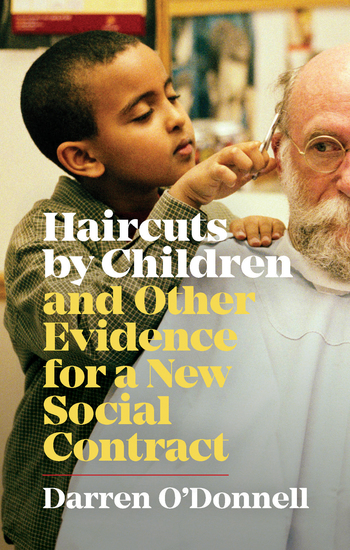
  • Haircuts by Children and Other Evidence for a New Social Contract - cover

    Haircuts by Children and Other...

    Darren O'Donnell

    • 0
    • 0
    • 0
    A cultural planner's immodest proposal: change how we think about children and we just might change the world.
       
    We live in an ‘adultitarian’ state, where the rules are based on very adult priori- ties and understandings of reality. Young people are disenfranchised and power- less; they understand they’re subject to an authoritarian regime, whether they buy into it or not. But their unique perspectives also offer incredible potential for social, cultural and economic innovation.
       
    Cultural planner and performance director Darren O’Donnell has been collaborating with children for years through his company, Mammalian Diving Reflex; their most well-known piece, Haircuts by Children (exactly what it sounds like) has been performed internationally. O’Donnell suggests that working with children in the cultural industries in a manner that maintains a large space for their participation can be understood as a pilot for a vision of a very different role for young people in the world – one that the UN Committee on the Rights of the Child considers a ‘new social contract.’
       
    Haircuts by Children is a practical proposal for the inclusion of children in as many realms as possible, not only as an expression of their rights, but as a way to intervene in the world and to disrupt the stark economic inequalities perpetuated by the status quo. Deeply practical and wildly whimsical, Haircuts by Children might actually make total sense.
       
    ‘No other playwright working in Toronto right now has O’Donnell’s talent for synthesizing psychosocial, artistic and political random thoughts and reflections into compelling analyses ... The world (not to mention the theatre world) could use more of this, if only to get us talking and debating.’
       
    – The Globe and Mail
    Show book
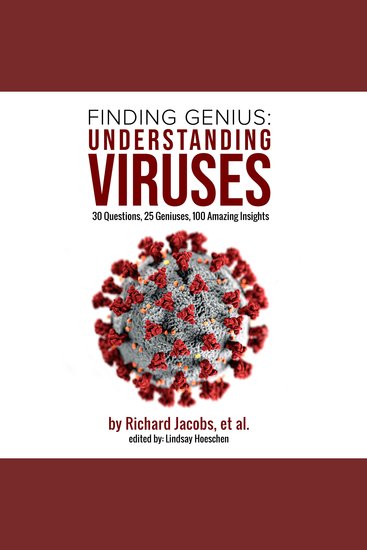
  • Finding Genius: Understanding Viruses - 30 Questions 25 Geniuses 100 Amazing Insights - cover

    Finding Genius: Understanding...

    Richard Jacobs

    • 0
    • 0
    • 0
    This book is the result of 30+ interviews of genius-level science professionals in various fields. They have all been asked the same set of questions, and have answered, to the best of their ability and knowledge. What you’re about to read is the answers to these questions, not from all the individuals, but from the most interesting 4 or 5 who answered each question. These interviews are for two kinds of audiences: 1) curious amateurs, and 2) science, engineering, or other professionals who have a general knowledge of and curiosity about science, but who are not experts in the field being covered.  
    At the start of my journey in science, I already had a B.S. in Chemical Engineering, but that was from 1998, certainly not 2016 when I started. Reading scientific papers was difficult at first – I understood about 10% of what I was reading. As I interviewed more scientists, researchers, clinicians and others, I started to pick up the vocabulary and thinking process needed to read scientific papers. After a year of reading, my comprehension increased, and now stands at around 70%, typically. In the areas of Physics or other sciences in which I’m not conversant, I understand about 30%. In advanced math, since it’s a language unto itself, especially at high levels, I am back to the 10% level.  
    Apply yourself, and you’ll be surprised at what you can learn in a year’s time.
    Show book
  • Forgiving Humanity - How the Most Innovative Species Became the Most Dangerous - The Curse of Exponential Change - cover

    Forgiving Humanity - How the...

    Peter Russell

    • 0
    • 0
    • 0
    Why has the most innovative of species become so dangerous? The answer, suggests Peter Russell, lies in humanity’s accelerating pace of development. He shows how innovation breeds further innovation—a positive feedback loop leading to exponential rates of change. But our minds cannot grasp the full implications of exponential growth. We think more in terms of linear change, leading to a blind spot on the future.  
    However fast the pace of change may be today, it will be even faster in the years to come, bringing ever more rapid scientific and technological advances. But ever-accelerating change also creates stress on the systems involved. The faster the change, the greater the stress, and the more likely systemic breakdown. We are heading into a future with technology beyond our dreams, but in a world that is breaking at the seams. 
    Russell argues there is no blame for this. Spiraling rates of development, with all their consequences, positive and negative, are the inevitable fate of any intelligent, technologically-empowered species.  
    How do we live with such unsettling conclusions? How can we prepare for a world that is becoming increasingly unpredictable? What does it mean for the future of humanity? 
    Peter Russell, the widely acclaimed author of The Global Brain and other pioneering works, earned an honors degree in theoretical physics and psychology —as well as a masters degree in computer science —at the University of Cambridge. He subsequently went to India where he explored meditation and Eastern philosophy, and was one of the first people to introduce personal development programs to corporations in the 1970s. His other books include The TM Technique, The Upanishads, Waking Up in Time, From Science to God, and Letting Go of Nothing.
    Show book