Join us on a literary world trip!
Add this book to bookshelf
Grey
Write a new comment Default profile 50px
Grey
Subscribe to read the full book or read the first pages for free!
All characters reduced
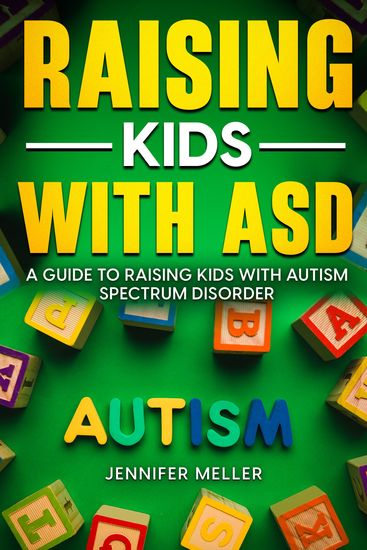
Raising Kids with ASD - A Guide to Raising Kids with Autism Spectrum Disorder - cover

Raising Kids with ASD - A Guide to Raising Kids with Autism Spectrum Disorder

Jennifer Meller

Publisher: Publishdrive

  • 0
  • 0
  • 0

Summary

Raising a child on the autism spectrum can feel overwhelming at times—filled with challenges, uncertainty, and moments of pure joy. Whether your child was recently diagnosed or you’ve been on this journey for years, you’re not alone.
 
Raising Kids with ASD offers a compassionate, practical, and research-backed guide to navigating the unique world of Autism Spectrum Disorder. From understanding your child’s needs to building strong communication skills, creating supportive routines, and advocating effectively, this book provides clear strategies you can start using today.
 
Imagine feeling confident in your parenting decisions, empowered with tools that truly help your child thrive, and connected to a supportive community of families who understand. This guide will help you strengthen your relationship with your child, celebrate their unique strengths, and guide them toward independence and happiness—while also taking care of yourself along the way.
 
Whether you’re seeking clarity, new strategies, or emotional reassurance, Raising Kids with ASD is your roadmap to a calmer, more connected, and empowered parenting journey. Start your journey today and discover how to help your child thrive—one step at a time.
Available since: 08/27/2025.
Print length: 292 pages.

Other books that might interest you

  • Civil War Turning Points in the East The: The Battle of Antietam and the Battle of Gettysburg - cover

    Civil War Turning Points in the...

    Editors Charles River

    • 0
    • 0
    • 0
    The bloodiest day in American history took place on the 75th anniversary of the signing of the Constitution. On September 17, 1862, Robert E. Lee’s Confederate Army of Northern Virginia fought George McClellan’s Union Army of the Potomac outside Sharpsburg along Antietam Creek. That day, nearly 25,000 would become casualties, and Lee’s army would barely survive fighting the much bigger Northern army. Although the battle was tactically a draw, it resulted in forcing Lee’s army out of Maryland and back into Virginia, making it a strategic victory for the North and an opportune time for President Abraham Lincoln to issue the Emancipation Proclamation, freeing all slaves in the rebellious states. For those reasons, Antietam is remembered as one of the major turning points of the Civil War, even as it is often overlooked that the bloody battle only represented the climactic culmination of a 3 week campaign that saw George McClellan cautiously pull a fragmented Union army together and begin tracking Lee’s army into Maryland.  
    	Without question, the most famous battle of the American Civil War took place outside of the small town of Gettysburg, Pennsylvania, which happened to be a transportation hub, serving as the center of a wheel with several roads leading out to other Pennsylvanian towns. From July 1-3, Robert E. Lee’s Confederate Army of Northern Virginia tried everything in its power to decisively defeat George Meade’s Union Army of the Potomac, unleashing ferocious assaults that inflicted nearly 50,000 casualties in all. Day 1 of the battle would have been one of the 25 biggest battles of the Civil War itself, and it ended with a tactical Confederate victory. But over the next two days, Lee would try and fail to dislodge the Union army with attacks on both of its flanks during the second day and Pickett’s Charge on the third and final day.
    Show book
  • Giftedness - How to Help Smart Children Focus and Handle Sensitivity (3 in 1 Combo) - cover

    Giftedness - How to Help Smart...

    Angela Wayning

    • 0
    • 1
    • 0
    Take advantage of this three-book bundle, which gives you a better deal than if you were to just buy one of them. The book contains the following titles: 
    Title 1: Gifted children often have a hard time staying focused on one thing, unless it’s something they are passionate about. Then they are hyper-focused. This and other problems can be address when talking to teachers, as well as the fact that some gifted kids seem to underachieve for various reasons. The best ways to motivate your gifted children are here, as well as tactics to deal with bullies, which often target more sensitive and intelligent children. Bullying is one of the last topics addressed in this guide: How to talk about it with the teacher, how to avoid becoming a target more quickly, and how to make it go away. 
    Title 2: In this brief guide to giftedness, we will assess and critically examine the results of IQ-tests and their significance. We will also look at the homework problems many gifted children face, with their particular set of grey matter, and why schools often fail to meet the needs of those same children, because let’s face it: The schools often have no clue what to do with them, how to challenge them properly, or how to adapt a program to their constant drive to explore, discover, and be more creative. 
    Title 3: Most gifted children are intelligent because their senses are sharp and intense, and this can result in strong feelings of self-reflection and dramas over nothing. Sometimes, they may say that things that are easy, are actually hard, or they are unwilling to push through with certain things. So, how do you deal with that? In this book, we’ll talk about that, as well as some of the prevention efforts to make sure your highly intelligent child won’t become the victim of bullying. We’ll also touch on the question of whether you should homeschool your child or not, something that many parents struggle with.
    Show book
  • Sanctions - What Everyone Needs to Know - cover

    Sanctions - What Everyone Needs...

    Bruce W. Jentleson

    • 0
    • 0
    • 0
    A concise, authoritative overview of a little-understood yet extremely important phenomenon in world politics: the use of economic sanctions by one country to punish another. 


    It's hard to browse the news without seeing reports of yet another imposition of sanctions by one country on another. The United States has sanctions against more than thirty countries. Russia has repeatedly imposed sanctions against former Soviet republics. China has developed its own approach, including targeting private entities such as the NBA. And it's not just major powers: Japan and South Korea have sanctioned each other over WWII and colonial legacies; Saudi Arabia against Qatar because of differences over Iran; and France, Germany, and Norway against Brazil over the Amazon forest and climate change. In Sanctions: What Everyone Needs to Know®, Bruce Jentleson—one of America's leading scholars on the subject—answers the fundamental questions about sanctions today: Why are they used so much? What are their varieties? What are the key factors affecting their success? Why have they become the tool of first resort for states engaged in international conflict? Jentleson demonstrates that examining sanctions is key to understanding international relations and explains how and why they will likely continue to bear on global politics.
    Show book
  • These Englishmen Who Died for France - 1st July 1916: The Bloodiest Day in British History - cover

    These Englishmen Who Died for...

    Jean-Michel Steg

    • 0
    • 0
    • 0
    On 1st July 1916, the Bay of Somme was the scene of the deadliest day in British military history. What happened there? Englishmen, Scotsmen, Irishmen, Welshmen, Canadians, South Africans, Australians, New Zealanders – many soldiers from Great Britain and the Commonwealth volunteered in 1916 to attack on the front in Picardy.
    Show book
  • British and French Mandates in the Middle East The: The History of the Allied Powers’ Post-War Occupations via the League of Nations - cover

    British and French Mandates in...

    Editors Charles River

    • 0
    • 0
    • 0
    The United Nations is one of the most famous bodies in the world, and its predecessor, the League of Nations, might be equally notorious. In fact, President Woodrow Wilson’s pet project was controversial from nearly the minute it was conceived. At the end of World War I, Wilson's pleas at the Paris Peace Conference relied on his Fourteen Points, which included the establishment of a League of Nations, but while his points were mostly popular amongst Americans and Europeans alike, leaders at the Peace Conference largely discarded them and favored different approaches. British leaders saw their singular aim as the maintenance of British colonial possessions. France, meanwhile, only wanted to ensure that Germany was weakened and unable to wage war again, and it too had colonial interests abroad that it hoped to maintain. Britain and France thus saw eye-to-eye, with both wanting a weaker Germany and both wanting to maintain their colonies. Wilson, however, wanted both countries to rid themselves of their colonies, and he wanted Germany to maintain its self-determination and right to self-defense. Wilson totally opposed the “war guilt” clause, which blamed the war on Germany. 
    	One of the League’s most lasting legacies was the manner in which it handed over administrative control of land in the Middle East to the victorious Allied Powers, namely France and Britain. The Ottoman Empire quickly collapsed after World War I, and its extensive lands were divvied up between the French and British. The intention of the mandate system was to have the administrators peacefully and gradually usher in independent states, and both European powers eventually attempted to withdraw from the region, but anyone with passing knowledge of the Middle East’s history in the late 20th century knows that the region has seen little peace.
    Show book
  • The Writings of the Apostolic Fathers - The Earliest Teachings After the New Testament - cover

    The Writings of the Apostolic...

    Various Early Christian Writers,...

    • 0
    • 0
    • 0
    What if the Church’s first generation after the apostles had left behind spiritual blueprints for us today? 
    The Writings of the Apostolic Fathers delivers a compelling collection of texts from Christianity’s earliest leaders—modernized for today’s listener.  
    These voices bridge the gap between Scripture and the Church’s rise, preserving firsthand wisdom, doctrine, and devotion from those who knew the apostles or followed them directly. 
    What you’ll discover inside: 
    •	1 & 2 Clement – Deep calls for humility, forgiveness, and church unity 
    •	Seven Epistles of Ignatius – Fierce, intimate letters defending Jesus’s divinity and the authority of the bishop 
    •	The Didache – Practical instructions on baptism, fasting, prayer, and Eucharist from one of the oldest Christian handbooks 
    •	Epistle of Barnabas – Early theological exploration of Old Testament symbolism and Christian identity 
    •	Polycarp’s Letters & Martyrdom Account – Stories of devotion, courage, and sacrifice from a disciple of John 
    •	The Shepherd of Hermas – Visionary allegories on repentance, angels, and end-time preparation 
    Whether you’re seeking the lost voices of the early Church or inspiration for your spiritual life, this audiobook opens a portal to ancient truth. 
    Let the voices of the Apostolic Fathers guide you back to the faith’s first foundation.
    Show book