Join us on a literary world trip!
Add this book to bookshelf
Grey
Write a new comment Default profile 50px
Grey
Subscribe to read the full book or read the first pages for free!
All characters reduced
Just Patty - cover

Just Patty

Jean Webster

Publisher: Bu Classics Books

  • 0
  • 0
  • 0

Summary

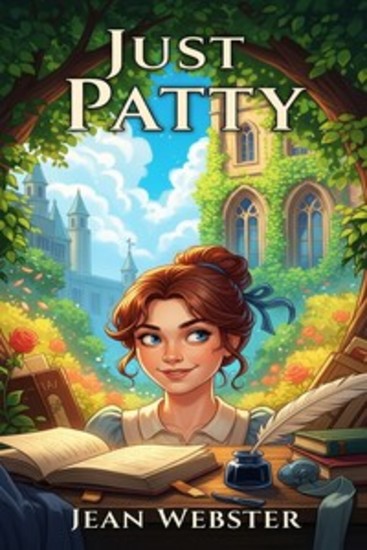
Patty Fairfield brings her infectious energy and penchant for mischief to a strict boarding school, constantly testing the patience of her teachers. Her adventures are a whirlwind of youthful rebellion, loyal friendships, and the innocent chaos of girlhood. This nostalgic look at school life celebrates the unbreakable bonds formed in the halls of St. Ursula’s.
Available since: 03/06/2026.
Print length: 197 pages.

Other books that might interest you

  • Cleopatra - cover

    Cleopatra

    Georg Ebers

    • 0
    • 0
    • 0
    "Cleopatra" is a historical novel by the German Egyptologist and writer Georg Ebers, published in the late 19th century. Ebers, renowned for his knowledge of ancient Egyptian culture and history, paints a vivid portrait of the legendary Queen Cleopatra. The novel delves into her relationships, particularly with the Roman leaders Julius Caesar and Mark Antony, and showcases the political and personal struggles she faced as one of history's most iconic rulers. Ebers intertwines accurate historical facts with fictional details, providing readers with an immersive glimpse into ancient Egypt and Rome.
    Show book
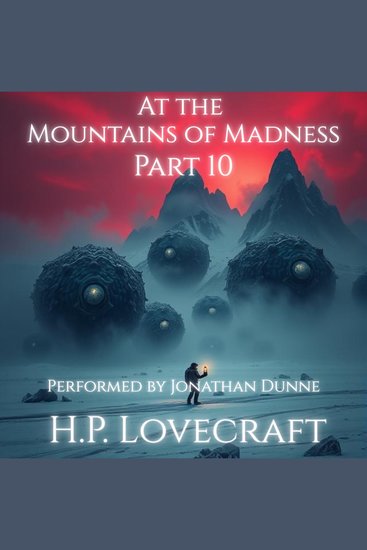
  • At the Mountains of Madness — Part 10 of 12 - cover

    At the Mountains of Madness —...

    H. P. Lovecraft

    • 0
    • 0
    • 0
    🎬 Experience the atmospheric visual edition of this tale by searching "Jonathan Dunne Horror" on YouTube. 
    Title: At the Mountains of Madness — Part 10 of 12 
    Author: H. P. Lovecraft 
    Narrator: Jonathan Dunne 
    Original Publication: 1936 
    Public Domain: Yes 
    Series Placement: Timeless Terrors No. 85 — Part 10 of 12 
    Description: 
    In Part Ten of At the Mountains of Madness, the mounting dread gives way to undeniable horror as Dyer and Danforth’s worst suspicions begin to take shape. The clues scattered throughout the ancient city—once ambiguous and easily rationalized—now converge into a terrifying coherence that can no longer be ignored. 
    What seemed like faint suggestions of recent activity hardens into something far more concrete. The explorers find evidence that the city’s long-slumbering past may not be entirely dormant, and that the forces described in the murals may still exert a presence within the frozen labyrinth. 
    The oppressive Antarctic silence is shattered by the growing realization that they are not alone. Every echo, every unexplained trace, presses upon their nerves, transforming scientific inquiry into a desperate struggle to comprehend—and survive—the unknown. 
    In this tenth installment of the 12-part complete audiobook series, Lovecraft drives the narrative toward its harrowing climax, as the line between discovery and danger collapses, and the explorers stand on the brink of encountering something that should have remained forever buried beneath the ice.
    Show book
  • The Spectacles - cover

    The Spectacles

    Edgar Allan Poe

    • 0
    • 0
    • 0
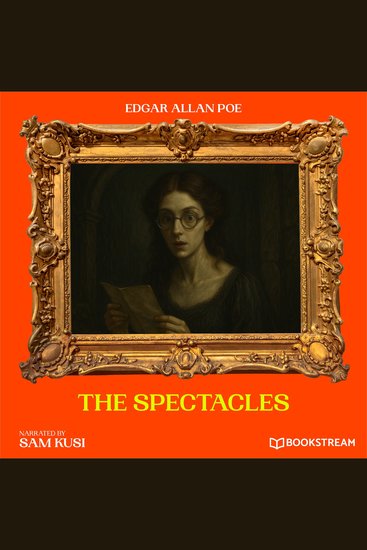
    "The Spectacles" is a short story by Edgar Allan Poe, first published in March 1844 in the Philadelphia Dollar Newspaper. It is one of Poe's comedy tales.
    The narrator, 22-year-old Napoleon Buonaparte Froissart, changes his last name to "Simpson" as a requirement to inherit a large sum from a distant cousin, Adolphus Simpson. At the opera he sees a beautiful woman in the audience and falls in love instantly. He describes her beauty at length, despite not being able to see her well; he requires spectacles but, in his vanity, "resolutely refused to employ them". His companion Talbot identifies the woman as Madame Eugenie Lalande, a wealthy widow, and promises to introduce the two. He courts her and proposes marriage; she makes him promise that, on their wedding night, he will wear his spectacles.
    Show book
  • The Horse Dealer's Daughter - Poignant story exploring death and its effects by the author of Sons And Lovers - cover

    The Horse Dealer's Daughter -...

    D H Lawrence

    • 0
    • 0
    • 0
    David Herbert Lawrence was born on the 11th September 1885 in Eastwood, Nottinghamshire, a coal mining town where the reality of a harsh life was only useful as experiences for future literary works. 
     
    He was educated at Beauvale Board School and became the first local boy to receive a scholarship to attend Nottingham High School. After 3 years he became a junior clerk in Haywood’s surgical appliances factory. He was also attempting a literary career which, in the short term, led to a teacher training position in Eastwood and later a teaching qualification from University College, Nottingham.  
     
    Lawrence’s first efforts were poems, short stories and a draft of ‘The White Peacock’. Moving to London and a teaching position in Croydon his writing attracted the attention of Ford Madox Ford, editor of The English Review, and he commissioned him to write ‘Odour of Chrysanthemums’.  
     
    Wanting to write full-time he now began work on what would become ‘Sons and Lovers.   
     
    In 1912 he met the older and married mother-of-three Frieda Weekley. They eloped to Germany and here Lawrence could see for himself the growing tensions with France.  So keen was his interest that he was arrested and accused of being a British spy.  
     
    In early 1914 Frieda obtained her divorce and they returned to Britain to be married just days before the outbreak of war. Owing to her German parentage, and his own public dislike of militarism and violence, the couple were treated with contempt and suspicion throughout the war years.  
     
    Despite this he continued to write but his reputation in England was so tarnished and, mirrored by his own disdain for the country, he and Frieda left England in November 1919, first for Europe and then America via Ceylon and Australia. 
     
    They bought a ranch in Taos, New Mexico and visited Mexico several times. The third visit in March 1925 caused a near fatal attack of malaria. To convalesce they moved to Florence. Here he continued work on ‘Lady Chatterley’s Lover’ which for many years would cause controversy. A renewed interest in oil painting resulted in an exhibition in 1929 which was raided by the police and several works were confiscated.  
     
    D H Lawrence died of complications arising from a bout of tuberculosis on the 2nd of March 1930 in Vence, France.  He was 44. 
     
    In ‘The Horse Dealers daughter’ a young woman begins a relationship with a young doctor and a friend of her brothers.  What should be straight forward is intimately investigated by Lawrence’s foraging pen.
    Show book
  • Mansfield Park - cover

    Mansfield Park

    Jane Austen

    • 0
    • 0
    • 0
    When shy Fanny Price arrives at Mansfield Park to live with her cousins, she is overwhelmed and only put at ease by her cousin, Edmund Bertram, whom she soon comes to love. But Edmund's head is turned by the beautiful Mary Crawford and she and her brother Henry spark a series of romantic entanglements that lead the Bertram family to the brink of social disaster. It becomes apparent to Fanny that pretty manners and fine words are no substitute for integrity.
    Show book
  • The Unfortunate Bride - From their pens to your ears genius in every story - cover

    The Unfortunate Bride - From...

    Aphra Behn

    • 0
    • 0
    • 0
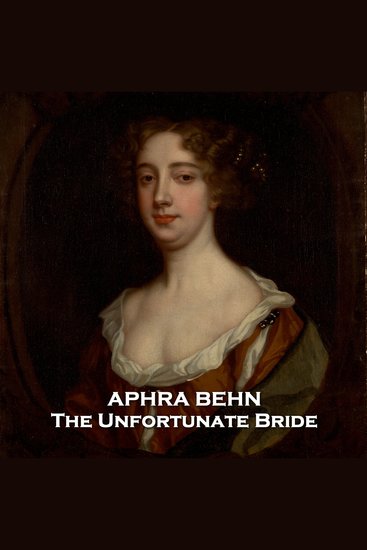
    Aphra Behn was a prolific and well-established poet and playwright but facts about her life remain scant and difficult to confirm. What can safely be said is that Aphra Behn is regarded as a key English playwright and a major figure in Restoration theatre.  Her poetry is now far more appreciated and seen as a breakthrough for women of the 17th Century and beyond.  
    Aphra was baptised on 14th December 1640 and grew up with the gathering tensions leading to the English Civil War, a time of much division and difficulty as the King, Parliament, and their respective forces, came closer and then finally into open conflict. 
    By 1664 her marriage was over, less than a year after it began. She now used Mrs Behn as her professional name and moved towards pursuing a more sustainable and substantial career, working for the King's Company and the Duke's Company players as a scribe. Her first play ‘The Forc’d Marriage’, was staged in 1670, and thereafter many followed, including her later comic works, which were more commercially successful.  She wrote 19 plays in all and contributed to many others as well as several works of prose. 
    Along with her literary career there are claims she was a spy, that she travelled abroad, possibly as far as Surinam.  She also claimed to have met a slave leader in Africa and based her story ‘Oroonoko’ on his life.  Other accounts suggest that during her life she was also known as Ann Behn, Agent One-Sixty and Astrea. Her financial troubles seem to have also incurred her a brief stay in a debtors' prison. Whatever the truth, both her life and work seem rich, textured and full of adventure. 
    From the mid 1680’s Aphra’s health began to decline.  This was exacerbated by her continual state of debt and descent into poverty although she was often fond of saying that she had led a ‘life dedicated to pleasure and poetry.’ 
    Aphra Behn died on 16th April 1689. She  is buried in the East Cloister of Westminster Abbey and the inscription on her tombstone reads: "Here lies a Proof that Wit can never be Defence enough against Mortality."
    Show book