Join us on a literary world trip!
Add this book to bookshelf
Grey
Write a new comment Default profile 50px
Grey
Subscribe to read the full book or read the first pages for free!
All characters reduced
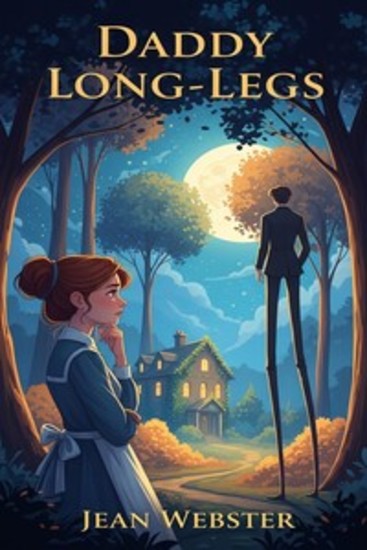
Daddy Long-Legs - cover

Daddy Long-Legs

Jean Webster

Publisher: Bu Classics Books

  • 0
  • 0
  • 0

Summary

An anonymous benefactor rescues an orphan from a bleak future, requiring only that she write him letters about her college experiences. As Jerusha Abbott blossoms into an independent woman, her correspondence reveals a growing wit and a mysterious connection to her benefactor. This heartwarming tale captures the joy of self-discovery and the magic of unexpected kinship.
Available since: 03/06/2026.
Print length: 127 pages.

Other books that might interest you

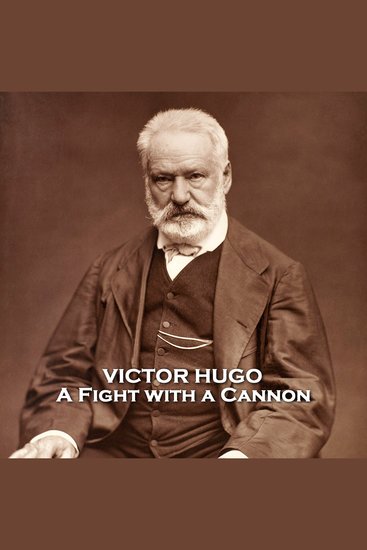
  • A Fight with a Cannon - From their pens to your ears genius in every story - cover

    A Fight with a Cannon - From...

    Victor Hugo

    • 0
    • 0
    • 0
    Victor Marie Hugo was born on 26th February 1802 in Besançon, France.   
    There can be no doubt that Hugo is ranked as the greatest of French authors and poets. In addition to this he fought against social injustice throughout his life and from his frequent elections to the French Assembly. 
    Hugo published his first novel, Han d’Islande (1823), the year after his marriage and so began an immense canon of fiction and poetry not only for France but to World literature.  
    He was elected to the Académie Française in 1841 and the same year came a peerage and entrance to the Higher Chamber as a pair de France, where he spoke against the death penalty, social injustice and in favour of press freedom.  
    In the years leading up to the Revolution of 1848 Hugo began to lean towards Republicanism and greater freedoms.  With the formation of the Second Republic, he was again elected to the Assembly. 
    When Napoleon III seized power in 1851, and established an anti-parliamentary constitution, Hugo openly declared him a traitor to France. This, of course, meant exile where he remained until 1870.  In exile he published his greatest work ‘Les Misérables’, and further widely honoured collections of poetry. 
    Returning home he was again elected to the National Assembly and the Senate.  It was the time of the Franco-Prussian war and with Paris under siege and food ever more scarce, he wrote in his diary that he was now "eating the unknown". 
    Later he was instrumental in strengthening the rights of artists and copyright, steps which led to the international protections of the Berne Convention.  
    Victor Hugo died on 22nd May 1885, aged 83.
    Show book
  • Quatrains of Omar Khayyám in English Prose - cover

    Quatrains of Omar Khayyám in...

    Omar Khayyám

    • 0
    • 0
    • 0
    Justin Huntly McCarthy (1859 - 1936) was an Irish scholar, author and nationalist politician. In 1889 his prose translations of 466 quatrains of the Rubáiyát of Omar Khayyám was published by David Nutt. An abbreviated edition, containing a shorter introduction and translations of 373 quatrains, was published by David Nutt in 1898, and this has been used for the present recording. (Summary by Algy Pug)
    Show book
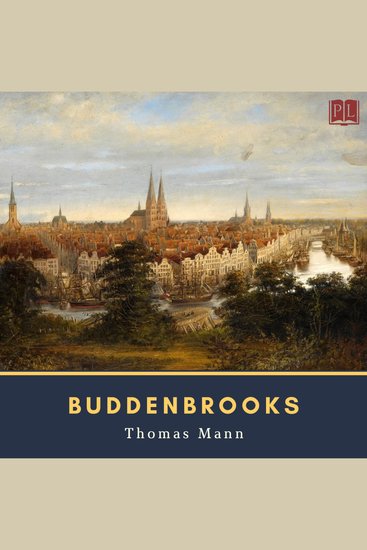
  • Buddenbrooks - The Decline of a Family - cover

    Buddenbrooks - The Decline of a...

    Thomas Mann

    • 0
    • 0
    • 0
    Buddenbrooks is a 1901 novel by Thomas Mann, chronicling the decline of a wealthy north German merchant family over the course of four generations, incidentally portraying the manner of life and mores of the Hanseatic bourgeoisie in the years from 1835 to 1877. Mann drew deeply from the history of his own family, the Mann family of Lübeck, and their milieu.
    It was Mann's first novel, published when he was twenty-six years old. With the publication of the second edition in 1903, Buddenbrooks became a major literary success. Its English translation by Helen Tracy Lowe-Porter was published in 1924. The work led to a Nobel Prize in Literature for Mann in 1929; although the Nobel award generally recognises an author's body of work, the Swedish Academy's citation for Mann identified "his great novel Buddenbrooks" as the principal reason for his prize.
    Mann began writing the book in October 1897, when he was twenty-two years old. The novel was completed three years later, in July 1900, and published in 1901. His objective was to write a novel on the conflicts between businessman and artist's worlds, presented as a family saga, continuing in the realist tradition of such 19th-century works as Stendhal's Le Rouge et le Noir (1830; The Red and the Black). Buddenbrooks is his most enduringly popular novel, especially in Germany, where it has been cherished for its intimate portrait of 19th-century German bourgeois life.
    Before Buddenbrooks Mann had written only short stories, which had been collected under the title Der kleine Herr Friedemann (1898, Little Herr Friedemann). They portrayed spiritually challenged figures who struggle to find happiness in (or at the margins of) bourgeois society. Similar themes appear in the Buddenbrooks, but in a fully developed style that already reflects the mastery of narrative, subtle irony of tone, and rich character descriptions of Mann's mature fiction.
    The exploration of decadence in the novel reflects the influence of Schopenhauer's The World as Will and Representation (1818, 1844) on the young Mann. The Buddenbrooks of successive generations experience a gradual decline of their finances and family ideals, finding happiness increasingly elusive as values change and old hierarchies are challenged by Germany's rapid industrialisation. The characters who subordinate their personal happiness to the welfare of the family firm encounter reverses, as do those who do not.
    The city where the Buddenbrooks live shares so many street names and other details with Mann's native town of Lübeck that the identification is unmistakable, although the novel makes no mention of the name. The young author was condemned for writing a scandalous, defamatory roman à clef about (supposedly) recognisable personages. Mann defended the right of a writer to use material from his own experience.
    The years covered in the novel were marked by major political and military developments that reshaped Germany, such as the Revolutions of 1848, the Austro-Prussian War, and the establishment of the German Empire. Historic events nevertheless generally remain in the background, having no direct bearing on the lives of the characters.
    Show book

  • The Masque of the Red Death - cover

    The Masque of the Red Death

    Edgar Allan Poe

    • 0
    • 0
    • 0
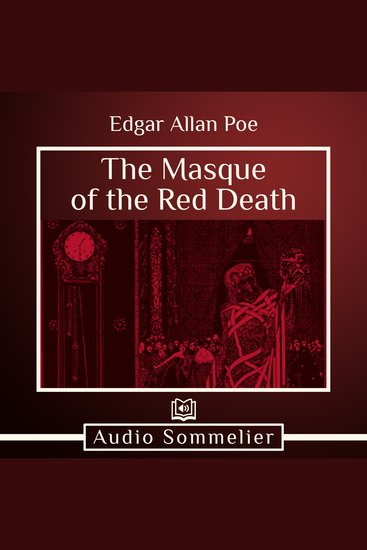
    A plague known as the Red Death has swept through the country, killing half the kingdom. Prince Prospero hides away in his castle with his favorite courtiers, unconcerned. One night he throws a lavish masquerade ball, but the party goes south when a mysterious guest appears dressed as a plague victim. Dive into this chilling Gothic tale for yourself to see what has entranced readers since its publication in 1842.  
    Show book
  • Don Quixote - The legendary Spanish satire of chivalry delusion and the impossible dream—a defining masterpiece of Classic Fiction that revolutionized the modern novel - cover

    Don Quixote - The legendary...

    Miguel de Cervantes Saavedra

    • 0
    • 0
    • 0
    He traded his sanity for a rusty sword, a noble steed, and a dream of chivalry that the world had long forgotten. 
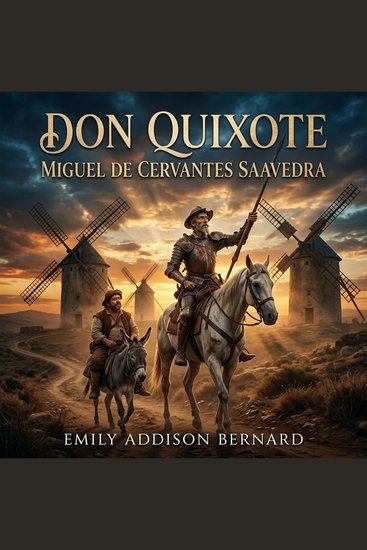
    In this crowning achievement of world literature, Alonso Quijano, an aging gentleman utterly consumed by romantic books of chivalric knights, loses his grip on reality. Renaming himself Don Quixote de La Mancha, he dons a makeshift suit of armor and sets forth across the Spanish countryside to right wrongs, protect the innocent, and win the favor of his imaginary lady love, Dulcinea. Accompanied by his pragmatic, proverb-spouting squire, Sancho Panza, the self-proclaimed knight tilts at windmills he believes to be fierce giants, mistakes dilapidated inns for grand castles, and turns the ordinary into the extraordinary. What follows is a tragicomic journey of profound depth, where delusion clashes with reality, and madness is sometimes far more noble than sanity. 
    Why you will love this: This cornerstone of Classic Fiction essentially invented the modern novel as we know it. Weaving biting satire with boundless humanity, epic quests, and the ultimate buddy-comedy dynamic, its exploration of idealism versus cynicism remains as sharp, moving, and hilarious today as it was over four centuries ago. 
    About the Author: Miguel de Cervantes Saavedra (1547–1616) was a Spanish soldier, captive, and visionary author. Despite enduring profound hardships—from crippling battlefield injuries to five years of enslavement in Algiers—he poured his boundless intellect and irrepressible humor into his writing, immortalizing himself as the greatest literary figure in the Spanish language.
    Show book
  • Importance of Being Earnest The - Audiobook - cover

    Importance of Being Earnest The...

    Oscar Wilde, Classic Audiobooks,...

    • 0
    • 0
    • 0
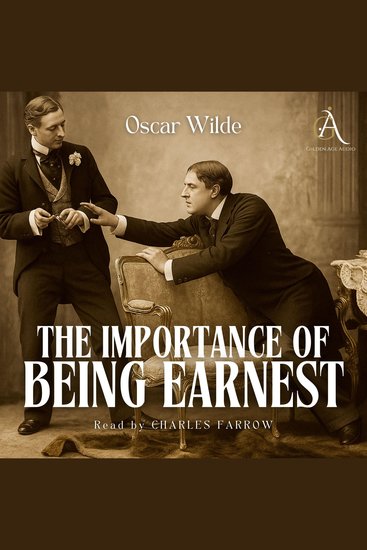
    The Importance of Being Earnest is Oscar Wilde's most celebrated play — a sharp, witty comedy that satirizes Victorian society's obsession with propriety, status, and marriage. The plot follows two friends, Jack and Algernon, who invent fictional personas to escape social obligations and pursue romance. Chaos and hilarity ensue as their lies unravel and identities are mistaken.This sparkling comedy of manners showcases Wilde's trademark wit and irony, exposing the absurdities of upper-class conventions with elegance and charm. At once light-hearted and deeply clever, the play remains one of the most beloved works in English theatre.
    Show book