Join us on a literary world trip!
Add this book to bookshelf
Grey
Write a new comment Default profile 50px
Grey
Subscribe to read the full book or read the first pages for free!
All characters reduced
(the) Woman - cover

(the) Woman

Jean Upton

Publisher: Nick Hern Books

  • 0
  • 0
  • 0

Summary

M is a writer. M is a mother. M is a woman.
The triumph of M's hit play is hijacked by motherhood. She is burnt out, angry, lonely, craving intimacy but disengaged, and terrified of the future.
She wants to tell her story, her way. But everyone keeps giving her their opinions on who she is, who she ought to be, and how she's fucking everything up.
Fiercely funny and brutally honest, Jane Upton's play (the) Woman shatters the glossy veneer of motherhood, exposing its raw, messy truth and what happens when a woman dares to question the definition of (her)self. It was shortlisted for the Bruntwood Prize for Playwriting, and first performed by New Perspectives on tour of the UK in 2025.
Available since: 02/27/2025.
Print length: 104 pages.

Other books that might interest you

  • Fighting the Madness - cover

    Fighting the Madness

    Fay van Burg

    • 0
    • 0
    • 0
    This debut collection is not for the faint of heart, as the poet unpacks the raw pain of the mind. Based on her life experiences, Fay van Burg addresses gut-wrenchingly relatable struggles and painful moments, while fighting for her sanity and wellbeing.  
    Fighting the Madness tackles abstract concepts of hurt and sorrow while taking you on an emotional journey of strength and perseverance.
    Show book
  • Cinema of the Present - cover

    Cinema of the Present

    Anonymous

    • 0
    • 0
    • 0
    What if the cinema of the present were a Möbius strip of language, a montage of statements and questions sutured together and gradually accumulating colour? Would the seams afford a new sensibility around the pronoun ‘you’? Would the precise words of philosophy, fashion, books, architecture and history animate a new vision, gestural and oblique? Is the kinetic pronoun cinema?
       
    These and other questions are answered in the new long poem from acclaimed poet and essayist Lisa Robertson. The book is available with four different back covers, designed by artists Hadley + Maxwell.
       
    Praise for Lisa Robertson:
       
    'Robertson proves hard to explain but easy to enjoy. . . . Dauntlessly and resourcefully intellectual, Robertson can also be playful or blunt. . . . She wields languageexpertly, even beautifully.' —The New York Times
    Show book
  • The Tempest - cover

    The Tempest

    William Shakespeare

    • 0
    • 0
    • 0
    ""Our revels now are ended... this rough magic I here abjure..."" 
    In Shakespeare hinting at the end of his own magnificent career in these and others lines spoken by the great magician, Prospero? The Tempest was the last of Shakespeare's comedies, completed just before he retired to his native Stratford-upon-Avon; perhaps this delightful comedy was intended to signal the playwright's farewell to his beloved theater. The Tempest reflects Shakespeare's mature genius, with its story of innocence tempered by intrigue, hilarity bounded by melancholy. Audiences the world over still thrill to The Tempest's dark comedy and magical fantasy. 
    Sir Michael Redgrave and Vanessa Redgrave helped to build one of England's foremost theatrical families-- a tradition that Ms. Redgrave continues today. And Hugh Griffith is one of the nation's greatest character actors. Together, they bring The Tempest majestically to life.
    Show book
  • Complete Writings Poems and Letters - cover

    Complete Writings Poems and Letters

    Phillis Wheatley

    • 0
    • 0
    • 0
    "Phillis Wheatley: Complete Writings. Poems and Letters" is a comprehensive collection that celebrates the life and literary legacy of Phillis Wheatley, one of the most significant figures in African American literature. This anthology features a wide range of Wheatley's works, including her celebrated poems and insightful letters.
    As the first African American woman to publish a book of poetry in the United States, Wheatley's writings reflect her remarkable talent, intelligence, and resilience in the face of adversity. Her poetry encompasses various themes, including religion, freedom, race, and the human experience, showcasing her mastery of form, language, and imagery.
    In addition to her poetry, this collection includes Wheatley's personal letters, providing readers with intimate glimpses into her life, thoughts, and relationships. Through her correspondence, Wheatley reveals her experiences as a slave, her struggles for recognition and respect, and her unwavering commitment to her craft.
    "Phillis Wheatley: Complete Writings" is a testament to Wheatley's enduring legacy as a trailblazing poet and a pioneering voice in American literature, whose words continue to inspire and resonate with readers across generations.
    Table of Contents:
    POEMS ON VARIOUS SUBJECTS, RELIGIOUS AND MORAL
    EXTANT POEMS NOT PUBLISHED IN POEMS ON VARIOUS SUBJECTS
    LETTERS
    Show book
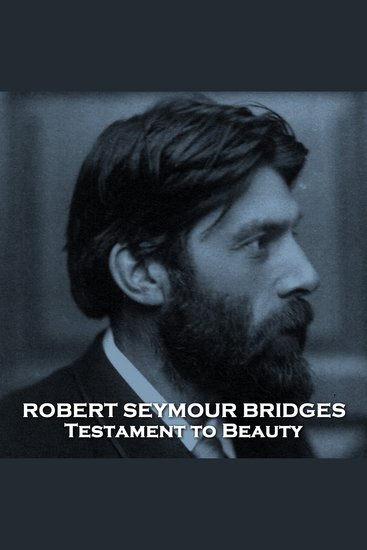
  • Testament to Beauty - A former Poet Laureate demonstrates his poetic talents in this tender and beautiful verse - cover

    Testament to Beauty - A former...

    Robert Seymour Bridges

    • 0
    • 0
    • 0
    Robert Seymour Bridges, OM was born on 23rd October 1844 at Walmer in Kent where he spent his early childhood in a house overlooking the anchoring ground of the British fleet.  
    His father died aged only 47 in 1853. A year later his mother remarried and the family relocated to Rochdale, where his stepfather was the vicar.  
    In 1854 Bridges was sent to Eton College and attended until 1863.  After Eton he went to Corpus Christi College at Oxford. There he became good friends with Gerard Manley Hopkins and would later compile an edition of his poems that is now considered a major contribution to English literature. 
    He graduated from Oxford, in 1867, with a second-class degree in literae humaniores.  Initially he planned to join the Church of England and travelled to the Middle East to broaden his religious horizons.  However, he soon decided that life as a physician would be a better path and, after 8 months studying German (that being the language of many scientific papers at the time) he began his study of medicine at St. Bartholomew's Hospital in 1869.  His long-term ambition was that by the age of forty he could retire from medicine to devote himself to writing. 
    Unfortunately Bridges failed his final medical examinations in 1873 and, as unable to immediately retake the papers, spent six months in Italy learning Italian as well as immersing himself in its art. In July 1874 he went to Dublin to continue his medical studies. Re-examined in December he passed and became a house physician at St Bartholomew's Hospital. It was whilst here that he engaged in a series of highly critical remarks about the Victorian medical establishment. One such was his claim that whilst working as a young doctor he saw a staggering 30,940 patients in one year. 
    A bout of severe pneumonia and lung disease forced his retirement from the medical profession in 1882 and so, slightly ahead of schedule, he began his literary career in earnest.  He already been writing for several years and had published his first poetry collection in 1873.  
    After his illness and a trip to Italy, Bridges moved, with his mother, to Yattendon in Berkshire.  It was during this time, from 1882 to 1904, that Bridges wrote most of his best-known lyrics as well as eight plays and two masques, all in verse.  
    It was also here, in 1884, that he married Monica Waterhouse. They would go on to have three children and spend the rest of their lives in rural seclusion, in an idyllic marriage, first at Yattendon, then at Boars Hill, Oxford. 
    Bridges made an important contribution to hymnody with the publication in 1899 of his Yattendon Hymnal. This collection of hymns became a bridge between the Victorian hymnody of the late 19th century and the modern hymnody of the early 20th century. He was also a chorister at Yattendon church for 18 years. 
    In 1902 Monica and his daughter Margaret became seriously ill with tuberculosis, and a move from Yattendon to a healthier climate was in order. After several temporary homes they moved abroad to spend a year in Switzerland before returning to settle again in England at Chilswell House, which Bridges had designed, and built on Boar's Hill overlooking Oxford University.   
    His greatest achievement though was still some years ahead of him.  The office of Poet Laureate was held by Alfred Austin but with his death it was offered first to Rudyard Kipling, who refused it, and then to Bridges. He was appointed Poet Laureate in 1913 by George V, the only medical graduate to have ever held the office. Bridges, at this time, was neither highly regarded nor well known but a safe pair of hands in a World rapidly being overshadowed by the storms about to erupt over Europe and the First World War. 
    The events of this War, including the wounding of his son, Edward, had a sobering effect on Bridges' poetry. His work became fiercely patriotic. In 1915 edited a volume of prose and poetry, The Spirit of Man, intended to appeal to readers living in war time
    Show book

  • My Land of Freedom - A poem of war and freedom - cover

    My Land of Freedom - A poem of...

    Ifeanyi Njoku

    • 0
    • 0
    • 0
    This poem is a powerful reflection on war, displacement, and the struggle for freedom. It tells the tragic story of a people who fought for liberation but were met with violence, loss, and eventual surrender. Likely referencing the Igbo experience during the Nigerian Civil War, it captures the pain of oppression and the resilience of those who endured it. 
    The poem begins with a contradiction: "In my land of freedom, I walked with fear." This highlights the irony of living in a place meant to be free but being consumed by anxiety. The people demand justice, yet their cries are silenced by violence. The line "Killing our brothers, and leaving us undone" conveys both physical loss and emotional devastation. 
    The imagery of "scorching soil" and "separated from families" paints a picture of suffering and displacement. War does not just take lives—it tears families apart and leaves hearts unable to thrive. The mention of "refugee camps" emphasizes how many were forced from their homes, left to question their identity: "Are we unlucky, to be Igbo?" This speaks to a deep sense of abandonment and injustice. 
    The poem also highlights betrayal, as leaders fail to protect their people. "Everyone was a soldier, in this war we couldn't win." This line captures the grim reality of a war where survival itself was a battle. Despite their bravery, they were up against overwhelming forces. 
    The final lines are heartbreaking: "We had to surrender, and say goodbye to our pride." This is not just a loss of battle but a loss of dignity. Yet, even in surrender, their story lives on. This poem is a tribute to resilience, a reminder of suffering, and a call to remember those who fought, even when the world turned away.
    Show book