Junte-se a nós em uma viagem ao mundo dos livros!
Adicionar este livro à prateleira
Grey
Deixe um novo comentário Default profile 50px
Grey
Assine para ler o livro completo ou leia as primeiras páginas de graça!
All characters reduced
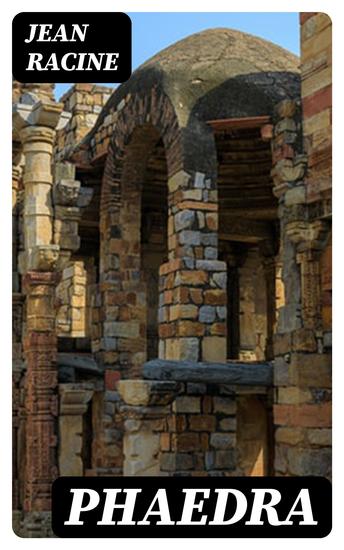
Phaedra - cover
LER

Phaedra

Jean Racine

Tradutor Robert Bruce Boswell

Editora: DigiCat

  • 0
  • 0
  • 0

Sinopse

Jean Racine's "Phaedra" is a poignant exploration of forbidden love, despair, and the complexities of human emotion, set against the backdrop of classical mythology. Written in 1677, this five-act tragedy showcases Racine's mastery of the French Alexandrine verse, blending psychological depth with lyrical beauty. Drawing inspiration from Euripides and Seneca, Racine infuses his characters with moral ambiguity and poignant internal struggle, particularly the titular character, Phaedra, whose obsessive love leads to devastating consequences. The play delves into themes of passion, fate, and the destructive nature of desire while remaining rooted in the neoclassical ideals of unity and decorum prevalent during the period. Racine, a key figure of the French Baroque theatre, was profoundly influenced by the cultural and philosophical currents of his time, particularly the interplay between reason and emotion. His own tumultuous life experiences, including a strained relationship with his mother and his call to serve in a royal court, may have inspired the intense emotional landscapes found in his characters. Through "Phaedra," Racine captures the fragility of human reason when confronted with overwhelming feelings, grounding the tragic elements in relatable psychological truths. Recommended for both literary scholars and general readers, "Phaedra" invites audiences to confront the darker aspects of the human psyche. Its rich, evocative language and profound emotional resonance continue to captivate and challenge readers, making it an essential read for anyone interested in the intricacies of tragedy and the enduring nature of human experience.
Disponível desde: 16/09/2022.
Comprimento de impressão: 35 páginas.
Outros livros que poderiam interessá-lo

  • Jam For The Enemy - Former soldier and journalist that became a revered author and screenwriter - cover

    Jam For The Enemy - Former...

    Edgar Wallace

    • 0
    • 0
    • 0
    Richard Horatio Edgar Wallace was born on the 1st April 1875 in Greenwich, London.  Leaving school at 12 because of truancy, by the age of fifteen he had experience; selling newspapers, as a worker in a rubber factory, as a shoe shop assistant, as a milk delivery boy and as a ship’s cook.  
     
    By 1894 he was engaged but broke it off to join the Infantry being posted to South Africa. He also changed his name to Edgar Wallace which he took from Lew Wallace, the author of Ben-Hur.  
     
    In Cape Town in 1898 he met Rudyard Kipling and was inspired to begin writing. His first collection of ballads, The Mission that Failed! was enough of a success that in 1899 he paid his way out of the armed forces in order to turn to writing full time.  
     
    By 1904 he had completed his first thriller, The Four Just Men. Since nobody would publish it he resorted to setting up his own publishing company which he called Tallis Press. 
      
    In 1911 his Congolese stories were published in a collection called Sanders of the River, which became a bestseller. He also started his own racing papers, Bibury’s and R. E. Walton’s Weekly, eventually buying his own racehorses and losing thousands gambling.  A life of exceptionally high income was also mirrored with exceptionally large spending and debts.  
     
    Wallace now began to take his career as a fiction writer more seriously, signing with Hodder and Stoughton in 1921. He was marketed as the ‘King of Thrillers’ and they gave him the trademark image of a trilby, a cigarette holder and a yellow Rolls Royce. He was truly prolific, capable not only of producing a 70,000 word novel in three days but of doing three novels in a row in such a manner. It was estimated that by 1928 one in four books being read was written by Wallace, for alongside his famous thrillers he wrote variously in other genres, including science fiction, non-fiction accounts of WWI which amounted to ten volumes and screen plays. Eventually he would reach the remarkable total of 170 novels, 18 stage plays and 957 short stories. 
     
    Wallace became chairman of the Press Club which to this day holds an annual Edgar Wallace Award, rewarding ‘excellence in writing’.  
     
    Diagnosed with diabetes his health deteriorated and he soon entered a coma and died of his condition and double pneumonia on the 7th of February 1932 in North Maple Drive, Beverly Hills. He was buried near his home in England at Chalklands, Bourne End, in Buckinghamshire.
    Ver livro
  • Anna Karenina part 3 - Step into Classic Literature as betrayal rural labor and forbidden romance collide in the spellbinding continuation of Tolstoy's epic tragedy of Russian high society - cover

    Anna Karenina part 3 - Step into...

    graf Leo Tolstoy

    • 0
    • 0
    • 0
    Betrayal wears a mask of duty, and forbidden passion demands the ultimate sacrifice in Tolstoy's epic masterpiece. 
    In the sweeping continuation of this timeless saga, the fallout of Anna's illicit confession reverberates across Russia. Alexey Alexandrovitch Karenin, desperate to maintain his immaculate societal facade, coldly calculates his revenge without shedding a single drop of blood. Instead of a duel or a scandalous divorce, he sentences his wife to a torturous prison of outward propriety. Meanwhile, deep in the country, a heartbroken Konstantin Levin seeks refuge in the exhausting, rhythmic labor of the peasant fields. But just as he vows to renounce the superficialities of the aristocracy forever, a fleeting, dawn-lit glimpse of his lost love, Kitty, shatters his newfound resolve and pulls him back into the agonizing labyrinth of human desire. 
    Why you will love this audiobook:This cornerstone of Classic Literature masterfully intertwines grand societal critique with intimate psychological depth. Fans of sweeping historical fiction, tragic romances, and vintage philosophical tales will be utterly captivated by this iconic story of morality, societal expectations, and unbridled love. Tolstoy's lush prose and profound exploration of the human condition make this an essential, unforgettable listen. 
    About the Author:Graf Leo Tolstoy (1828–1910) is widely considered one of the greatest novelists in the history of world literature. A Russian aristocrat who later embraced a radical philosophy, his unparalleled realism and psychological insight forever changed the literary landscape.
    Ver livro
  • Black Beauty - cover

    Black Beauty

    Anna Sewell

    • 0
    • 0
    • 0
    "As a young horse, Black Beauty is well-loved and happy. But when his owner is forced to sell him, his life changes drastically. He has many new owners--some of them cruel and some of them kind. All he needs is someone to love him again...  Whether pulling an elegant carriage or a ramshackle cab, Black Beauty tries to live as best he can. This is his amazing story, told as only he could tell it."
    Ver livro
  • Henry VIII - cover

    Henry VIII

    Pierre Arthur Laure, Tom...

    • 0
    • 0
    • 0
    King Henry is married to Catherine of Aragon, but he has been smitten by the charms of the queen's maid of honor, Anne Boleyn, and is tempted to divorce his dignified and noble wife.  
    Meanwhile, the lords of England resent the influence of Henry's trusted advisor, Cardinal Wolsey, who is gradually drawing power into his own hands. As Catherine and Wolsey suffer their tragic falls, new figures rise to fill their places, but they, too, will be brought low by the inexorable sweep of time and fortune.  
    This colorful history play, possibly written in collaboration with John Fletcher, comes from the very end of Shakespeare's dramatic career. 
    Paul Jesson plays Henry VIII, and Jane Lapotaire plays Queen Catherine. Timothy West is Cardinal Wolsey.
    Ver livro
  • The Avenger - From their pens to your ears genius in every story - cover

    The Avenger - From their pens to...

    Edgar Rice Burroughs

    • 0
    • 0
    • 0
    Edgar Rice Burroughs (1875-1950) is a celebrated American novelist best known for the creation of the fictional character and immortal icon Tarzan as well as for the creation of the now famous hero John Carter. By and large, although Burroughs’s fictional production is often classified among ‘pulp literature’ by many a canonical critic, his numerous novels revolutionized the science-fiction novel and the adventure novel. Burroughs’s extraordinary characters rapidly found their way to other media than literature including cartoons, radio and cinema and thus made his fortune and fame. Edgar Rice Burroughs was born in Chicago in 1875 and educated in a number of different schools. It is said has it that as a teenager he had to move from one school to another because of the influenza epidemic of 1891. At a certain point of his early life, his father who was himself a civil war veteran, decided to give his son a military education and sent him to the Michigan Military Academy.  
    Burroughs almost had a life-time career in the army was it not for his health problems that disqualified him from the service. He then engaged in different jobs in which he was not very successful. These included running a stationery store in Pocatello, Idaho, as well as working in his father’s firm. He later worked in his father’s American Battery Company before he got married to his childhood’s love Emma Centennia Hulbert in 1900. 
    Burroughs was almost obsessed with running his own business. This made him feel uneasy with the many positions that he fulfilled in private companies. After moments of financial crises, he eventually established a private business selling pencil sharpeners to retailers. The tradition goes that when Burroughs was waiting for his salesmen he used to browse through magazines to check the placement of the advertisements of his own business. Many of such magazines were pulp fiction magazines that published serialized stories belonging to the romance, crime and science-fiction genres. It was thus that the idea came to him to start writing similar stories and sell them to such magazines. Once famous, Burroughs never stopped evoking this story, relating that he believed himself able to write much better stories than the ones he chanced to read. By 1911, he started writing stories to be serialized in magazines with the aim of just making money. However, his stories happened to please the famous magazine publisher Frank Munsey and the editor Thomas Metcalf who paid him generously. 
    Under the pseudonym Norman Bean, Burroughs published his first story Under the Moons of Mars whose title was chosen by the editor. The story became popular and encouraged the author to follow it up with sequels to be later referred to as the ‘Barsoom’ series. Before the publication of the last installment of Under the Moons of Mars, Burroughs’s second novel was completed and entitled The Outlaw of Torn. Though the latter was to be posthumously hailed as one of his finest achievements, Burroughs’s editor refused to serialize it. The novel was then sent to be published in five installments in the New Story Magazine in 1914. It was, however, Burroughs’s third work that brought him to immediate and unprecedented success with the creation of the immortal character of Tarzan, a good-natured savage born in the African jungle to dead English parents. He is brought up by a monkey tribe to become a man of great physical and intellectual abilities. Tarzan’s perfection was often a subject of disagreement between his creator and cinema directors who rather tend to highlight the animalistic side of the character. Burroughs often explained that Tarzan should not be portrayed as the savage from a colonialist perspective. For him, Tarzan should rather stand for all the qualities and the goodness of natural life. Indeed, after a journey into the ‘civilized’ world, Tarzan eventually decides to regain to the jungle, realizing that the latter is actually more natural, more true
    Ver livro
  • The Poison Belt - cover

    The Poison Belt

    Arthur Conan Doyle

    • 0
    • 0
    • 0
    A follow up to Arthur Conan Doyles well known novel, The Lost World, the Poison Belt is a short story set over a single 24 hour span of time. On the Anniversary of their momentous trip to the Plateau, as depicted in The Lost World, the irascible Professor Challenger calls his companions to his home in Rochester with a curious directive: "Bring Oxygen". What can it mean? Does it have anything to do with his dire warnings printed in the Times that morning? Can it truly be, as he says... The End of the World?  
    Written by Arthur Conan Doyle in 1913 and Narrated here by Michael Ward.
    Ver livro