¡Acompáñanos a viajar por el mundo de los libros!
Añadir este libro a la estantería
Grey
Escribe un nuevo comentario Default profile 50px
Grey
Suscríbete para leer el libro completo o lee las primeras páginas gratis.
All characters reduced
Speakerbox - cover

Speakerbox

Jean Petit Frere

Editorial: Publishdrive

  • 0
  • 0
  • 0

Sinopsis

Speakerbox is a soulful mixture of poems aimed to represent our voices. We are loud and boisterous, but also quiet and reserved at the same time. These poems are meant to touch us, remind us, make us smile, and at times make us angry and sad. We all have a voice that needs to be heard, and by hearing mine, you can also hear yours as well.
Disponible desde: 13/09/2025.
Longitud de impresión: 348 páginas.

Otros libros que te pueden interesar

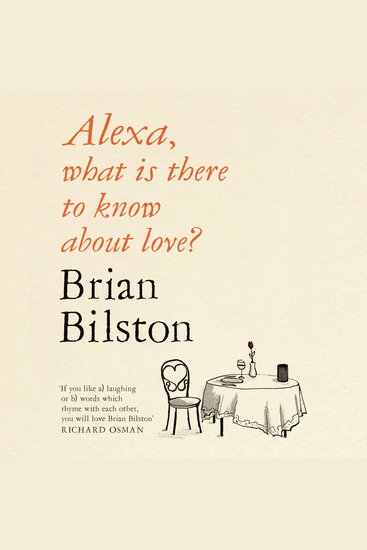
  • Alexa What Is There to Know About Love? - A Hilarious and Moving Poetry Collection - cover

    Alexa What Is There to Know...

    Brian Bilston

    • 0
    • 0
    • 0
    'Brian Bilston is a laureate for our fractured times.' Ian McMillan'Someone who knows their way round both a joke and a bittersweet narrative.' The Times'Part John Cooper Clarke, part Frank Sidebottom . . . all brilliant.' Esquire'Bilston is a magician with words' GuardianAlexa, what is there to know about love? is a wonderful collection of poems about love in all its forms, covering everything from romantic love to familial love, to long-distance love, and even love on the internet.The collection also features poems about the true passions for many booklovers, reading and literature, and the odd one about the subject causing many of us heartbreak: politics. With titles like ‘Hold My Hand While We Jump Off This Cliff’ and ‘Remembrance of Things Pasta’, there’s something for even the most jaded romantic within these pages.The perfect, witty gift for Valentine’s and beyond.
    Ver libro
  • Indexical Elegies - cover

    Indexical Elegies

    Jon Paul Fiorentino

    • 0
    • 0
    • 0
    Jon Paul Fiorentino's new collection is a whip-smart poetic investigation of anxiety in all its many manifestations. Anxiety caused by geography, anxieties of influence and looming worries about loss inform the poems as they weave narrative threads that highlight both the treachery of language and its necessity in shaping human experience.
       
    The poems here build on Derrida's ideas about the psychological implications of memory and the archival impulse and on philosopher Charles Sanders Peirce's semiotics of 'the index.' Indexical Elegies is a rich, emotionally charged work that showcases Fiorentino's talents at their feisty, engaged best. From its Post-Prairie pamphleteering and Montreal musings to its moving elegies, this is provocative poetry that never loses touch with the reader's pleasure.
      
       
    Praise for Fiorentino's The Theory of the Loser Class:
       
    'Fiorentino is smart and deft … By turns compassionate, funny and filled with self-loathing, The Theory of the Loser Class is never without the possibility of redemption.' – Globe and Mail
    Ver libro
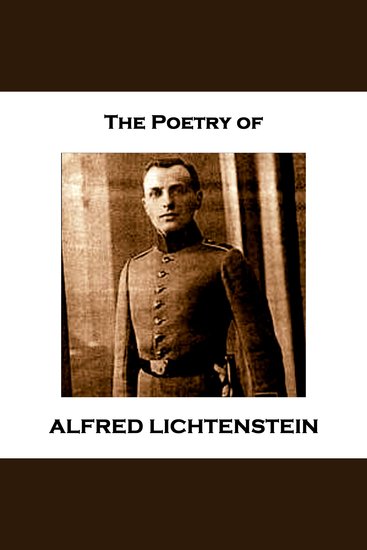
  • The Poetry of Alfred Lichtenstein - Surrealist German poet who was killed in WW1 - cover

    The Poetry of Alfred...

    Alfred Lichtenstein

    • 0
    • 0
    • 0
    Alfred Lichtenstein was born on the 23rd August 1889, in Berlin-Wilmersdorf, the son of a Jewish manufacturer.  He grew up in Berlin before studying law at Erlangen in Bavaria.   
     
    A writer in the Expressionist style his poems and stories are short but beautifully honed works.  His tragically curtailed life allowed only a small part of his talents to rest with us.  Undoubtedly a full life would have given the world a very gifted literary force. 
     
    Alfred Lichenstein volunteered for duty in the German Army for World War I.  He died on the front at the Somme in the early months of combat on the 25th September 1914.  He was 25.
    Ver libro
  • George Bernard Shaw: Arms And The Man - cover

    George Bernard Shaw: Arms And...

    George Bernard Shaw

    • 0
    • 0
    • 0
    Arms and the Man is a satirical drama play written by George Bernard Shaw published in 1898.  It has become one of the most popular of his plays. Like his other works, Arms and the Man questions conventional values and uses war and love as his satirical targets. He delightfully pops the bubble of the 'brave soldier' always wishing to charge into battle and shows (I think) how people stay the same whether in uniform or not and are not magically changed into different people. A cautious soldier can be just as admirable as a reckless one.
    Ver libro
  • The Tempest - cover

    The Tempest

    William Shakespeare

    • 0
    • 0
    • 0
    What happens when revenge gives way to mercy?
    
    The Tempest is one of William Shakespeare's most enchanting and thought-provoking plays. Set on a mysterious island after a violent storm, the story follows Prospero, a wronged duke who wields magical power to control fate, enemies, and even nature itself.
    
    As shipwrecked nobles confront betrayal, ambition, and illusion, Shakespeare weaves a tale rich with magic, music, and wonder. Through unforgettable characters such as Ariel and Caliban, the play explores themes of authority, freedom, colonization, forgiveness, and the healing power of compassion.
    
    Often considered Shakespeare's farewell to the stage, The Tempest blends fantasy with deep human insight, offering a hopeful vision of reconciliation and renewal.
    
    Inside this eBook, you'll experience:
    
    A magical island world filled with wonder and mystery
    
    Themes of power, forgiveness, and transformation
    
    Lyrical language and unforgettable characters
    
    One of Shakespeare's most imaginative and symbolic plays
    
    Widely studied and performed across the world, The Tempest remains essential reading for anyone interested in classic literature, theater, and the power of imagination.
    
    Enter the storm, and discover the calm beyond it. Buy now and experience one of Shakespeare's most visionary masterpieces.
    Ver libro
  • May-Day and Other Pieces - cover

    May-Day and Other Pieces

    Ralph Waldo Emerson

    • 0
    • 0
    • 0
    Spring arrives with a rush of words, and Ralph Waldo Emerson stands at the threshold, pen in hand. May-Day and Other Pieces is not just a collection of poems—it is an invitation to witness the shifting tides of nature, thought, and destiny through the eyes of one of America's sharpest philosophical minds.
    From the awakening landscapes of May-Day to the untamed wilderness of The Adirondacs, Emerson moves effortlessly between the grandeur of the world and the depths of the soul. The mysticism of Brahma, the inevitability of Fate, the defiance of Freedom—each poem is a meditation, a spark meant to ignite the reader's own reflection. History echoes in the Boston Hymn, sung as the Civil War reshaped a nation, while the lyrical simplicity of My Garden and Seashore captures fleeting moments of peace amid the rush of existence.
    Yet, Emerson never lingers too long in stillness. He follows the restless course of Two Rivers, listens to the quiet solitude of Waldeinsamkeit, and faces the finality of Terminus with unwavering clarity. This is poetry that questions, poetry that endures. It is a journey through seasons, through America, through the self—one that leaves the reader standing on the shore, looking out at the vastness, changed.
    May-Day and Other Pieces is more than verse. It is a conversation with the universe, and Emerson, ever the sage, is still speaking.
    Contents
     • May-Day
     • The Adirondacs
        A Journal
        Dedicated to my Fellow Travellers IN August, 1858
    • Brahma
    • Nemesis
    • Fate
    • Freedom
    • Ode Sung in the Town Hall, Concord, July 4, 1857
    • Boston Hymn, Read in Music Hall, January 1, 1863
    • Voluntaries
    • Love and Thought
    • Una
    • Boston
    • Letters
    • Rubies
    • Merlin's Song
    • The Test
    • Solution
    • Hymn Sung at the Second Church, at the Ordination of Rev. Chandler Robbins
    • Nature I
    • Nature II
    • The Romany Girl
    • Days
    • My Garden
    • The Chartist's Complaint
    • The Titmouse
    • The Harp
     • Seashore
    • Song of Nature
    • Two Rivers
    • Waldeinsamkeit
    • Terminus
    • The Nun's Aspiration
    • April
    • Maiden Speech of the Aeolian Harp
    • Cupido
    • The Past
     • The Last Farewell
       Lines written by the author's brother, Edward Bliss Emerson, whilst sailing out of Boston Harbor, bound for the island of Porto Rico, in 1832
    • In Memoriam E. B. E.
    Ver libro