Join us on a literary world trip!
Add this book to bookshelf
Grey
Write a new comment Default profile 50px
Grey
Subscribe to read the full book or read the first pages for free!
All characters reduced
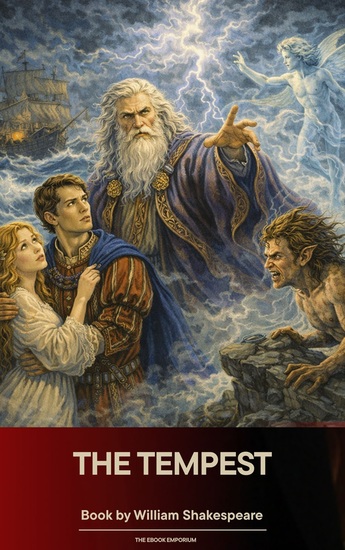
The Tempest - cover

The Tempest

William Shakespeare

Publisher: The Ebook Emporium

  • 0
  • 0
  • 0

Summary

What happens when revenge gives way to mercy?

The Tempest is one of William Shakespeare's most enchanting and thought-provoking plays. Set on a mysterious island after a violent storm, the story follows Prospero, a wronged duke who wields magical power to control fate, enemies, and even nature itself.

As shipwrecked nobles confront betrayal, ambition, and illusion, Shakespeare weaves a tale rich with magic, music, and wonder. Through unforgettable characters such as Ariel and Caliban, the play explores themes of authority, freedom, colonization, forgiveness, and the healing power of compassion.

Often considered Shakespeare's farewell to the stage, The Tempest blends fantasy with deep human insight, offering a hopeful vision of reconciliation and renewal.

Inside this eBook, you'll experience:

A magical island world filled with wonder and mystery

Themes of power, forgiveness, and transformation

Lyrical language and unforgettable characters

One of Shakespeare's most imaginative and symbolic plays

Widely studied and performed across the world, The Tempest remains essential reading for anyone interested in classic literature, theater, and the power of imagination.

Enter the storm, and discover the calm beyond it. Buy now and experience one of Shakespeare's most visionary masterpieces.
Available since: 01/22/2026.
Print length: 90 pages.

Other books that might interest you

  • The Railway Children - Three Suburban Children Beside a Country Line - cover

    The Railway Children - Three...

    E. Nesbit

    • 0
    • 0
    • 0
    Three children and their mother move from a London villa to a cottage by a railway line after their father is taken away by two men who will not say why. Nesbit serialised it in 1905 and told the whole story from the children's side, so that the reader guesses at the disgrace before Bobbie reads the newspaper. The waving at the train, and what comes down the platform in the last chapter, have survived every adaptation. Fifty-three paintings by Grimshaw and Clausen and their contemporaries follow the children from London villa to country line, catching the rick-building, gate-lounging, and long light of the world they move through.
    Show book
  • Alonzo Fitz and Other Stories - A Courtship Conducted Entirely by Telephone - cover

    Alonzo Fitz and Other Stories -...

    Mark Twain

    • 0
    • 0
    • 0
    Comic pieces from Twain's middle years: a courtship conducted entirely by telephone, an encounter with an interviewer, a stolen white elephant hunted by the whole New York police force, and the tale of a man who mislaid a corpse. They come from a quarter-century of magazine work, from the late 1870s to A Dog's Tale of 1903. The elephant story is the best thing here and the least like anything else he wrote. Fifty-four plates of American painting, from Winslow Homer to Albert Bierstadt, capture the same decades of American life Twain was busy making fun of.
    Show book
  • Taman - From their pens to your ears genius in every story - cover

    Taman - From their pens to your...

    Mikhail Lermontov

    • 0
    • 0
    • 0
    The bookshelves of European literature are incredible collections that have gathered together centuries of very talented authors.  From this continent their fame spread and whilst among their number many are now forgotten or neglected their talents endure.  Among them is Mikhail Lermontov.
    Show book
  • Rookwood - cover

    Rookwood

    William Harrison Ainsworth

    • 0
    • 0
    • 0
    Rookwood is a novel by William Harrison Ainsworth published in 1834. It is a historical and gothic romance that describes a dispute over the legitimate claim for the inheritance of Rookwood Place and the Rookwood family name.
    Show book
  • The pleasures of life - cover

    The pleasures of life

    SIR JOHN LUBBOCK

    • 0
    • 0
    • 0
    Those who have the pleasure of attending the opening meetings of schools and colleges, and of giving away prizes and certificates, are generally expected at the same time to offer such words of counsel and encouragement as the experience of the world might enable them to give to those who are entering life.Having been myself when young rather prone to suffer from low spirits, I have at several of these gatherings taken the opportunity of dwelling on the privileges and blessings we enjoy, and I reprint here the substance of some of these addresses (omitting what was special to the circumstances of each case, and freely making any alterations and additions which have since occurred to me), hoping that the thoughts and quotations in which I have myself found most comfort may perhaps be of use to others also.It is hardly necessary to say that I have not by any means referred to all the sources of happiness open to us, some indeed of the greatest pleasures and blessings being altogether omitted.In reading over the proofs I feel that some sentences may appear too dogmatic, but I hope that allowance will be made for the circumstances under which they were delivered.
    Show book
  • Bizeban - From their pens to your ears genius in every story - cover

    Bizeban - From their pens to...

    Moritz Jokai

    • 0
    • 0
    • 0
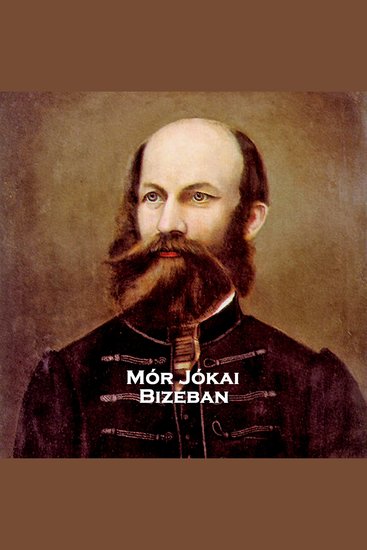
    Móric Jókay de Ásva was born on the 18th February 1825 in Komárom, then in the Kingdom of Hungary but now part of Slovakia.  
    Due to his timid and delicate constitution he was educated at home until the age of 10 and then sent away to complete his studies at the Calvinist college at Pápa. 
    At 12 his father died, and he was pushed to honour him by replicating his career as a lawyer.  He studied hard and completed the curriculum at Kecskemét and Pest.  He won his first case as a newly graduated lawyer. 
    But he found a career in law to be dull and, encouraged by the positive reaction to his first play, he moved to Pest in 1845.  There he published, first in a newspaper, and then as a novel ‘Hétköznapok’ (‘Working Days’).  It was acclaimed as a masterpiece.  To add to his promise he was appointed as the editor of Életképek, the leading Hungarian journal. 
    In 1848 he married the actress, Róza Laborfalvi.  That same year Europe was awash with revolutions and Jókai, a moderate Liberal, enthusiastically supported the nationalist cause and its decision to depose the Habsburg dynasty.  The attempt failed. 
    He was now classed as a political suspect and threw himself into his literary career, writing dozens of novels, many of them masterpieces, stories, essays and the like.  In total he wrote several hundred volumes, many of them in the local Magyar language which helped arrest its declining relevance in society.  
    By 1867 the political temperature had cooled, and he entered parliament as well as becoming the editor a government journal he had founded.   His skills were much admired and helped the government navigate through several difficult matters.   
    His wife died in 1886 but although grief-stricken he continued to work and to write.  
    In 1897 the king appointed him a member of the upper house.  Two years later he caused a minor scandal by marrying the young 20-year-old actress, Bella Nagy.  At the time he was 74.
    Show book