Join us on a literary world trip!
Add this book to bookshelf
Grey
Write a new comment Default profile 50px
Grey
Subscribe to read the full book or read the first pages for free!
All characters reduced
The Most Influential Works of Jean-Jacques Rousseau - Enriched edition Emile On the Social Contract Discourse on the Origin of Inequality Among Men Confessions… - cover

The Most Influential Works of Jean-Jacques Rousseau - Enriched edition Emile On the Social Contract Discourse on the Origin of Inequality Among Men Confessions…

Jean-Jacques Rousseau

Translator Barbara Foxley, G. D. H. Cole, Samuel William Orson

Publisher: Musaicum Books

  • 0
  • 0
  • 0

Summary

In The Most Influential Works of Jean-Jacques Rousseau, the reader is presented with a comprehensive analysis of Rousseau's literary endeavors, exploring his groundbreaking ideas and philosophical musings. Rousseau's writing style is characterized by a profound introspection and a relentless quest for truth, evident in works like Emile and The Social Contract. Through a lens of social and political critique, Rousseau challenges prevailing societal norms and offers radical perspectives on education, citizenship, and the human condition. His works continue to spark debates and inspire thinkers across disciplines. Rousseau's unique blend of rationalism and romanticism sets him apart as a key figure in the Enlightenment movement. His influence on subsequent generations of writers and philosophers is undeniable, making this collection a must-read for anyone interested in the evolution of modern thought.

In this enriched edition, we have carefully created added value for your reading experience:
- A comprehensive Introduction outlines these selected works' unifying features, themes, or stylistic evolutions.
- The Author Biography highlights personal milestones and literary influences that shape the entire body of writing.
- A Historical Context section situates the works in their broader era—social currents, cultural trends, and key events that underpin their creation.
- A concise Synopsis (Selection) offers an accessible overview of the included texts, helping readers navigate plotlines and main ideas without revealing critical twists.
- A unified Analysis examines recurring motifs and stylistic hallmarks across the collection, tying the stories together while spotlighting the different work's strengths.
- Reflection questions inspire deeper contemplation of the author's overarching message, inviting readers to draw connections among different texts and relate them to modern contexts.
- Lastly, our hand‐picked Memorable Quotes distill pivotal lines and turning points, serving as touchstones for the collection's central themes.
Available since: 11/02/2018.
Print length: 1434 pages.
Other books that might interest you

  • Magna Carta - Its Medieval Writings Rights and Background - cover

    Magna Carta - Its Medieval...

    Kelly Mass

    • 0
    • 0
    • 0
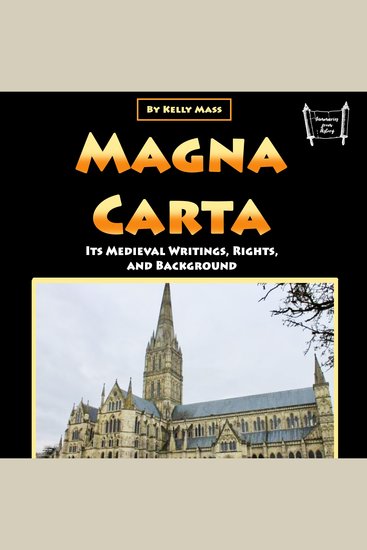
    The Magna Carta Libertatum, commonly known as the Magna Carta, is a royal charter of rights that was signed by King John of England on June 15, 1215, at Runnymede, near Windsor. This historic document was initially drafted by Archbishop of Canterbury Stephen Langton in response to escalating tensions between King John and a group of discontented barons. The Magna Carta sought to resolve these tensions by outlining a series of promises and protections, aimed at securing peace between the monarchy and the nobility. 
    At its core, the Magna Carta addressed several critical grievances, promising protection for the rights of the Church, safeguarding barons from illegal imprisonment, guaranteeing access to swift justice, and imposing limitations on feudal payments to the Crown. These promises were to be enforced through the creation of a council of 25 barons, which would oversee the king's adherence to the terms. However, the charter's effectiveness was short-lived. Within a few months, Pope Innocent III annulled the document, declaring it void, as neither King John nor the rebel barons honored their commitments. This revocation led directly to the First Barons' War, a conflict that further destabilized the kingdom.
    Show book
  • Rudolf Hoess - The Sadistic German SS War Criminal - cover

    Rudolf Hoess - The Sadistic...

    Kelly Mass

    • 0
    • 0
    • 0
    We’ve all had our humble beginnings, and we seemed so innocent as children. However, for some people, given their childhood and circumstances, and then the political or war-driven environment they face, it goes completely wrong. Such was the case for Rudolf Hoess, a cruel, murderous Nazi commander who had been brainwashed by the system that justified his aid in exterminating millions of Jews. 
    Rudolf Franz Ferdinand Hoess was a Nazi German SS-officer who was found guilty of war criminal activities after Nazi Germany was beat. Höss was the commandant of Auschwitz concentration and extermination camp for the longest time (from four May 1940 to November 1943, and again from eight May 1944 to January the 18th 1945). He tried out and executed techniques to accelerate Hitler's directive to get rid of the Jewish population of Nazi-occupied Europe. 
    Learn more about what Rudolf Hoess did and why he has become so infamous in the history of World War 2.
    Show book
  • Sustainability and Infrastructure - Building Resilient Cities (3 in 1) - cover

    Sustainability and...

    Lyric Vale

    • 0
    • 0
    • 0
    In the crucible of global environmental challenges, cities emerge as both the most vulnerable landscapes and the most promising laboratories for transformative change. Sustainable urban development represents a critical frontier where human innovation, technological advancement, and ecological consciousness converge to reimagine our collective living environments. This comprehensive exploration delves into the intricate world of sustainable urban infrastructure, examining how cities can evolve from passive consumers of resources to dynamic, regenerative ecosystems that actively contribute to environmental preservation and human well-being. 
    The journey through sustainable urban infrastructure is a narrative of hope, innovation, and strategic reimagining. By analyzing the complex intersections of technological design, environmental stewardship, and social resilience, this book unveils the multifaceted approaches that can transform urban landscapes from sources of environmental strain to models of sustainable living. Readers will explore how cutting-edge urban planning strategies, advanced infrastructure technologies, and holistic design principles can create cities that are not just environmentally responsible, but also more livable, adaptable, and responsive to the rapidly changing global challenges of climate change, population growth, and resource scarcity. From renewable energy systems and green building technologies to innovative transportation networks and circular economy principles, this exploration offers a visionary roadmap for designing urban environments that balance human needs with ecological sustainability.
    Show book
  • Look What Sports Did to This Little Kid! - A Baby Boomer’s Journey Through the Golden Age of Sports - cover

    Look What Sports Did to This...

    Chuck Spinner

    • 0
    • 0
    • 0
    As Baby Boomers (born between 1946 and 1965) reach their golden years, they reminisce about a unique time in sports history. Born just after World War II, this generation experienced the first wave of live televised sports, transforming how fans engaged with their favorite athletes and teams. No longer reliant on radio broadcasts or newspapers, they witnessed iconic sports moments in real-time, forever shaping their love for the game. In A Lifetime of Sports: A Baby Boomer’s Memoirs, author Chuck Spinner offers a heartfelt and humorous look at the unforgettable sports memories that defined his life—and the lives of countless others. Narrated by the talented Kyle Goodknight, this audiobook brings the exhilarating highs, personal encounters, and heartwarming stories to life, making listeners feel as if they're reliving those incredible moments. Published by Audiobook Publishing Services, this autobiography isn't just about sports—it's a time capsule of personal and historical milestones that shaped a generation. With chapters brimming with nostalgia, sports fans and Baby Boomers alike will enjoy tales such as: How the author’s uncle became a pro wrestler to pay his way through law school. A 40-year reunion with a boyhood sports idol. Riding in a pace car with his grandsons. Playing international basketball in Senegal. Beating a future Supreme Court justice in a basketball game! Meeting the only ambidextrous pitcher in Major League Baseball history. The most comfortable pole vault landing pit ever! The day Larry Bird ruined a local TV sports broadcast. Running with Olympic gold medalist Bob Richards. The author’s wife nearly meeting Michael Jordan. And many more engaging stories! Through Spinner's captivating storytelling and Goodknight's engaging narration, A Lifetime of Sports captures the magic of sports and the power of shared experiences.
    Show book
  • Fearless Faith - Learning to Trust Jesus in Every Situation - cover

    Fearless Faith - Learning to...

    Jonathan Stephen

    • 0
    • 0
    • 0
    When fear takes hold, we can feel powerless and insipid. Life’s spiritual battles become too much, and the devil seems to be winning. It does not have to be like this, though! We can, and do, have victory in Christ. Faith in the all-powerful one means that we are strong in him, even when we feel weak.  Jonathan Stephen writes with clarity and compassion to help us understand how the battle against the enemy can truly be won. He uses one of the best known and most dramatic incidents in the Gospels, the stilling of the storm. As he draws our attention to what Jesus is teaching through this ‘faith-training exercise’, we join the disciples in discovering that when we are buffeted and frightened by the storms of life we can not only endure but overcome.
    Show book
  • Wars that Forged Imperial Japan The: The History of the Conflicts that Established the Japanese Empire Before World War II - cover

    Wars that Forged Imperial Japan...

    Editors Charles River

    • 0
    • 0
    • 0
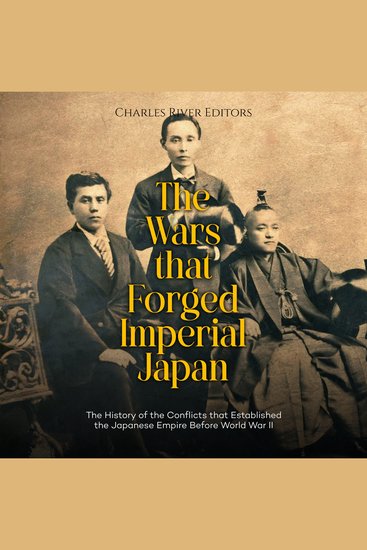
    Completing the Meiji Restoration that heralded the dawn of a new era for both Japan and Asia, the island nation found itself thrust into the modern world, a world of industry and conquest. Flexing its new muscles, the burgeoning power soon came to blows with the regional power that for centuries dominated the area politically and culturally: China. In its first modern war, the modernized Japanese empire went to war against the dominant power in the region, and though interested Western powers favored China, Japan won the day, claiming Korea as their conquest and permanently upsetting the balance of power in the region. The conflict paved the way for the future Empire of Japan and the collapse of the Qing Dynasty. 
    Though both nations modernized, and China far outweighed Japan in terms of men and materiel potential, the island nation handily won its first modern war. The conflict resulted in Japan’s short-term gains in the wake of victory, and the long term disaster for both sides’ new roles in Asia, for with the end of Chinese dominance in East Asia came a new era for the region as a whole, an era whose consequences and horrors would not be fully realized for several more decades. 
    In 1937, the Empire of Japan once more went to war with China, a nation broken into petty warlord fiefdoms and wracked by civil war. The most modern Asian nation enacted a brutal campaign over the fragmented realms that made up China, committing atrocities just as horrendous as their Axis ally in Europe. Despite this, the sheer size of China, coupled with Japan’s overextension, allowed the larger, less developed nation to endure.
    Show book