Join us on a literary world trip!
Add this book to bookshelf
Grey
Write a new comment Default profile 50px
Grey
Subscribe to read the full book or read the first pages for free!
All characters reduced
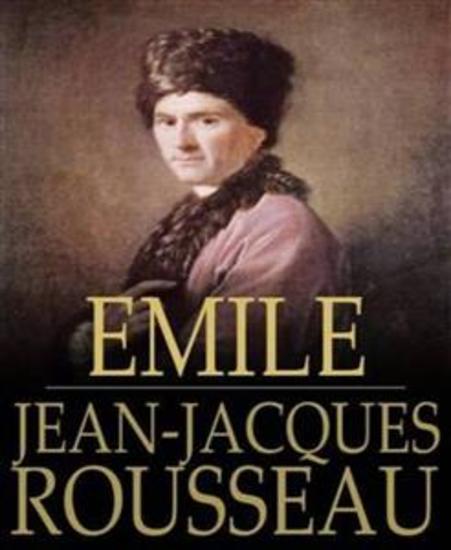
Emile - cover

Emile

Jean-Jacques Rousseau

Publisher: BookRix

  • 0
  • 0
  • 0

Summary

Emile is a treatise on the nature of education and on the nature of man written by Jean-Jacques Rousseau, who considered it to be the “best and most important of all my writings”. Due to a section of the book entitled “Profession of Faith of the Savoyard Vicar,” Emile was banned in Paris and Geneva and was publicly burned in 1762, the year of its first publication. During the French Revolution, Emile served as the inspiration for what became a new national system of education.

The work tackles fundamental political and philosophical questions about the relationship between the individual and society— how, in particular, the individual might retain what Rousseau saw as innate human goodness while remaining part of a corrupting collectivity. Its opening sentence: “Everything is good as it leaves the hands of the Author of things; everything degenerates in the hands of man.”

Rousseau seeks to describe a system of education that would enable the natural man he identifies in The Social Contract to survive corrupt society He employs the novelistic device of Emile and his tutor to illustrate how such an ideal citizen might be educated. Emile is scarcely a detailed parenting guide but it does contain some specific advice on raising children.[5] It is regarded by some as the first philosophy of education in Western culture to have a serious claim to completeness
Available since: 12/19/2023.
Print length: 1009 pages.

Other books that might interest you

  • The Power of Mentorship - cover

    The Power of Mentorship

    Will Jawando

    • 0
    • 0
    • 0
    As a man born of a Nigerian father and a white mother, Jawando is our guide for the essential gift of mentorship and how staggeringly transformative it can be for an entire community. It’s a reminder of how even a brief encounter of positive mentoring can make all the difference for all our children, most especially those at risk.
    Show book
  • Social Experiments in the 20th Century: The History of the World’s Most Famous and Infamous Psychological Experiments - cover

    Social Experiments in the 20th...

    Editors Charles River

    • 0
    • 0
    • 0
    The human psyche is one of the most complex, unpredictable, enigmatic, and therefore riveting phenomena in existence, one that psychologists have been working on deciphering since the dawn of modern science. To better understand the multifaceted intricacies of human behavior, and to unlock the secrets of the conscious mind and the subconscious, ambitious professionals in the field have conducted numerous groundbreaking – and at times, problematic – psychological experiments. The practice originated with German philosopher Wilhelm Wundt, one of the fathers of modern psychology and the creator of the world's first experimental psychology laboratory at the University of Leipzig. He sought to measure the average speed of thought processes by assigning a range of reaction time tasks to his subjects.  
    	As the nascent, yet fast-developing scientific discipline took hold around the globe, psychological experiments simultaneously diversified. As revolutionary and eye-opening as many of these experiments were, they often danced on the fine line between ethical and unethical. There was, for instance, the now-infamous Little Albert Experiment, conducted at Johns Hopkins University in 1920, in which a nine-month-old infant was deliberately manipulated into developing an irrational fear for the purpose of studying classical conditioning, and the correlation between adult fears and childhood traumas. The Monster Study, carried out at the University of Iowa in 1939, attempted to convert orphans into stutterers, half of whom were subjected to positive reinforcements and the others to negative ones. Then, there was arguably the most notorious psychological experiment in history: the 1971 Stanford Prison Experiment, in which participants were randomly assigned the character of either prisoner or prison guard. That role-playing study quickly spiraled out of control.
    Show book
  • Architects of Terror: Paranoia Conspiracy and Anti-Semitism in Franco’s Spain - cover

    Architects of Terror: Paranoia...

    Paul Preston

    • 0
    • 0
    • 0
    A TIMES HISTORY BOOK OF THE YEAR 
    From the preeminent historian of 20th century Spain Paul Preston, Architects of Terror is a new history of how paranoia, conspiracy and anti-Semitism was used to justify the military coup of 1936 and enabled the construction of a dictatorship built on violence and persecution. 
    It is the previously untold story of how antisemitic beliefs were weaponised to justify and propagate the Franco overthrow of liberal Spain. 
    The Spanish military coup of 1936 was launched to overturn the social and economic reforms of the democratic Second Republic, and its educational and cultural challenges to the established order. The consequent civil war was fought in the interests of the landowners, industrialists, bankers, clerics and army officers whose privileges were threatened. However, a central justification for a war that took the lives of around 500,000 Spaniards was that it was being fought to combat an alleged scheme for world domination by a non-existent ‘Jewish- Masonic-Bolshevik Conspiracy’. Despite the fact that Spain had only a tiny minority of Jews and Freemasons, Franco and his inner circle were ardent believers in this fabricated conspiracy and spread the notion that the survival of Catholic Spain, as well, of course, of the establishment ’ s economic interests, required the total annihilation of Jews and Freemasons. 
    Architects of Terror is the story of how fake news, mendacity, corruption and nostalgia for lost empire generated violence and hatred. The book presents vivid portraits of the key ideologues who propagated the myth of the Jewish-Masonic-Bolshevik Conspiracy and of the military figures who implemented the atrocities that it justified. Among the convictions shared by these individuals was their belief in the idea that Freemasonry was responsible for Spain ’ s loss of empire and in the factual veracity of The Protocols of the Elders of Zion, the notorious fiction about the global domination of the Jews. 
    This is a history that reverberates in our own political moment 
    In his latest work, Architects of Terror, Paul Preston presents a compelling narrative of the Spanish military coup of 1936, a historical event marred by paranoia, conspiracy, and anti-Semitism. The book, a must-read in the biography and historical genre, uncovers the role of fake news, corruption, and nostalgia in generating violence and hatred. 
    For fans of Antony Beevor (Arnhem), Giles Tremlett (The International Brigades), Adam Hochschild (American Midnight), Stephen Kotkin (Stalin, Vol. II), and Anne Applebaum (Red Famine). 
    HarperCollins 2023
    Show book
  • The Suppression of Truth in the United States and the World - cover

    The Suppression of Truth in the...

    Martin K. Ettington

    • 0
    • 0
    • 0
    In today’s world we live in a culture of truth suppression. This is true in representative democracies like the United States as well as full totalitarian dictatorships like Communist China.This book covers many areas of major lies like Global Warming, perverted doctrines taught in schools, Politics, News Suppression, Communist China, limitations in Spirituality, deficit spending, and problems with globalism.There are many different types of truth suppression and as much as we would like to think that we live in an advanced culture and world, this effort by different entities to suppress truth affects our lives negatively in many ways.The most direct effect is that we live in fear of the future of our world which is a big lie.This suppression also keeps us from fully realizing our spiritual natures and that we do have the ability to accomplish amazing things when we live with full honesty in our lives.I believe that individuals are closest to a state of happiness when they live their lives in truth. (See my book “A New Paradigm of Truth and Happiness” for more information.)There are actions we can take to correct this situation but they are mass actions which need many persons involved to have a real effect. A list of these actions are given later in this book.
    Show book
  • Pompey the Great: The Life and Legacy of the Legendary Roman General Who Lost the Civil War to Julius Caesar - cover

    Pompey the Great: The Life and...

    Editors Charles River

    • 0
    • 0
    • 0
    Thanks to Caesar’s victory in the civil war, Pompey is mostly remembered not for being one of Rome’s greatest generals, but for being defeated by Caesar and then ignominiously murdered after he fled to Egypt, where the boy pharaoh Ptolemy XIII decapitated Pompey and offered his head to Caesar as a gift. Although Caesar was there chasing Pompey’s men, he quickly became involved in Egypt’s own civil war. As a consequence of Ptolemy’s barbarity, Caesar impulsively decided to side with his sister Cleopatra in her bid for the throne of Egypt, escalating what was rapidly becoming an all-out civil war.  
    	Of course, before the civil war, Pompey was one of the most powerful men in Rome. Gnaeus Pompeius was born on September 29, 106 BCE and went on to become regarded as one of the greatest statesmen and generals of the late Roman Republic. He was given the title “the Great” by his troops in Africa in 82 BCE and assumed the cognomen Magnus after 81 BCE. Pompey belonged to the senatorial nobility, the Pompeii, and the family had its first consul in 141 BCE. He loved all things Greek and spoke the language fluently. He gained much of his early military experience working on the staff of his father Pompeius Strabo, and the family base was in Picenum in eastern Italy. Strabo had significantly increased the family’s clients when he was consul in 88 BCE.  
    	In time, Pompey played a role in defeating many of Rome’s enemies across the world, from Africa to Spain, and he even helped put down Spartacus’ uprising. He had built his military power and acumen by participating in Rome’s previous civil war between Gaius Marius and Sulla, sharpening both his political and military skills, and he used them to great effect for decades during one of ancient Rome’s most chaotic – and important – periods. Perhaps just as importantly, following his successes in Africa, he demanded a triumph and refused to disband his army.
    Show book
  • Hi Anxiety - Life With a Bad Case of Nerves - cover

    Hi Anxiety - Life With a Bad...

    Kat Kinsman

    • 0
    • 0
    • 0
    Joining the ranks of such acclaimed accounts as Manic, Brain on Fire, and Monkey Mind, a deeply personal, funny, and sometimes painful look at anxiety and its impact from writer and commentator Kat Kinsman. 
    Feeling anxious? Can’t sleep because your brain won’t stop recycling thoughts? Unable to make a decision because you're too afraid you’ll make the wrong one? You’re not alone. 
    In Hi, Anxiety, beloved food writer, editor, and commentator Kat Kinsman expands on the high profile pieces she wrote for CNN.com about depression, and its wicked cousin, anxiety. Taking us back to her adolescence, when she was diagnosed with depression at fourteen, Kat speaks eloquently with pathos and humor about her skin picking, hand flapping, “nervousness” that made her the recipient of many a harsh taunt. With her mother also gripped by depression and health issues throughout her life, Kat came to live in a constant state of unease—that she would fail, that she would never find love . . . that she would end up just like her mother. 
    Now, as a successful media personality, Kat still battles anxiety every day. That anxiety manifests in strange, and deeply personal ways. But as she found when she started to write about her struggles, Kat is not alone in feeling like the simple act of leaving the house, or getting a haircut can be crippling. And though periodic medication, counseling, a successful career and a happy marriage have brought her relief, the illness, because that is what anxiety is, remains. 
    Exploring how millions are affected anxiety, Hi, Anxiety is a clarion call for everyone—but especially women—struggling with this condition. Though she is a strong advocate for seeking medical intervention, Kinsman implores those suffering to come out of the shadows—to talk about their battle openly and honestly. With humor, bravery, and writing that brings bestsellers like Laurie Notaro and Jenny Lawson to mind, Hi, Anxiety tackles a difficult subject with amazing grace.
    Show book