Join us on a literary world trip!
Add this book to bookshelf
Grey
Write a new comment Default profile 50px
Grey
Subscribe to read the full book or read the first pages for free!
All characters reduced
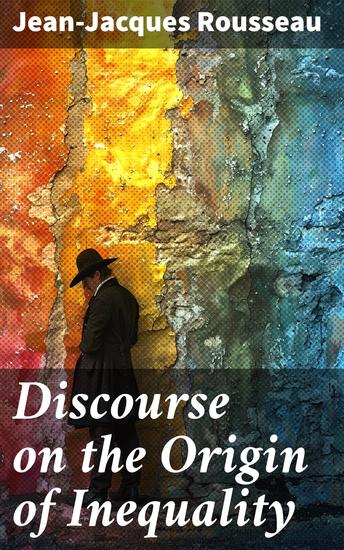
Discourse on the Origin of Inequality - Enriched edition Unveiling the Philosophical Roots of Social Inequality and Human Nature in Enlightenment Discourse - cover

Discourse on the Origin of Inequality - Enriched edition Unveiling the Philosophical Roots of Social Inequality and Human Nature in Enlightenment Discourse

Jean-Jacques Rousseau

Publisher: Good Press

  • 0
  • 0
  • 0

Summary

In "Discourse on the Origin of Inequality," Jean-Jacques Rousseau presents a profound philosophical examination of the social constructs that give rise to inequality among men. Written in 1755, the work adopts a strikingly eloquent and often provocative style, blending historical analysis with a speculative account of human development. Rousseau delineates two forms of inequality: natural and moral, critiquing the ways in which societal structures distort human equality and freedoms. His inquiry situates itself within the broader intellectual currents of the Enlightenment, contrasting starkly with the prevailing notions of progress and civilization that justified social hierarchies. Jean-Jacques Rousseau, a pivotal figure in Enlightenment thought, drew from his own experiences of social alienation and his belief in the inherent goodness of man to write this influential text. His formative years in Geneva, coupled with his passion for music, education, and political philosophy, fueled a desire to question the status quo and grapple with the moral implications of contemporary society. These influences culminate in a work that challenges readers to reconsider the moral foundation of their political structures and societal norms. "Discourse on the Origin of Inequality" is essential reading for anyone interested in political philosophy, social justice, or the foundational principles of modern democratic thought. Rousseau's ability to articulate the paradoxes of human society invites deep reflection and critical engagement, making this discourse not only historically significant but also strikingly relevant in contemporary discussions about inequality.

In this enriched edition, we have carefully created added value for your reading experience:
- A succinct Introduction situates the work's timeless appeal and themes.
- The Synopsis outlines the central plot, highlighting key developments without spoiling critical twists.
- A detailed Historical Context immerses you in the era's events and influences that shaped the writing.
- An Author Biography reveals milestones in the author's life, illuminating the personal insights behind the text.
- A thorough Analysis dissects symbols, motifs, and character arcs to unearth underlying meanings.
- Reflection questions prompt you to engage personally with the work's messages, connecting them to modern life.
- Hand‐picked Memorable Quotes shine a spotlight on moments of literary brilliance.
- Interactive footnotes clarify unusual references, historical allusions, and archaic phrases for an effortless, more informed read.
Available since: 11/16/2023.
Print length: 63 pages.

Other books that might interest you

  • Ownership - The Evangelical Legacy of Slavery in Edwards Wesley and Whitefield - cover

    Ownership - The Evangelical...

    Sean McGever

    • 0
    • 0
    • 0
    ECPA Top Shelf Book Cover Award
    The Gospel Coalition Book Awards Award of Distinction–History and Biography
    Men of their time?
    Jonathan Edwards, John Wesley, and George Whitefield were the three most prominent early evangelicals—and all three were deeply compromised on the issue of slavery. Edwards and Whitefield both kept slaves themselves, and Wesley failed to speak out against slavery until near the end of his life.
    In Ownership, Sean McGever tells the true story of these men's relationships to slavery: a story that has too often been passed over or buried in scholarly literature. Laying out the dominant attitudes among Christians toward slavery at the time, McGever sets these "men of their times" in their own context, inviting us to learn how these shapers of American evangelicalism contributed to the tragic history of racism in America. He also explores how Christians finally began to recognize that slavery, which they'd excused for most of Christian history, is actually wrong. It's a story that white evangelicals must wrestle with today.
    Ownership is more than a book of history. It's an invitation to examine our own legacies and to understand—and take ownership of—both our heritage and our own part in the story.
    Show book
  • Fifth Crusade The: The History of the Christian Campaign to Retake Jerusalem - cover

    Fifth Crusade The: The History...

    Charles River Editors

    • 0
    • 0
    • 0
    In the 50 years following the First Crusade, the Latin states in the East were consolidated, but there were also growing tensions and new challenges. Against this backdrop, the fall of the County of Edessa in December 1144 at the hands of Zengi, the atabeg of Aleppo and Mosul, was a catastrophic event. Founded in 1098 by the future King Baldwin of Boulogne, Edessa was the first Crusader state, as well as the northernmost, weakest, and least populated. It was constantly exposed to Muslim attacks, and news of its fall reached Europe at the beginning of 1145, and the fall was the catalyst for the Second Crusade. Furthermore, the Crusader States were also concerned about their relationship with the Byzantine Empire, as relations with the Byzantines were often tense. Indeed, efforts to strengthen and then retake parts of the collapsing Crusader States would fuel subsequent Crusades, and the Fourth Crusade notoriously ended with the Crusaders sacking Constantinople instead of proceeding to Jerusalem.  
    	Naturally, the Fifth Crusade was launched as a result of the Fourth Crusade’s failure to retake Jerusalem, and Pope Innocent III’s goal of reclaiming Jerusalem, which had been lost in 1187, remained unchanged.[1] At the same time, there was a truce between the Kingdom of Jerusalem and the Ayyubid Sultan al-‘Adil I, which was due to expire in 1217. The timing seemed favorable for a new initiative, particularly given the strengthening of Christendom in other regions such as Spain, where the victory at Las Navas de Tolosa in 1212 had secured much of the Iberian Peninsula against the Moors. The turning point for the proclamation of the Fifth Crusade was the Fourth Lateran Council in 1215, where Innocent III established a model for future Crusades, providing the enterprise with consistent legal, liturgical, and fiscal provisions.
    Show book
  • Turning Points - Crisis and Change in Modern Britain from 1945 to Truss - cover

    Turning Points - Crisis and...

    Steve Richards

    • 0
    • 1
    • 0
    The Times Best Politics and Current Affairs Books of the YearAn entertaining and revealing history of modern British politics from Steve Richards, broadcaster, journalist, and author of The Prime Ministers We Never Had.'Through wonderful vignettes, Richards offers a masterful, clear-eyed and, above all, entertaining history of British politics. To pilot a better future, we need to learn how not to repeat the mistakes of the past. The book is a lesson in just that' – Will HuttonEvery few weeks in British politics, a columnist will reach for the word ‘unprecedented’ as a cabinet minister resigns or yet another inquiry is called. We have become so accustomed to turmoil that it is impossible to take a breath and see where we are headed. In this magisterial history, respected broadcaster and journalist Steve Richards puts the recent chaos into context and takes a step back to explore ten critical moments that have shaped modern Britain.From the Suez Crisis of 1956 to the Covid-19 pandemic, from 1945 to Thatcher, Richards argues that it is only with distance that we can perceive the tectonic plates shifting – and events that may seem earth-shattering in the moment might be a passing tremor with the perspective of history.With his trademark insight, forged over several decades as one of the UK’s foremost political commentators, Richards blends anecdote and analysis to explore the biggest events in British political history. A must-read for anyone seeking to understand our nation, this landmark work is enlightening and entertaining in equal measure.'An engaging canter through postwar Britain . . . shaped by a lifetime of reading' – Prospect
    Show book
  • Acceptance-Based Emotion Regulation Therapy - A Clinician's Guide to Treating Emotion Dysregulation and Self-Destructive Behaviors Using an Evidence-Based Therapy Drawn from ACT and DBT - cover

    Acceptance-Based Emotion...

    PhD Matthew T. Tull, PhD Kim L....

    • 0
    • 0
    • 0
    Originally developed for treating self-injury among women with borderline personality disorder, research shows that acceptance-based emotion regulationtherapy is effective in treating emotion dysregulation and related psychiatric symptoms and self-destructive behaviors in a wide range of clients. 


    Acceptance-Based Emotion Regulation Therapy offers an empirically supported protocol that addresses all key dimensions of emotion regulation using evidence-based strategies drawn from dialectical behavior therapy (DBT), acceptance and commitment therapy (ACT), and emotion-focused therapy (EFT), as well as basic behavioral principles—resulting in a treatment that is more targeted and far briefer than comprehensive DBT. 


    With this comprehensive protocol, you'll be fully equipped to treat psychiatric symptoms stemming from emotion dysregulation, self-destructive behaviors serving an emotion-regulating function, and emotion dysregulation more broadly. 


    If you've been searching for an emotion regulation therapy that efficiently and effectively targets all the core dimensions of emotion dysregulation driving your clients' symptoms and clinical difficulties, this guide has everything you need.
    Show book
  • Shiloh: The History of the First Major Battle in the Western Theater during the Civil War - cover

    Shiloh: The History of the First...

    Jonathan Gianos-Steinberg

    • 0
    • 0
    • 0
    After Union General Ulysses S. Grant captured Fort Henry and Fort Donelson in early 1862, Confederate General Albert Sidney Johnston, widely considered the Confederacy’s best general, concentrated his forces in northern Georgia and prepared for a major offensive that culminated with the biggest battle of the war to that point, the Battle of Shiloh. On the morning of April 6, Johnston directed an all out attack on Grant’s army around Shiloh Church, and though Grant’s men had been encamped there, they had failed to create defensive fortifications or earthworks. They were also badly caught by surprise. With nearly 45,000 Confederates attacking, Johnston’s army began to steadily push Grant’s men back toward the river. 
    The Battle of Shiloh lasted two days, but the battle over the battle had just begun. Grant’s army had just won the biggest battle in the history of North America, with nearly 24,000 combined casualties among the Union and Confederate forces. Usually the winner of a major battle is hailed as a hero, but Grant was hardly a winner at Shiloh. The Battle of Shiloh took place before costlier battles at places like Antietam and Gettysburg, so the extent of the casualties at Shiloh shocked the nation. Moreover, at Shiloh the casualties were viewed as needless; Grant was pilloried for allowing the Confederates to take his forces by surprise, as well as the failure to build defensive earthworks and fortifications, which nearly resulted in a rout of his army. Speculation again arose that Grant had a drinking problem, and some even assumed he was drunk during the battle. Though the Union won, it was largely viewed that their success owed to the heroics of General Sherman in rallying the men and Don Carlos Buell arriving with his army, and General Buell was happy to receive the credit at Grant’s expense.
    Show book
  • Inside the Roosevelt's: America's Heartbeat in War - Discover "Inside the Roosevelts!" Dive into captivating audio that brings America's heartbeat during wartime alive - cover

    Inside the Roosevelt's:...

    Thorne Marlowe

    • 0
    • 0
    • 0
    Inside the Roosevelts: America's Heartbeat in War 
    Looking to enhance your knowledge of America's resilience during wartime under the Roosevelt leadership? 
    Searching for an all-encompassing guide that delves deep into the impact of the Roosevelts during the war? 
    Your quest ends here! 
    This audiobook is your ultimate companion for gaining a profound understanding, honing your insights, and immersing yourself in the pivotal moments of history. Prepare to be inspired. 
    Updated for an enriched understanding of America's wartime leadership. 
    Key features of this insightful guide: 
    - In-depth exploration of Roosevelt's influence during wartime 
    - Detailed analysis of America's resilience through Roosevelt's guidance 
    - Effective strategies for understanding historical contexts and implications 
    Our guide stands apart with its thorough coverage, essential for mastering historical knowledge. It doesn’t just skim through events; it offers meticulous analysis and exploration. 
    Please note that this audiobook is an independent resource, providing valuable insights for your educational benefit. 
    Structured with clarity and accessible language, our guide seamlessly transitions between topics, making complex history clear and engaging. 
    So, why delay? Click the BUY NOW button, secure your copy, and embark on a journey through America's wartime history with the Roosevelts!
    Show book