Join us on a literary world trip!
Add this book to bookshelf
Grey
Write a new comment Default profile 50px
Grey
Subscribe to read the full book or read the first pages for free!
All characters reduced
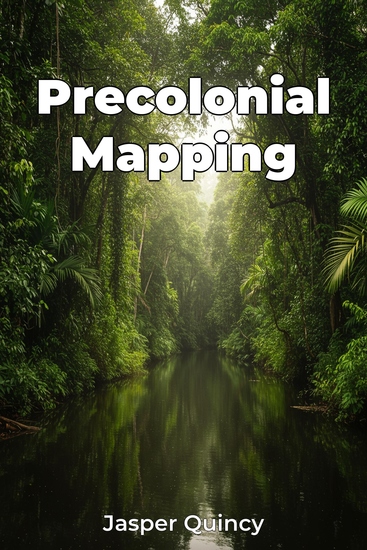
Precolonial Mapping - cover

Precolonial Mapping

Jasper Quincy

Translator A AI

Publisher: Publifye

  • 0
  • 0
  • 0

Summary

Precolonial Mapping explores how indigenous cultures understood and navigated their environments without formal cartography. Challenging Western-centric views, it reveals sophisticated alternative knowledge systems used for centuries. The book focuses on mental maps, cognitive representations of space crucial for daily life, and oral traditions, dynamic archives of geographical information transmitted through stories and rituals. These systems, tailored to specific cultural values, demonstrate effective ways of interacting with the environment. The book examines diverse indigenous societies, highlighting the cultural significance of landscapes and their connection to identity.

 
Beginning with an introduction to precolonial mapping, it progresses through the creation of mental maps and the role of oral traditions. It investigates applications in resource management, navigation, and conservation.

 
Readers will gain insights into sustainable living and alternative ways of knowing, making it valuable for those interested in history, geography, and indigenous cultures.
Available since: 03/29/2025.
Print length: 62 pages.


Other books that might interest you

  • The Souls of Black Folk - cover

    The Souls of Black Folk

    W. E. B. Du Bois

    • 0
    • 0
    • 0
    The Souls of Black Folk is a 1903 work of American literature by W. E. B. Du Bois. It is a seminal work in the history of sociology and a cornerstone of African-American literature.
    The book contains several essays on race, some of which the magazine Atlantic Monthly had previously published. To develop this work, Du Bois drew from his own experiences as an African American in American society. Outside of its notable relevance in African-American history, The Souls of Black Folk also holds an important place in social science as one of the early works in the field of sociology.
    In The Souls of Black Folk, Du Bois used the term "double consciousness", perhaps taken from Ralph Waldo Emerson ("The Transcendentalist" and "Fate"), applying it to the idea that black people must have two fields of vision at all times. They must be conscious of how they view themselves, as well as being conscious of how the world views them.
    Show book
  • The Magic Path of Intuition - cover

    The Magic Path of Intuition

    Florence Scovel Shinn

    • 0
    • 0
    • 0
    Florence Scovel Shinn was a gifted teacher who shaped the fields of spiritual growth and New Thought. Her practical, straightforward style empowered countless people to trust their inner knowing and overcome their challenges.
    With an Introduction by self-help luminary Louise Hay, who credits Florence as one of her early inspirations, this simple yet poignant book—which contains original, previously unpublished text—can help you positively transform your life. Powerful affirmations will show you how to cultivate your intuition and release any resistance, fear, and doubt.
    Florence said, "You must live fully in the now to make your dreams come true." Are you ready to follow your own magic path, your Divine wisdom, and realize your dreams? Goals or wishes that seem far off or unattainable are just waiting for you to believe in your potential and innate ability to manifest your desires!
    Show book
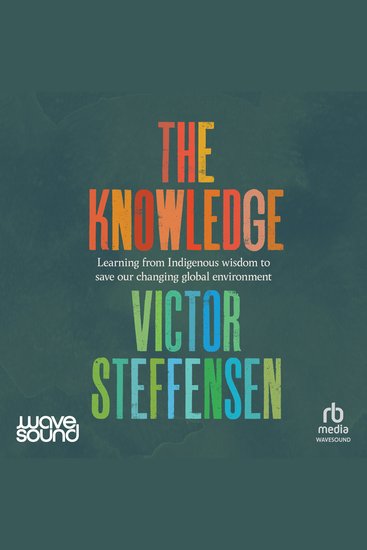
  • The Knowledge - cover

    The Knowledge

    Victor Steffensen

    • 0
    • 0
    • 0
    Learning from ancestral wisdom to save our challenging global environment. 
     
    In this follow-up to his bestselling Fire Country, Victor Steffensen offers a positive pathway for healing the planet based on traditional Indigenous knowledge systems. 
     
    Catastrophic wildfires have overwhelmed countries around the world from Australia, Canada and the United States to Greece and Brazil. Despite our growing climate crisis, changes to Western environmental approaches have been scant and many land management practices continue to destroy the land. It's time for a 'new' way of thinking. The solutions lie in the cultures of First Peoples, if only we're willing to listen. 
     
    As a Tagalaka man from Australia, Victor Steffensen spends his days educating people around the world about Aboriginal fire and land management knowledge. Applying the practices passed onto him by his mentors, Victor is on a mission to teach others the value of this knowledge. 
     
    In The Knowledge, Victor shares the simple yet core belief underlying Indigenous knowledge systems: that humans are part of the natural world. The land is not something to be dominated and exploited. Rather, we are nature and the way forward is to realign ourselves with the Earth, recognising our responsibility to care for the planet environmentally and socially. Filled with stories of Victor's work applying Indigenous solutions, The Knowledge will transform the way you think about our responses to bushfires, floods and the climate crisis. 
     
    Never has the call to change our global environmental approach been so strong or so clear. Destined to become a seminal work, The Knowledge is a must-read for anyone concerned about the future of our planet. 
     
     
    'Indigenous knowledge must lead us out of the emergency of climate change and species extinction. Buy this book.' DAVID SUZUKI
    Show book
  • Drunks: An American History - An American History - cover

    Drunks: An American History - An...

    Christopher M. Finan

    • 0
    • 0
    • 0
    A social history of alcoholism in the United States, from the seventeenth century to the present day 
    Today, millions of Americans are struggling with alcoholism, but millions are also in long-term recovery. Alcoholics Anonymous and a growing number of recovery organizations are providing support for alcoholics who will face the danger of relapse for the rest of their lives. We have finally come to understand alcoholism as a treatable illness, rather than a moral failure. Today’s advocates can draw inspiration from the victories of sober drunks throughout American history. 
    Christopher Finan recounts the nation’s history with alcohol and its search for sobriety, which began among Native Americans in the colonial period, when liquor was used to cheat them of their property. He introduces us to the first of a colorful cast of characters, a remarkable Iroquois leader named Handsome Lake, who dedicated his life to helping his people renounce hard liquor. And we meet Carrie Nation, the wife of an alcoholic who destroyed bars with an ax in her anger over what alcohol had done to her family, as well as the idealistic and energetic Washingtonians, reformed drunks who led the first national movement to save men like themselves. 
    Finan also tells the dramatic story of Bill Wilson and Dr. Bob Smith, the two drunks who helped each other stay sober and then created AA, which survived its tumultuous early years and has made it possible for millions of men and women to quit drinking. This is narrative history at its best: entertaining and authoritative, an important portrait of one of America’s great liberation movements.
    Show book
  • Napoleon’s Escape from Elba: The History of the French Emperor’s Return from Exile and the Road to Waterloo - cover

    Napoleon’s Escape from Elba: The...

    Editors Charles River

    • 0
    • 0
    • 0
    Although Napoleon was exiled, he was allowed to retain the title of Emperor and was given de facto control over Elba. But it should not be surprising the man who once ruled Europe was not content with the island of Elba. Separated from his family and cast away on a small island, Napoleon attempted suicide by taking a poison pill, but he had first carried the pill with him on the retreat from Moscow, rightly concerned about an uncertain fate at the time. The aging process had fatally weakened the pill, which stopped it from fatally weakening Napoleon. 
    Though the emperor busied himself developing the island’s industries and had established a miniature army and navy, he must still have found time to brood upon his situation and could not have helped but think of himself as reduced to laughing stock. The “Emperor of Elba” was a poor title for a man who had once ruled over more than half of mainland Europe. Even some of Napoleon’s old Marshals, like Murat, now controlled more territory than the man who had raised them in the first place. To add insult to injury, the salary he had been promised in the Treaty of Fontainebleau and that was meant to keep him in relative luxury was often late and sometimes failed to arrive at all. Coupled with his deteriorating health and the express refusal of the Austrian court to let him speak or write to his wife and son, Napoleon must have felt himself well and truly slighted. Beaten, but not defeated, he resolved to show the Coalition powers he could still make Europe tremble. 
    Of all the incredible military feats Napoleon accomplished, none were more impressive than his escape from Elba and his return to France, which was literally a bloodless revolution. On February 26, 1815, Napoleon escaped from Elba, and in a desperate gamble, he landed on the French mainland with less than a thousand men and marched on Paris.
    Show book
  • Black in White Space - The Enduring Impact of Color in Everyday Life - cover

    Black in White Space - The...

    Elijah Anderson

    • 0
    • 0
    • 0
    A birder strolling in Central Park. A college student lounging on a university quad. Two men sitting in a coffee shop. Perfectly ordinary actions in ordinary settings—and yet, they sparked jarring and inflammatory responses that involved the police and attracted national media coverage. Why? In essence, Elijah Anderson would argue, because these were Black people existing in white spaces. 


    In Black in White Space, Anderson brings his immense knowledge and ethnography to bear in this timely study of the racial barriers that are still firmly entrenched in our society at every class level. He focuses in on symbolic racism, a new form of racism in America caused by the stubbornly powerful stereotype of the ghetto embedded in the white imagination, which subconsciously connects all Black people with crime and poverty regardless of their social or economic position. White people typically avoid Black space, but Black people are required to navigate the "white space" as a condition of their existence. 


    An unwavering truthteller in our national conversation on race, Anderson has shared intimate and sharp insights into Black life for decades. Vital and eye-opening, Black in White Space will be a must-listen for anyone hoping to understand the lived realities of Black people and the structural underpinnings of racism in America.
    Show book