Join us on a literary world trip!
Add this book to bookshelf
Grey
Write a new comment Default profile 50px
Grey
Subscribe to read the full book or read the first pages for free!
All characters reduced
Pride and Prejudice - cover

Pride and Prejudice

Jane Austen

Publisher: Mauro Liistro Editore

  • 0
  • 3
  • 0

Summary

Pride and Prejudice is a novel of manners by Jane Austen, first published in 1813. The story follows the main character Elizabeth Bennet as she deals with issues of manners, upbringing, morality, education, and marriage in the society of the landed gentry of early 19th-century England. Elizabeth is the second of five daughters of a country gentleman living near the fictional town of Meryton in Hertfordshire, near London. Page 2 of a letter from Jane Austen to her sister Cassandra (11 June 1799) in which she first mentions Pride and Prejudice, using its working title First Impressions. (NLA) Though the story is set at the turn of the 19th century, it retains a fascination for modern readers, continuing near the top of lists of "most loved books" such as The Big Read.[1] It has become one of the most popular novels in English literature and receives considerable attention from literary scholars. Modern interest in the book has resulted in a number of dramatic adaptations and an abundance of novels and stories imitating Austen's memorable characters or themes. To date, the book has sold some 20 million copies Worldwide
Available since: 03/16/2017.
Other books that might interest you

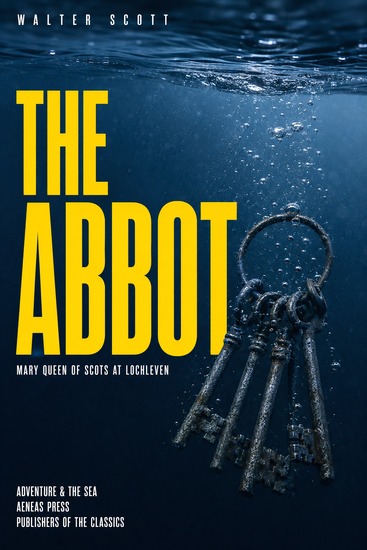
  • The Abbot - Being the Sequel to the Monastery - cover

    The Abbot - Being the Sequel to...

    Walter Scott

    • 0
    • 0
    • 0
    Mary Queen of Scots imprisoned at Lochleven, the boy page who carries her messages, and the escape across the loch. Scott wrote it as the sequel to The Monastery and made a much better job of it; the Mary here is drawn from the papers of people who had guarded her. This edition is bound with a gallery of 55 plates of paintings by Edvard Munch, Gillis Mostaert, William Segar and Jan Brueghel the Elder, and includes three illustrations restored and coloured for this edition.
    Show book
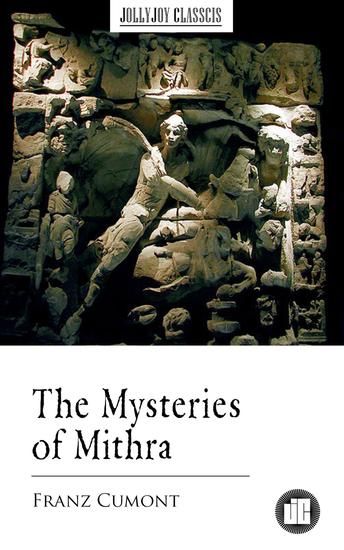
  • The Mysteries of Mithra - cover

    The Mysteries of Mithra

    Franz Cumont

    • 0
    • 0
    • 0
    This definitive treatment of Mithrais religion by the recognized authority on classical religions pieces together information from the fragments of texts, bas-reliefs, statuary, etc., remaining from the almost total destruction of the religion centuries ago. In a work of masterful scholarship, Dr. Cumont reconstructs the charateristics of the principle divinities, the rituals, the mystery teachings, the liturgy and clergy, the attitude towards Mithra of the typical Roman soldier, the rapid dissemination of the religion in the early years of the Christian era. 70 illustrations—photographs and drawings of Mithraic art—are included.
    Show book
  • Creepiness - H P Lovecraft - cover

    Creepiness - H P Lovecraft

    H.P. Lovecraft

    • 0
    • 0
    • 0
    Creepiness - H. P. Lovecraft  
     
    Lovecraft Short Stories 
     
    H.P. Lovecraft, also known as Howard Phillips Lovecraft, was an American writer who excelled in horror, fantasy, poetry, and science fiction, particularly in the subgenre of weird fiction. He is widely considered as the leading authority on frightening, eerie, and unsettling stories. This list features seven tales by Lovecraft, showcasing his writing prowess across his entire career - from works written when he was a young teenager to others that were only published posthumously. These stories are unique in their own way, but all stem from the same imaginative mind that gave us the "Cult of Cthulhu" and other memorable, strange works that have captivated generations with their ability to tap into our innermost fears. Some of these tales delve into the depths of the human psyche, while others delve into the depths of human depravity and terror. 
     
    Track List 
     
        1) The Beast in the Cave		 
     
    	2) The White Ship		 
     
    	3) Nyarlathotep		 
     
    	4) The Alchemist		 
     
    	5) The Shunned House		 
     
    	6) Dagon		 
     
    	7) The Tomb
    Show book
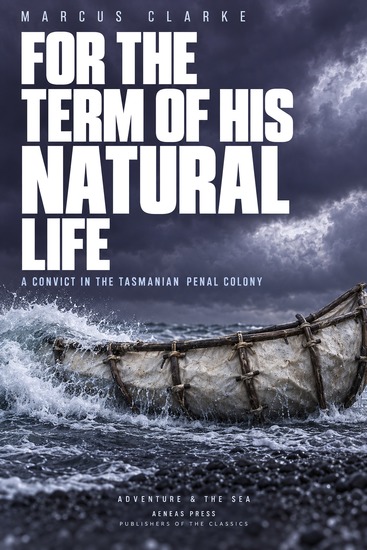
  • For the Term of His Natural Life - A Convict in the Tasmanian Penal Colony - cover

    For the Term of His Natural Life...

    Marcus Clarke

    • 0
    • 0
    • 0
    An innocent man is transported to Van Diemen's Land and passes through the whole convict system - the hulks, Macquarie Harbour, Norfolk Island - and out the other side barely human. Clarke researched it in the colonial archives and interviewed survivors; it is the great Australian novel of the convict era. Fifty-seven plates from Hogarth to Holman Hunt, 1732 to 1877, fix the novel in the English social world whose courts and prisons sent its characters to the other side of the earth.
    Show book
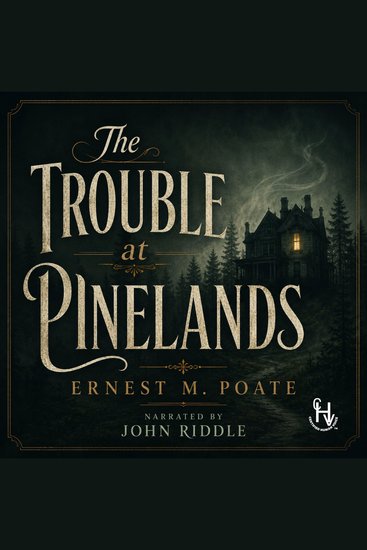
  • The Trouble at Pinelands - cover

    The Trouble at Pinelands

    Ernest M. Poate

    • 0
    • 0
    • 0
    A haunted house. A murdered physician. A bridegroom found holding the smoking gun. 
     
    George Uhlman has reluctantly agreed to watch over his niece, Dorothy McGregor, as she prepares to marry young physician Lewis Parker. His stay at Fort House should be uneventful—but the gloomy North Carolina mansion is already troubled by unexplained noises, shattered dishes, missing food, and rumors of a destructive poltergeist. 
     
    Then the disturbances take a deadly turn. 
     
    After a bitter confrontation between Lewis and his professional rival, Dr. Gaskell, a shotgun blast shatters the early-morning quiet. Gaskell is discovered dead in the scrub oaks, and Lewis is found nearby with the weapon in his hands. 
     
    The evidence appears damning. The townspeople demand justice, the authorities close in, and Dorothy’s future collapses around her. But when Lewis’s sharp-minded best man, Dr. Floyd Somers, arrives in Pinelands, he refuses to accept the obvious solution. 
     
    Behind the ghostly disturbances lies a household filled with secrets. Behind the murder lies a web of jealousy, old grudges, hidden criminal activity, and carefully arranged deception. 
     
    First published in 1922, *The Trouble at Pinelands* is an atmospheric American mystery combining a seemingly haunted house, small-town rivalries, courtroom intrigue, and a classic puzzle of detection. 
     
    Narrated by John Riddle.
    Show book
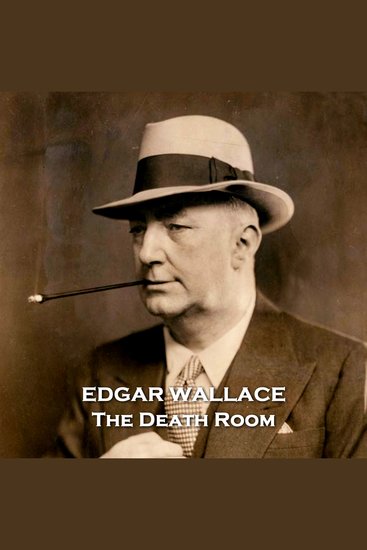
  • The Death Room - Former soldier and journalist that became a revered author and screenwriter - cover

    The Death Room - Former soldier...

    Edgar Wallace

    • 0
    • 0
    • 0
    Richard Horatio Edgar Wallace was born on the 1st April 1875 in Greenwich, London.  Leaving school at 12 because of truancy, by the age of fifteen he had experience; selling newspapers, as a worker in a rubber factory, as a shoe shop assistant, as a milk delivery boy and as a ship’s cook.  
     
    By 1894 he was engaged but broke it off to join the Infantry being posted to South Africa. He also changed his name to Edgar Wallace which he took from Lew Wallace, the author of Ben-Hur.  
     
    In Cape Town in 1898 he met Rudyard Kipling and was inspired to begin writing. His first collection of ballads, The Mission that Failed! was enough of a success that in 1899 he paid his way out of the armed forces in order to turn to writing full time.  
     
    By 1904 he had completed his first thriller, The Four Just Men. Since nobody would publish it he resorted to setting up his own publishing company which he called Tallis Press. 
      
    In 1911 his Congolese stories were published in a collection called Sanders of the River, which became a bestseller. He also started his own racing papers, Bibury’s and R. E. Walton’s Weekly, eventually buying his own racehorses and losing thousands gambling.  A life of exceptionally high income was also mirrored with exceptionally large spending and debts.  
     
    Wallace now began to take his career as a fiction writer more seriously, signing with Hodder and Stoughton in 1921. He was marketed as the ‘King of Thrillers’ and they gave him the trademark image of a trilby, a cigarette holder and a yellow Rolls Royce. He was truly prolific, capable not only of producing a 70,000 word novel in three days but of doing three novels in a row in such a manner. It was estimated that by 1928 one in four books being read was written by Wallace, for alongside his famous thrillers he wrote variously in other genres, including science fiction, non-fiction accounts of WWI which amounted to ten volumes and screen plays. Eventually he would reach the remarkable total of 170 novels, 18 stage plays and 957 short stories. 
     
    Wallace became chairman of the Press Club which to this day holds an annual Edgar Wallace Award, rewarding ‘excellence in writing’.  
     
    Diagnosed with diabetes his health deteriorated and he soon entered a coma and died of his condition and double pneumonia on the 7th of February 1932 in North Maple Drive, Beverly Hills. He was buried near his home in England at Chalklands, Bourne End, in Buckinghamshire.
    Show book