Join us on a literary world trip!
Add this book to bookshelf
Grey
Write a new comment Default profile 50px
Grey
Subscribe to read the full book or read the first pages for free!
All characters reduced
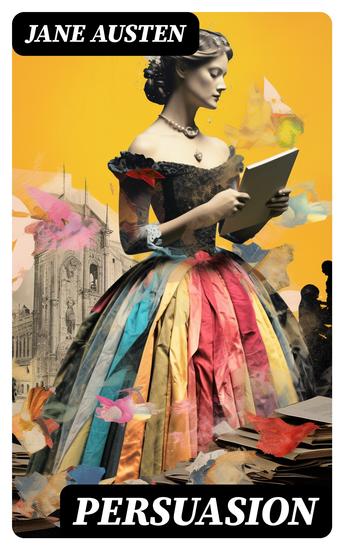
Persuasion - cover

Persuasion

Jane Austen

Publisher: DigiCat

  • 0
  • 0
  • 0

Summary

In Jane Austen's final completed novel, "Persuasion," the narrative unfolds around Anne Elliot, a woman whose mature perspective on love and societal expectations serves as a poignant critique of early 19th-century English gentry. The novel employs a richly layered literary style, combining sharp dialogue and keen social observation, often veering towards irony and self-reflection. Austen's exploration of themes such as regret, resilience, and the powerful nature of true love is set against a backdrop of shifting social dynamics, enhanced by her astute characterizations and intricate plot developments. This work stands as a testament to Austen's mastery in encapsulating human emotions, particularly the nuances of persuasion that influence personal relationships and societal positions. Jane Austen (1775-1817) was a pioneering novelist whose keen insights into the lives of women and class structures have rendered her an enduring figure in English literature. The inspiration for "Persuasion" stems from Austen's own life experiences and the societal limitations placed upon women, particularly regarding marriage and autonomy. Having remained single for much of her life, Austen's observations on love and the complexities of romantic entanglements are further enriched by her personal reflections on choices and second chances. "Persuasion" is highly recommended for readers interested in a thoughtful yet engaging exploration of love, social status, and the intricacies of human relationships. Austen's work provides a profound understanding of personal reflections and societal critique, making it not only a delightful read but also a significant contribution to the literary canon. Whether for a first-time reader or a seasoned Austen enthusiast, this novel invites contemplation on the art of persuasion in the context of enduring human emotions.
Available since: 10/11/2022.
Print length: 210 pages.

Other books that might interest you

  • The Big Four - cover

    The Big Four

    Agatha Christie

    • 0
    • 0
    • 0
    Originally published as a series of short stories in Sketch magazine, this tale of international intrigue and espionage begins when a visitor stumbles into detective Hercule Poirot's bedroom. In the final moments before his death, he tells Poirot of the crime cartel known only as the Big Four. What follows is Hercule Poirot's biggest case yet, taking him and his sidekick Arthur Hastings on the trail of the Big Four before their plans to take control of the world unfold. Note: The Big Four contains characterization and thematic elements representative of prejudiced beliefs, particularly Sinophobia and Orientalism. While these views were never legitimate nor equitable, they were unfortunately commonplace at the time of writing and publication. Rather than glossing over this painful dimension of literary history, this audiobook edition references the text as it was originally published so that it may be included when taking into consideration the overall impact of Agatha Christie's body of work. The beliefs and views present in this book do not reflect that of the publisher's.
    Show book
  • The Custom of the Country - cover

    The Custom of the Country

    Wharton Edith

    • 0
    • 0
    • 0
    The Spraggs, a wealthy family of Midwesterners, are visiting New York City to marry off their beautiful daughter Undine. While Undine's beauty catches the attention of several high-society men, she finds it difficult to fit in with the old-money social circles that rule New York. When she finally marries Ralph Marvell, she embraces a life full of frivolities, which eventually leads to her tumultuous demise. Best known for inspiring the hit series Downton Abbey, this classic novel is a scathing critique of ambition featuring one of the most ruthless heroines in literature.
    Show book
  • Eve's Ransom - cover

    Eve's Ransom

    George Gissing

    • 0
    • 0
    • 0
    In Eve's Ransom , George Gissing weaves a poignant and ironic tale of love, loss, and economic desperation in Victorian England. The novel follows Harold Transome, a struggling schoolteacher who returns to London after years abroad, only to find himself entangled with Eve Mayfield, a beautiful young woman trapped in poverty. Drawn into a relationship that blurs duty and desire, Harold sacrifices his modest livelihood to support Eve, believing he is rescuing her from hardship. But as their bond deepens, so too does the complexity of their emotional and financial dependence. Gissing masterfully critiques romantic idealism and gender dynamics, exposing the harsh realities beneath sentimental illusions. A quiet tragedy of misplaced devotion and social constraint, Eve's Ransom explores the cost of love when it becomes an obligation rather than a choice.
    Show book
  • Dubliners - cover

    Dubliners

    James Joyce

    • 0
    • 0
    • 0
    A remarkable collection of stories that captures the emotions, routines, and hidden tensions of ordinary life in Dublin.
    
    Through a series of interconnected tales, James Joyce explores the experiences of people from different walks of life—children, workers, dreamers, and individuals facing moments of change or realization. Each story reveals quiet emotional depth beneath everyday situations.
    
    The collection examines themes of identity, isolation, ambition, and personal awakening. Joyce's subtle storytelling and sharp observations bring realism and humanity to every character, creating moments that feel intimate and deeply authentic.
    
    Rich in atmosphere and psychological insight, Dubliners paints a vivid picture of a city and its people while exploring universal emotions and struggles. Its influence on modern literature remains profound.
    
    Written by James Joyce, this classic collection continues to resonate with readers through its honesty and literary brilliance.
    
    Step into the lives, memories, and quiet revelations of Dublin—download your copy today.
    Show book
  • The Heart's Highway - A Romance of Virginia in the Seventeenth Century - cover

    The Heart's Highway - A Romance...

    Mary Eleanor Wilkins Freeman

    • 0
    • 0
    • 0
    Virginia in the 1680s: a convict-servant with a gentleman's past, a planter's daughter, and the Tobacco Rebellion — when men went through the fields at night cutting the plants to force the price up. Freeman wrote the definitive stories of New England's stubborn, straitened women; this is her one costume novel, and the Virginia in it is a colony where labour is property.
    Show book
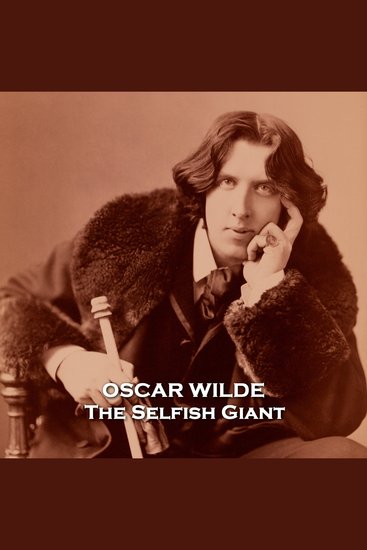
  • The Selfish Giant - From their pens to your ears genius in every story - cover

    The Selfish Giant - From their...

    Oscar Wilde

    • 0
    • 0
    • 0
    Oscar Fingal O'Flahertie Wills Wilde was born on the 16th October 1854 in Dublin, Ireland.  The son of Dublin intellectuals Oscar proved himself an outstanding classicist at Trinity College and then at Oxford. 
    Wilde then moved to London and its fashionable cultural and social circles.  With his biting wit, flamboyant dress, and glittering conversation, Wilde became one of the most well-known personalities of his day. 
    His only novel, ‘The Picture of Dorian Gray’ was published in 1890 and he then moved on to writing for the stage with ‘Salome’ in 1891.  His society comedies were enormous hits and turned him into one of the most successful writers of late Victorian London. 
    Whilst his masterpiece, ‘The Importance of Being Earnest’, was on stage in London, Wilde had the Marquess of Queensberry, the father of his lover, Lord Alfred Douglas, prosecuted for libel.  The trial unearthed evidence that caused Wilde to drop his charges and led to his own arrest and trial for gross indecency. He was convicted and imprisoned for two years hard labour. It was to break him. 
    On release he left for France. There he wrote his last work, ‘The Ballad of Reading Gaol’ in 1898.  He died destitute in Paris at the age of forty-six sipping champagne a friend had brought with the line ‘Alas I am dying beyond my means’.
    Show book