Unisciti a noi in un viaggio nel mondo dei libri!
Aggiungi questo libro allo scaffale
Grey
Scrivi un nuovo commento Default profile 50px
Grey
Iscriviti per leggere l'intero libro o leggi le prime pagine gratuitamente!
All characters reduced
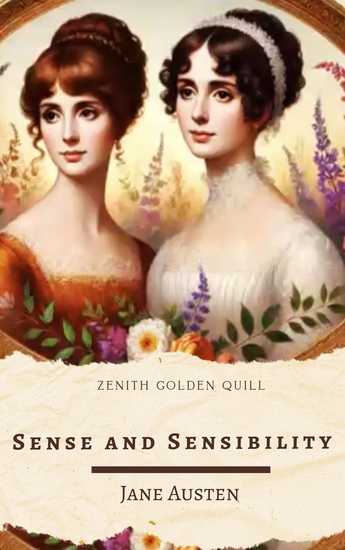
Sense and Sensibility - Two Sisters Two Philosophies One Unforgettable Journey Through Heartache and Hope - cover

Sense and Sensibility - Two Sisters Two Philosophies One Unforgettable Journey Through Heartache and Hope

Jane Austen, Zenith Golden Quill

Casa editrice: Zenith Golden Quill

  • 0
  • 0
  • 0

Sinossi

When love meets logic, who wins?

In Sense and Sensibility, Jane Austen introduces readers to the Dashwood sisters—Elinor, composed and rational, and Marianne, emotional and impulsive. As they navigate love, loss, and the rigid rules of English society, their contrasting personalities reveal the timeless struggle between reason and passion.

Set in the refined world of Regency England, this beloved novel blends romantic intrigue, biting social commentary, and Austen's signature wit. Whether you're team Sense or team Sensibility, you'll find yourself swept away by this tale of heartbreak, resilience, and personal growth.

This edition includes historical annotations and period illustrations to enrich your reading experience.

"Austen's first novel, and still one of her finest." — The New Yorker
"Sharp, elegant, and enduringly relevant." — The Guardian

Click Buy Now to enjoy one of the greatest romantic classics ever written.
Disponibile da: 14/05/2025.
Lunghezza di stampa: 366 pagine.

Altri libri che potrebbero interessarti

  • Romeo And Juliet - Full Cast Drama - cover

    Romeo And Juliet - Full Cast Drama

    William Shakespeare

    • 0
    • 0
    • 0
    The characters of Romeo and Juliet have been depicted in literature, music, dance, and theatre. The appeal of the young hero and heroine—whose families, the Montagues and the Capulets, respectively, are implacable enemies—is such that they have become, in the popular imagination, the representative type of star-crossed lovers. Shakespeare sets the scene in Verona, Italy. Juliet and Romeo meet and fall instantly in love at a masked ball of the Capulets, and they profess their love when Romeo, unwilling to leave, climbs the wall into the orchard garden of her family’s house and finds her alone at her window. Because their well-to-do families are enemies, the two are married secretly by Friar Laurence. When Tybalt, a Capulet, seeks out Romeo in revenge for the insult of Romeo’s having dared to shower his attention on Juliet, an ensuing scuffle ends in the death of Romeo’s dearest friend, Mercutio. Impelled by a code of honor among men, Romeo kills Tybalt and is banished to Mantua by the Prince of Verona, who has been insistent that the family feuding cease. When Juliet’s father, unaware that Juliet is already secretly married, arranges a marriage with the eminently eligible Count Paris, the young bride seeks out Friar Laurence for assistance in her desperate situation. He gives her a potion that will make her appear to be dead and proposes that she take it and that Romeo rescue her. She complies. Romeo, however, unaware of the friar’s scheme because a letter has failed to reach him, returns to Verona on hearing of Juliet’s apparent death. He encounters a grieving Paris at Juliet’s tomb, reluctantly kills him when Paris attempts to prevent Romeo from entering the tomb, and finds Juliet in the burial vault. There he gives her a last kiss and kills himself with poison. Juliet awakens, sees the dead Romeo, and kills herself. The families learn what has happened and end their feud. 
     
    Mostra libro
  • Blood - From their pens to your ears genius in every story - cover

    Blood - From their pens to your...

    Hanns Heinz Ewers

    • 0
    • 0
    • 0
    Hanns Heinz Ewers was born on 3rd November 1871 in Düsseldorf, Germany. 
    His first published poem was at 17 on the death, after a reign of only 99 days, of the German Emperor Frederick III. 
    A stint in the German military was cut short after only 44 days because of his myopia.  Writing was to be the way forward for him with a book of satiric verse published in 1901. At the same time he co-founded a literary vaudeville troupe that toured central and eastern Europe before censors and expenses forced its closure.  An inveterate traveller he was in South America when the Great War enveloped Europe and he relocated to New York. 
    From here his story darkens. Although by now a successful and admired author he was arrested in the U S in 1918 as a German Agent on the pretext of his travels and a falsified Swiss passport. Interned, he was released in 1921 and returned to Germany.  He claimed only to be raising money for the German Red Cross. 
    His literary fame is decidedly easier to clarify. His novels beginning with ‘The Sorcerer’s Apprentice’ in 1910 are dark, they bristle with evil intent and are littered with characters who have a dubious moral compass and yet, along with his short stories, are brazen, brilliant feats of literary narrative. 
    He also wrote and published plays, fairy tales, opera librettos, critical essays and lectured for many years on ‘The Religion of Satan’ and was one of the first to write scripts for the cinema, which he considered a legitimate art form. 
    As the Weimar republic began its chaotic death throes Ewers became attracted to the rising Nazi Party.  At first he was warmly received despite disagreeing with its anti-semitism (his most famed literary character had a Jewish mistress) and he was even commissioned by Hitler to write a biography of the Nazi martyr Horst Wessel.  This together with his own homosexuality culminated with his works being banned in 1934 and his assets and property seized.  It took him many years to have the ban lifted.  This association rightfully clouds his personal reputation but has meant his literary contributions are also overlooked and neglected. 
    Hanns Heinz Ewers died of tuberculosis on 12th June 1943 in his Berlin apartment.
    Mostra libro
  • The Celestial Omnibus and Other Stories - cover

    The Celestial Omnibus and Other...

    E. M. Forster

    • 0
    • 0
    • 0
    The Celestial Omnibus and Other Stories is a collection of short-stories which Forster wrote during the prewar years, most of which were symbolic fantasies or fables. It includes:The Story of a PanicThe Other Side of the HedgeThe Celestial OmnibusOther KingdomThe Curate's FriendThe Road from ColonusE.M. Forster (born January 1, 1879, London) was a British novelist, essayist, and social and literary critic. He is most renowned and admired for his novels Howards End (1910), A Passage to India (1924), and his large body of criticism.
    Mostra libro
  • Taras Bulba and Other Tales (Unabridged) - cover

    Taras Bulba and Other Tales...

    Nikolai Gogol

    • 0
    • 0
    • 0
    Nikolai Gogol was one of the first to use the technique of the grotesque. According to Viktor Shklovsky, Gogol's strange style of writing resembles the "ostranenie" technique of defamiliarization. His early works, such as Evenings on a Farm Near Dikanka, were influenced by his Ukrainian upbringing, Ukrainian culture and folklore. His later writing satirised political corruption in the Russian Empire (The Government Inspector, Dead Souls). The novel Taras Bulba (1835), the play Marriage (1842), and the short stories "The Tale of How Ivan Ivanovich Quarreled with Ivan Nikiforovich", "The Portrait" and "The Carriage", are also among his best-known works.
    Mostra libro
  • A Scene from the Ghetto of Venice - From their pens to your ears genius in every story - cover

    A Scene from the Ghetto of...

    Rainer Maria Rilke

    • 0
    • 0
    • 0
    René Karl Wilhelm Johann Josef Maria Rilke was born into a troubled marriage on the 4th December 1875 in Prague, then part of the Austro-Hungarian Empire.  His mother, having previously lost a baby girl, would dress the young boy up in girl’s clothing.   
    Later his father dispatched him to a military academy at age 10 but after a miserable 5 years the young Rilke left due to illness and instead entered first Prague and then Munich and finally Berlin university to study art history, philosophy and literature. 
    His initial forays into literature was in poetry.  His intense, mystical and lyrical style was much admired and over time inspired many in succeeding generations.    
    His short prose collection ‘Stories of God’, written in an impassioned burst over several nights was published in 1900 and offers a beguiling view of much of Rilke’s influences and outlook.  
    The following year he married the pioneering sculptor and artist Clara Westhoff.  The union produced one child, a daughter Ruth.   
    He lived in Paris for most of the Century’s first decade where he mixed with many great minds of the time.  Although he continued to write he also worked as a secretary to the sculptor, Rodin.   
    It was only after they settled in Switzerland in 1919 that his writing output was in full flow.  Here he wrote profusely in both German and French, which included much on his previous travels, his left-wing sympathies, his religious and existential thoughts, all part of a unique and consummate style. 
    From 1923 on, Rilke increasingly struggled with his health which was now in constant decline and often spent time rehabilitating at a sanatorium.   
    Rainer Maria Rilke died of leukaemia on the 29th December 1926 in Montreux, Switzerland.  He was 51.
    Mostra libro
  • The Flax - cover

    The Flax

    H. C. Andersen

    • 0
    • 0
    • 0
    Classic short story by H. Ch. Andersen, written from the perspective of the flax.
    Mostra libro